The EU list of permitted health claims ties each of its wordings to a named nutrient. Pantothenic acid (vitamin B5) contributes to normal mental performance, and vitamin C, biotin, vitamin B6 and vitamin B12 each contribute to normal psychological function.
- One nutrient with the mental performance wording. Of the nutrients in Core™, only pantothenic acid holds it.
- Four with the psychological function wording. Vitamin C, biotin, vitamin B6 and vitamin B12 each contribute to normal psychological function.
- The same four with the nervous system wording. Vitamin C, biotin, vitamin B6 and vitamin B12 each contribute to normal functioning of the nervous system.
of 106 women found our liquid marine collagen easy to include in their daily routine in an 8-week user trial.
- 95%felt the appearance of their skin improved
- 86%reported healthier hair
- 76%reported stronger nails
"Vitamins for brain fog": what words does the EU claims list use?
The EU claims list uses three phrases here: normal mental performance, normal psychological function and normal functioning of the nervous system, each authorised one by one for named nutrients in the list of permitted health claims made on foods.1 That list has a vocabulary of its own, different from the phrase you typed into a search bar.
- Mental performance. Pantothenic acid (vitamin B5) contributes to normal mental performance.
- Psychological function. Vitamin C, biotin, vitamin B6 and vitamin B12 each contribute to normal psychological function.
- The nervous system. Vitamin C, biotin, vitamin B6 and vitamin B12 each contribute to normal functioning of the nervous system.
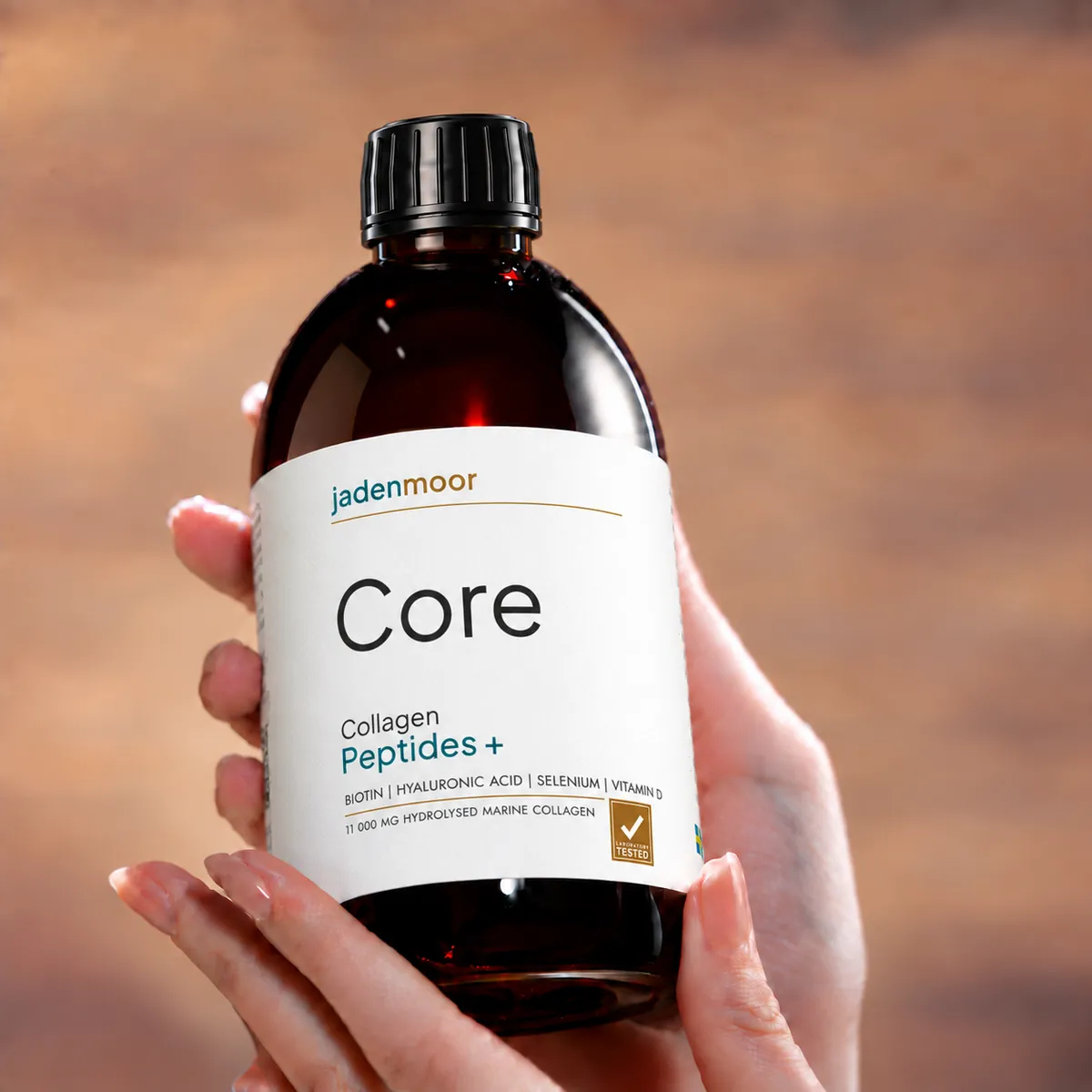
That makes five nutrients across three wordings, and Core™ has all five in every portion.2 The wordings come first, then the nutrients one at a time, then the label amounts.
We start with the wording because it is the part you can check for yourself. A claim on the list is a fixed sentence, so if a label uses it, you can hold the label against the list and see that the two match.
What do the authorised claims actually say?
Pantothenic acid holds the mental performance sentence, while vitamin B6, vitamin B12, biotin and vitamin C each hold the psychological function and nervous system sentences, every one a single sentence attached to a named nutrient. The table sets out the three wordings, the nutrients in Core™ that hold each, and the amount of those nutrients in one portion.
Three authorised wordings and the nutrients in Core™ that hold them
The claim as written on the EU list, nutrient by nutrient, with the amount in one portion.
| Wording | Nutrients in Core™ that carry it | Amount per portion |
|---|---|---|
| Normal mental performance | Pantothenic acid (vitamin B5) contributes to normal mental performance. | Pantothenic acid 5 mg (83% NRV). |
| Normal psychological function | Vitamin C contributes to normal psychological function. Biotin contributes to normal psychological function. Vitamin B6 contributes to normal psychological function. Vitamin B12 contributes to normal psychological function. | Vitamin C 120 mg (150% NRV). Biotin 5,000 µg. Vitamin B6 1.7 mg (121% NRV). Vitamin B12 24 µg (960% NRV). |
| Normal functioning of the nervous system | Vitamin C contributes to normal functioning of the nervous system. Biotin contributes to normal functioning of the nervous system. Vitamin B6 contributes to normal functioning of the nervous system. Vitamin B12 contributes to normal functioning of the nervous system. | The same four nutrients at the same amounts as the row above. |
Three details stand out in the table. Every sentence names one nutrient, so the claim belongs to that nutrient and to nothing else in the pack. Every sentence holds the word "normal". Pantothenic acid stands alone in the top row as the only nutrient in Core™ with the mental performance wording.1
We print these wordings as the list gives them. The phrase "psychological function" appears there exactly like that, so that is how it stays on this page.
The same vitamins hold further lines on the list, and those have their own articles. For the wording on tiredness and fatigue, read vitamins for tiredness and energy. For energy-yielding metabolism, read B vitamins and metabolism.

assets/img/blog/bf2-window.webpWhat is pantothenic acid?
Pantothenic acid is the formal name of vitamin B5 and the name the EU list uses. It is a water-soluble B vitamin. Its main job is to help make coenzyme A, usually shortened to CoA, and CoA is essential for building and breaking down fatty acids.3
It belongs to the B vitamins, a group of eight water-soluble vitamins.4 In a scientific review of that family, the author reported that B vitamins work as coenzymes across a large share of the enzymatic processes in the body, among them the reactions that cells use to produce energy.4 A coenzyme is a helper molecule that an enzyme works with.
On a label, pantothenic acid is measured against a reference intake. The EU figure is 6 mg a day, and it is the number behind the % NRV you see printed.5 One portion of Core™ has 5 mg of vitamin B5, which is 83% NRV.2
And the line it holds on the list, once more in full: pantothenic acid contributes to normal mental performance.1 No other nutrient in Core™ shares it, which is why this vitamin gets a section to itself.
What do vitamin B6, vitamin B12, biotin and vitamin C have in common here?
Vitamin B6, vitamin B12, biotin and vitamin C each hold the same two wordings, the psychological function sentence and the nervous system sentence, so they fill the second and third rows of the table together.1 Apart from that shared ground they are four different vitamins. The cards give what the reference sources say about each, next to the amount in a portion.
At work in over 100 enzyme reactions
Vitamin B6 is water-soluble. In its active coenzyme forms it takes part in more than 100 enzyme reactions, most of them concerned with protein metabolism.6 On the EU list, vitamin B6 contributes to normal psychological function.1
1.7 mg per portion · 121% NRV · reference intake 1.4 mg
The partner of two enzymes
Vitamin B12 is a water-soluble vitamin and a cofactor for two enzymes, methionine synthase and L-methylmalonyl-CoA mutase. It is required for healthy red blood cell formation and DNA synthesis.7 On the EU list, vitamin B12 contributes to normal functioning of the nervous system.1
24 µg per portion · 960% NRV · reference intake 2.5 µg
A cofactor for five carboxylases
Biotin is a water-soluble vitamin. It serves five carboxylase enzymes as a cofactor, and those enzymes catalyse critical steps in the metabolism of fatty acids, glucose and amino acids.8 On the EU list, biotin contributes to normal psychological function.1
5,000 µg per portion · reference intake 50 µg
Two wordings, quoted in full
Vitamin C is best known on our pages for its collagen line, and it holds both wordings from this section as well. Vitamin C contributes to normal psychological function, and vitamin C contributes to normal functioning of the nervous system.1
120 mg per portion · 150% NRV · reference intake 80 mg
Amounts per portion from the Core™ product specification. Reference intakes from the EU food information regulation, Annex XIII.
The first three cards quote one of the two wordings to keep them short. Both apply to all four vitamins, as the table shows.
If you are reading with menopause in mind, we cover that stage in collagen and menopause.
What is in one Core™ portion?
One portion of Core™ has 11,000 mg of hydrolysed marine collagen, types I and III, alongside pantothenic acid, vitamin B6, vitamin B12, biotin and vitamin C.2 These five nutrients from this article come in the same pour, listed below with the label amount and, beside it, the EU reference intake that the percentage is worked out from.5
- Pantothenic acid (vitamin B5). 5 mg per portion, 83% NRV. Reference intake: 6 mg.
- Vitamin B6. 1.7 mg per portion, 121% NRV. Reference intake: 1.4 mg.
- Vitamin B12. 24 µg per portion, 960% NRV. Reference intake: 2.5 µg.
- Vitamin C. 120 mg per portion, 150% NRV. Reference intake: 80 mg.
- Biotin. 5,000 µg per portion. Reference intake: 50 µg.
A reference intake is a labelling reference. It gives every label the same baseline, so you can set one product beside another and compare like with like.
Taking it is a small routine. Shake the pack, pour one portion into the cap, and drink it straight or stirred into water or a smoothie. Core™ has a natural berry flavour and is sugar free and fat free. Once opened, the pack lives in the fridge. You can read the whole label on the Core™ product page.
What did women in our trial report?
Women in our trial reported on the drink as a whole: 99% found it easy to include in their daily routine, 95% felt the appearance of their skin improved and 86% reported healthier hair. In our user trial, 106 women took our liquid marine collagen daily for 8 weeks and reported what they noticed.2 The figures we use here cover the routine, skin, hair and nails.
found it easy to include in their daily routine.
felt the appearance of their skin improved.
reported healthier hair.
We lead with the 99% because a daily portion is a habit, and that figure is what the women in the trial said about fitting it into their day. In the same trial, 76% reported stronger nails.2


Participants in the 8-week user trial of our liquid marine collagen, photographed before and after.
“The taste is amazing and it is sugar free! Love what it does to my hair, nails and skin.”
★★★★★
Suzanne H.Verified purchase · Amazon, United Kingdom · 26 August 2024
“I can really see the visible changes in my skin and nails.”
★★★★★
Check4YouVerified purchase · Amazon, Germany · 27 December 2023
“My skin looks great, with no fine lines. I'm 45 and will definitely keep using it.”
★★★★★
FrédériqueVerified purchase · Amazon, France · 18 May 2024
Verified buyer reviews of our liquid marine collagen, as sold under our manufacturer's own label.
Questions about vitamins and mental performance
What vitamins are good for brain fog?
The EU list of permitted health claims links pantothenic acid to normal mental performance, and vitamin C, biotin, vitamin B6 and vitamin B12 to normal psychological function and normal functioning of the nervous system. Brain fog itself is a search phrase, and the list uses those words of its own instead. The table above shows the named nutrient each one belongs to.
Which vitamin is linked to mental performance?
Pantothenic acid, also known as vitamin B5, is the vitamin with the mental performance wording. The authorised sentence reads: pantothenic acid contributes to normal mental performance. A Core™ portion has 5 mg of it, which is 83% NRV.
Which vitamins are linked to the nervous system?
Vitamin C, biotin, vitamin B6 and vitamin B12, four of the nutrients in Core™, each contribute to normal functioning of the nervous system. All four are in every portion.
What does "normal psychological function" mean on a label?
On a label, normal psychological function is an exact phrase from the EU list of permitted health claims, and a label may use it only for a nutrient the list names. Among the nutrients in Core™, vitamin C, biotin, vitamin B6 and vitamin B12 each contribute to normal psychological function. We quote the phrase as it is written.
How much vitamin B6 and vitamin B12 is in a Core™ portion?
One Core™ portion has 1.7 mg of vitamin B6, which is 121% NRV, and 24 µg of vitamin B12, which is 960% NRV. Both come in the same as 11,000 mg of hydrolysed marine collagen.
Is a daily collagen portion easy to keep up?
In an 8-week user trial of our liquid marine collagen, 99% of 106 women found it easy to include in their daily routine. In the same trial, 95% felt the appearance of their skin improved.