Yes, collagen is worth taking for menopausal skin. In trials run only in menopausal and postmenopausal women, a daily dose of marine or fish collagen improved skin elasticity compared with placebo.
- Better elasticity in 4 weeks on 5 g of marine collagen hydrolysate a day, in a trial of 36 postmenopausal women.
- Elasticity up 12.23% from baseline after 6 months of 5 g of fish collagen a day, in a trial of menopausal women aged 45 to 60.
- As much as 30% of skin collagen is lost in the first five years after menopause, so these are the years that count.
of 106 women reported firmer skin after 8 weeks on our liquid marine collagen.
- 95%said their skin looked better
- 86%healthier hair
- 76%stronger nails
What happens to your skin after menopause?
After menopause the skin loses collagen, thickness and elasticity at the same time, at approximately 2% of its collagen each postmenopausal year, so it starts to feel thinner and less springy. Researchers who reviewed the measurements describe three things moving at once in the years after your last period: the amount of collagen in the skin, how thick the skin is, and how well it springs back.1
less skin collagen per postmenopausal year, approximately.
less skin thickness per postmenopausal year, approximately.
the approximate amount skin elasticity can fall each year in early postmenopause.
Approximate yearly figures from a published review, for oestrogen-deficient women after menopause.1 They describe the general pattern, not any one woman.
The pace is quickest at the start. As much as 30% of skin collagen is lost in the first five years after menopause.2 Those same years are also where collagen has been put to the test, in women at the same stage as you.
Does collagen help menopausal skin? The trials
Yes, in the first two trials below, which enrolled only women in or past menopause, gave them marine or fish collagen every day and measured their skin against a placebo group, skin elasticity improved. Most collagen research recruits adults of every age, which makes these trials the most useful to you.3,4
Elasticity is the spring in your skin: how readily it returns to place after you smile, press or pinch it. It is the quality that makes a face look firm, and it is one of the three things that slips after menopause.
Skin elasticity better in 4 weeks
Postmenopausal women took either 5 g of marine collagen hydrolysate or a placebo each day. After 4 weeks, cheek skin elasticity had improved in the collagen group compared with placebo. The difference was still measurable four weeks after the women stopped.3
36 postmenopausal women · randomised, double-blind, placebo-controlled
Skin elasticity up 12.23%
Menopausal women took 5 g a day of collagen from freshwater fish skin for 6 months. In the collagen group of 20 women, skin elasticity improved by 12.23% from its starting point, significantly more than in the women given placebo.4
Menopausal women aged 45 to 60 · randomised, placebo-controlled
65% more procollagen in the skin
Women in this age band took 2.5 g of collagen peptides a day. After 8 weeks, skin samples from the collagen group contained 65% more procollagen type I and 18% more elastin than those from the placebo group.5
114 women aged 45 to 65 · randomised, double-blind, placebo-controlled
Wrinkle score down 35% on one side of the face
On 10 g of hydrolysed fish collagen a day for 12 weeks, the wrinkle score on the right side of the face fell 35% from baseline. The reduction was 24% greater than in the placebo group.6
Women aged 45 to 60 · randomised, triple-blind, placebo-controlled
The first card is the one that matters most here. Every woman in it was postmenopausal, the trial was double-blind, and the change arrived in 4 weeks. The second card shows menopausal women who kept going, with a 12.23% gain in elasticity at the 6-month mark.
The wider research agrees. A meta-analysis of 19 randomised double-blind trials, covering 1,125 participants aged 20 to 70 of whom about 95% were women, concluded that 90 days of hydrolysed collagen reduced wrinkles and improved skin elasticity and hydration.7 Lines are a subject of their own, and our article on collagen for wrinkles covers them in full.
Is marine collagen good for menopausal skin?
Yes, marine collagen hydrolysate improved cheek skin elasticity compared with placebo in the 4-week trial in postmenopausal women, and the 6-month trial used collagen from freshwater fish skin.3,4
Marine collagen matches what skin is made of. Type I collagen makes up 80% to 90% of the collagen in skin.8 The marine collagen in Core™ is types I and III.9
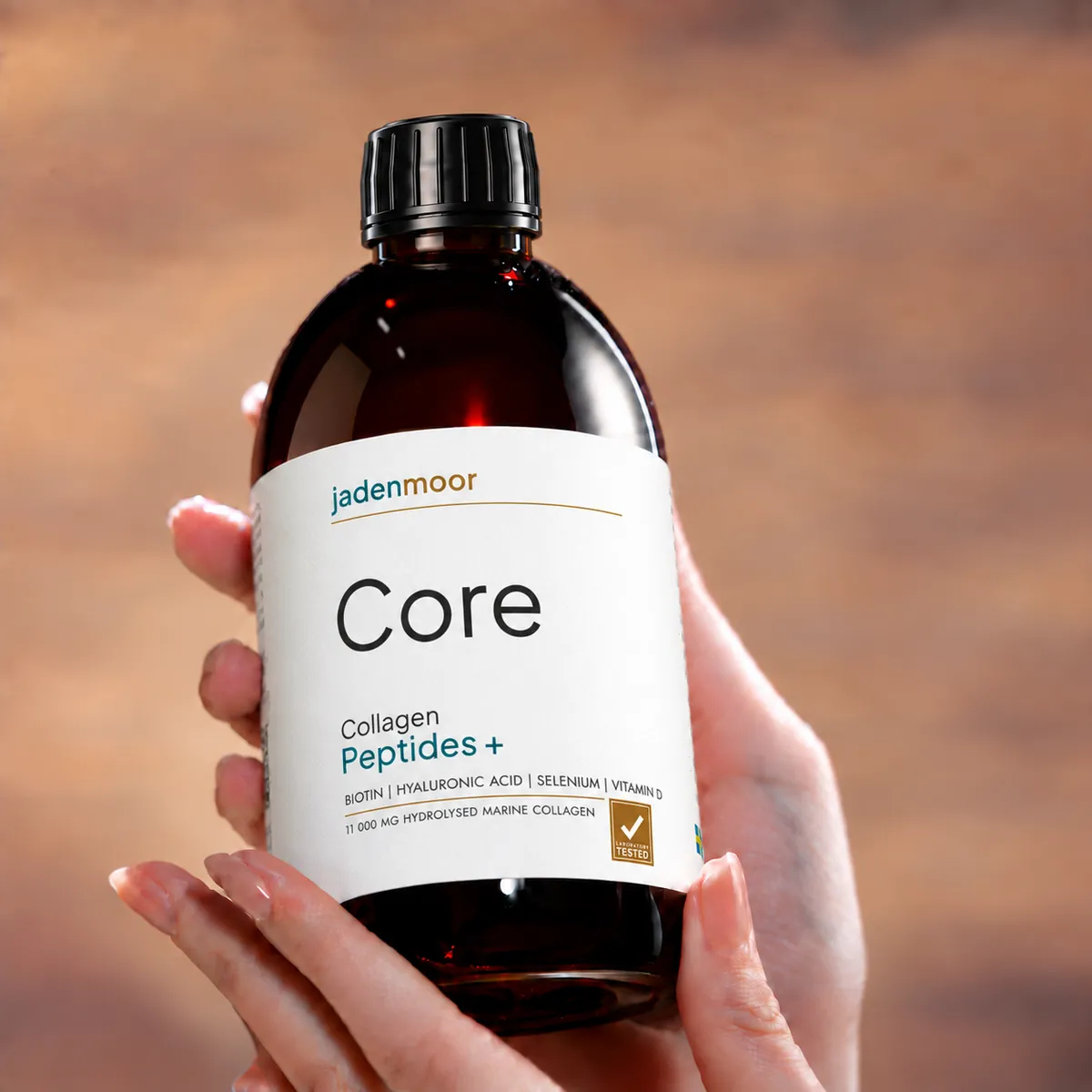
Both menopause trials used 5 g a day. One portion of Core™ holds 11,000 mg of hydrolysed marine collagen, types I and III, in a sugar-free drink with a natural berry flavour.9

assets/img/blog/mp-life.webpWhat about hair and nails at menopause?
A change in hair at menopause is common and usually slight: in one study of 178 postmenopausal women in Thailand, 52.2% had female pattern hair loss, and 73.2% of those cases were the mildest grade.10
Our own trial asked about everyday hair and nails. When 106 women took our liquid marine collagen for 8 weeks, 86% reported healthier hair and 76% reported stronger nails.9 Core™ also carries biotin and selenium, the nutrients with authorised claims for normal hair and nails, which are set out in the next section. The hair research has its own home in our article on collagen for hair.
What is in Core™ for the menopause years?
Core™ pairs 11,000 mg of marine collagen with vitamin C, biotin, selenium, vitamin B6 and vitamin D, the vitamins and minerals with authorised claims for skin, hair, nails, hormonal activity and bones. Each portion gives you:9,11
- Marine collagen, 11,000 mg. Hydrolysed, types I and III, with 9.9 g of protein in the portion.
- Vitamin C, 120 mg. Vitamin C contributes to normal collagen formation for the normal function of skin.
- Biotin, 5,000 µg. Biotin contributes to the maintenance of normal skin. Biotin also contributes to the maintenance of normal hair.
- Selenium, 27.5 µg. Selenium contributes to the maintenance of normal hair. Selenium also contributes to the maintenance of normal nails.
- Vitamin B6, 1.7 mg. Vitamin B6 contributes to the regulation of hormonal activity.
- Vitamin D, 60 µg. Vitamin D contributes to the maintenance of normal bones.
- Hyaluronic acid and silica, 50 mg of each. Alongside vitamin B5 and vitamin B12.
All of it sits in a single berry-flavoured portion that is sugar free and fat free. You can read the complete label on the Core™ product page.
What did women notice after 8 weeks?
After 8 weeks of our liquid marine collagen every day, 81% of 106 women reported firmer skin, 95% felt the appearance of their skin improved and 89% reported more moisture and glow. Firmness came through strongly when we asked them what changed.9
Women in that trial reported visible results in as little as 4 weeks, with further improvement by week 8.9 For the week-by-week picture, see how long collagen takes to work.
A separate clinical study put the skin of 10 women under imaging before and after 8 weeks on our liquid marine collagen, and it showed a visible reduction in eye wrinkles, forehead wrinkles, spots, pigmentation and redness, with improved skin texture.9
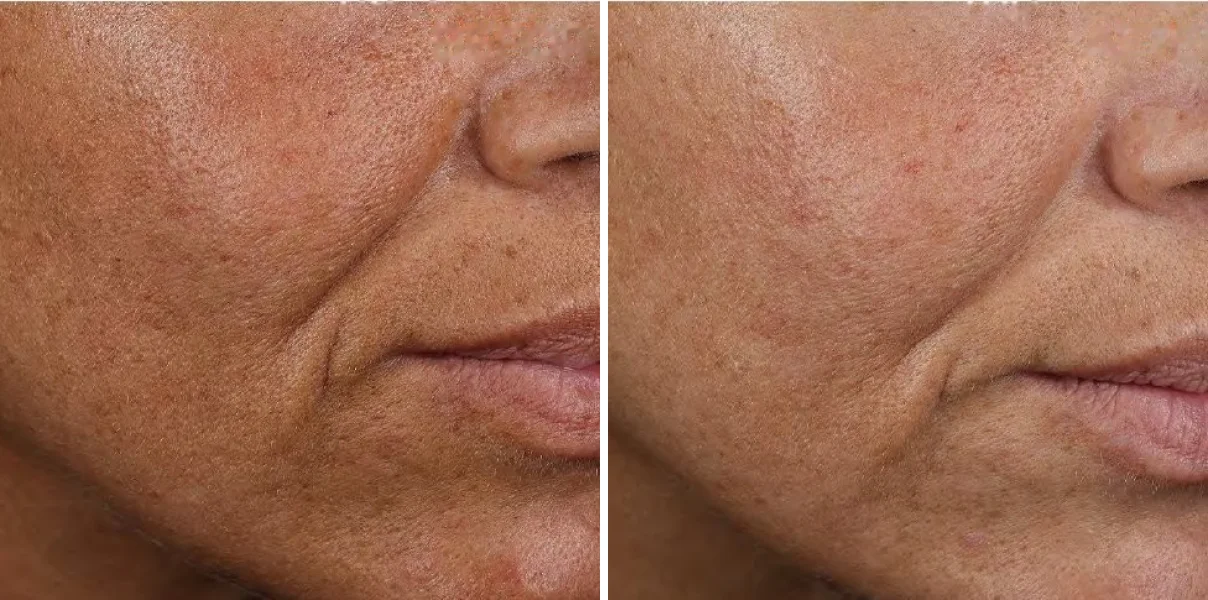
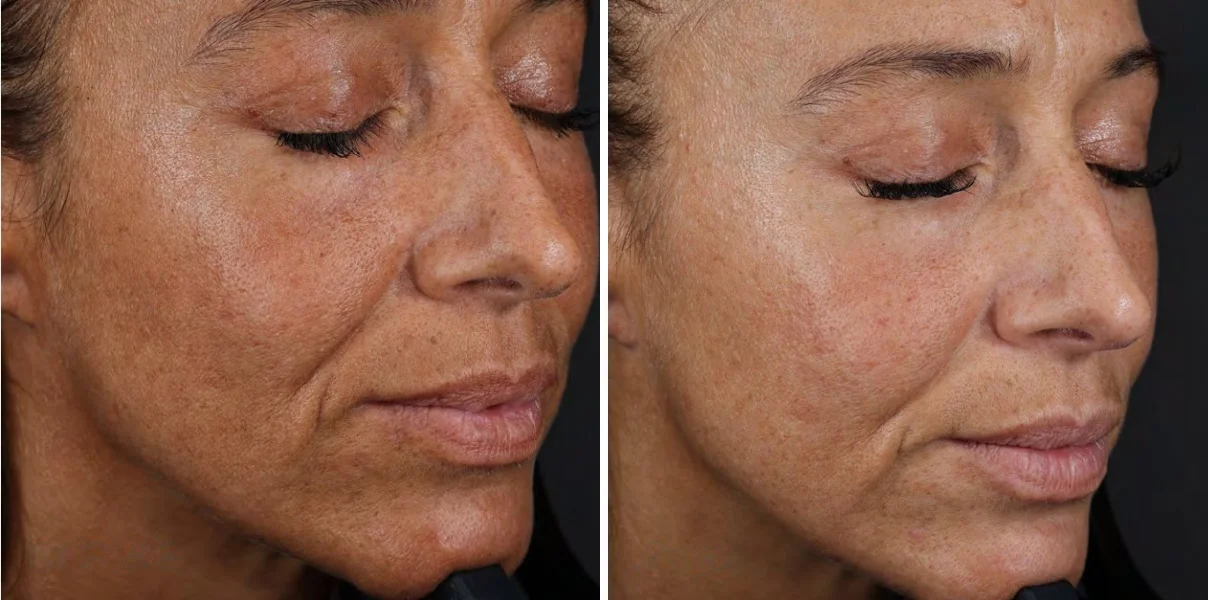
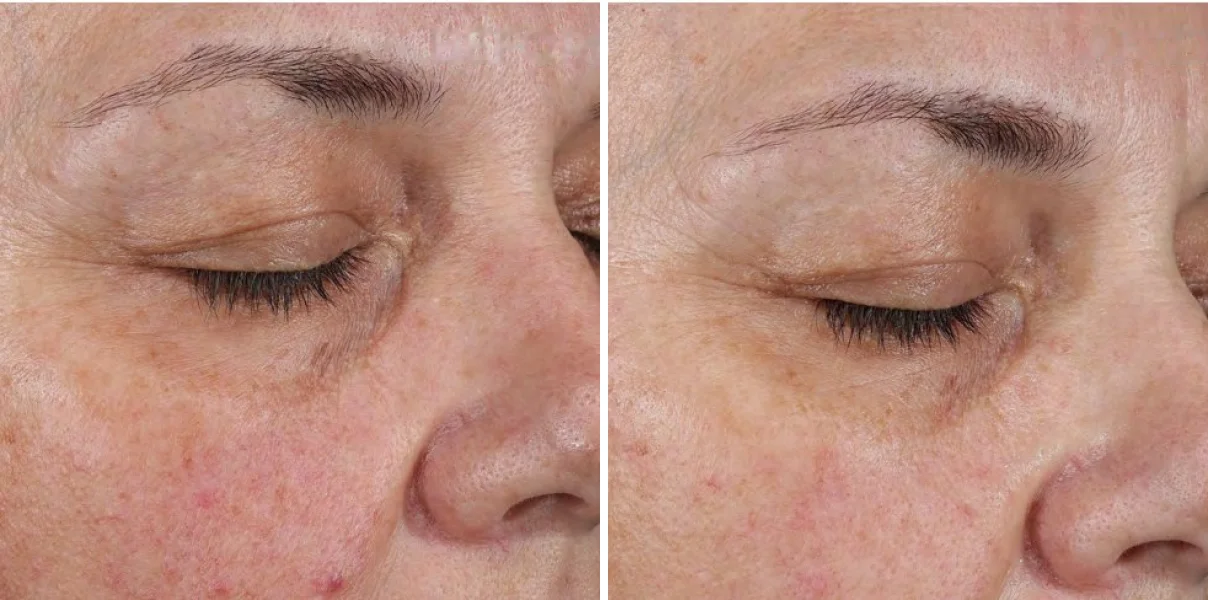
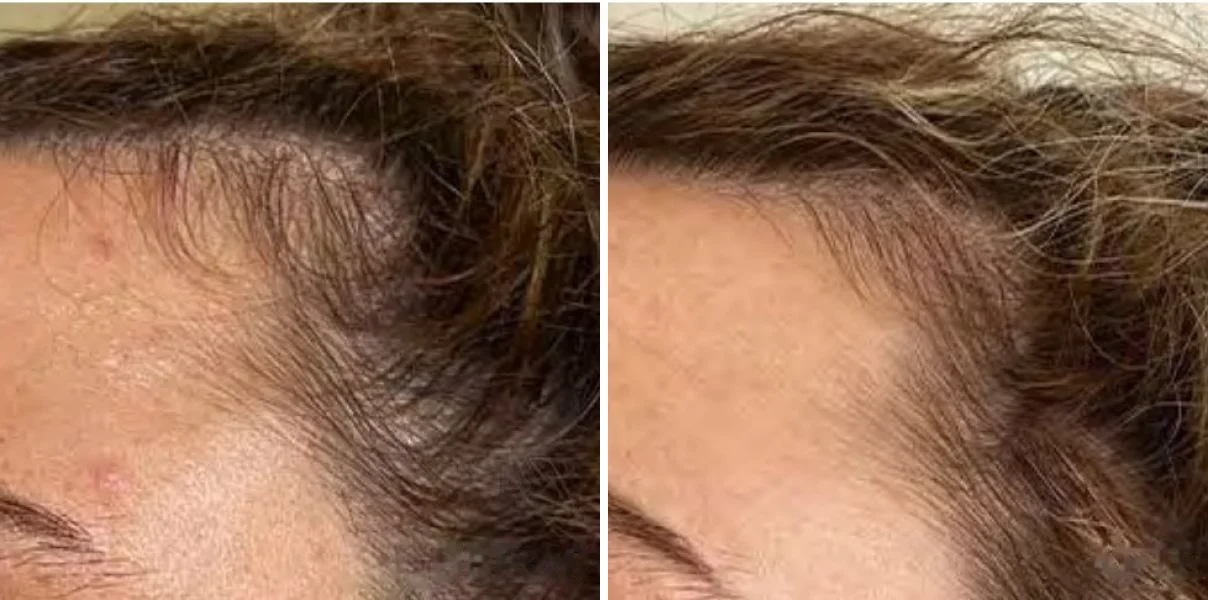
Participants in the 8-week user trial of our liquid marine collagen, photographed before and after.
What women say about collagen in midlife
In the accounts below, women describe more hydrated, plumper and glowing skin and fuller hair, and one calls her nails the best she had ever had, which echoes the trial results closely.
“My nails were the best I had ever had in my whole life.”
She began marine collagen after turning 40. Her skin was more hydrated inside the first month, and by month six her hair felt thicker and fuller too.
Charlotte DormonWriting in Hip & Healthy12
“My skin looks great, with no fine lines. I'm 45 and will definitely keep using it.”
★★★★★
FrédériqueVerified purchase · Amazon, France · 18 May 2024
“And truthfully? My skin looks better than ever.”
She calls herself a sceptic. Two months of marine collagen every day left her skin plump, glowing and healthy.
Shannon LawlorBeauty editor, writing in Marie Claire UK13
Independent first-person accounts of marine collagen published by the outlets named, and a verified buyer review of our liquid marine collagen as sold under our manufacturer's own label.
How do you take collagen during menopause?
- One portion a day. Shake the pack, pour into the cap and drink it straight, or stir it into water or a smoothie.
- Daily, without gaps. The trials in menopausal and postmenopausal women both ran on a dose taken each day, and so did ours.
- For a full course. Elasticity moved in 4 weeks in the postmenopausal trial, and women in our trial kept improving to week 8.
- Chilled. Keep the pack in the fridge once opened.
Questions about collagen and menopause
Does collagen help with menopause?
In two placebo-controlled trials of menopausal and postmenopausal women, daily collagen improved skin elasticity. In a placebo-controlled trial of 36 postmenopausal women, 5 g of marine collagen hydrolysate a day improved cheek skin elasticity in 4 weeks. In a second trial, in menopausal women aged 45 to 60, skin elasticity rose 12.23% from baseline over 6 months on 5 g of fish collagen a day.
Why does skin change so much after menopause?
Skin changes so much after menopause because its collagen falls quickly, with as much as 30% of skin collagen lost in the first five years. A review put the yearly fall in oestrogen-deficient women after menopause at about 2% for skin collagen and about 1.13% for skin thickness.
Is marine collagen good for menopausal skin?
Yes, marine collagen hydrolysate was the collagen in the trial that found better elasticity in postmenopausal women after 4 weeks. Type I collagen accounts for 80% to 90% of the collagen in skin, and the marine collagen in Core™ is types I and III.
How long does collagen take to work after menopause?
The trials point to 4 to 8 weeks: cheek skin elasticity was already better than placebo at 4 weeks in the trial of postmenopausal women, and women in our own trial reported visible results in as little as 4 weeks, with more by week 8.
When should I start taking collagen, in perimenopause or after?
You can start collagen in perimenopause or after, whenever you notice the change, as the trials found better elasticity both in menopausal women aged 45 to 60 and in postmenopausal women. The first five years after menopause are when skin collagen changes most, which makes them a good time to have the habit in place.
What else is in Core™ for menopause?
Besides 11,000 mg of marine collagen, each portion has vitamin C, biotin, selenium, vitamin B6 and vitamin D. Vitamin B6 contributes to the regulation of hormonal activity. Vitamin D contributes to the maintenance of normal bones, and vitamin C contributes to normal collagen formation for the normal function of skin.