The EU list of permitted claims sets out which nutrients may use the word. Among the nutrients in Core™, vitamin C, biotin, pantothenic acid, vitamin B6 and vitamin B12 each contribute to normal energy-yielding metabolism.
- What the phrase means. Energy-yielding metabolism is label language for how your body turns food into energy.
- Biotin has a second line. Biotin contributes to normal macronutrient metabolism.
- So does vitamin B6. Vitamin B6 contributes to normal protein and glycogen metabolism.
of 106 women found our liquid marine collagen easy to include in their daily routine over an 8-week user trial.
- 89%reported more moisture and glow
- 81%reported firmer skin
- 76%reported stronger nails
Which vitamins are involved in metabolism?
On a food label, the vitamins in Core™ linked to energy-yielding metabolism are vitamin C, biotin, vitamin B5 (pantothenic acid), vitamin B6 and vitamin B12, a list set by law. The EU publishes the health wording a nutrient is permitted to carry on a food, and a nutrient either appears beside the word metabolism there or it does not.1
Core™ contains five nutrients that appear there for energy-yielding metabolism: vitamin C, biotin, vitamin B5 (also called pantothenic acid), vitamin B6 and vitamin B12.2 The authorised sentence is the same for all of them, so one line covers it. Pantothenic acid, vitamin B6, vitamin B12, biotin and vitamin C each contribute to normal energy-yielding metabolism.1
Most of that list comes from one family. The B vitamins are a group of eight water-soluble vitamins, and the author of a scientific review of the family reported that they act as coenzymes in a large share of the body's enzymatic processes, including the reactions cells use to produce energy.3 A coenzyme is a helper molecule that works alongside an enzyme.
What does "energy-yielding metabolism" mean?
Energy-yielding metabolism is how your body turns food into energy. The official phrase reads more heavily than it needs to.
We use the phrase in that sense throughout this article. The energy itself comes from your food. The vitamins named above are the ones with authorised wording for the process, and the word "normal" sits in every line of it.
Three more phrases from the same list appear further down, each tied to its own nutrient: macronutrient metabolism, protein and glycogen metabolism, and red blood cell formation.

assets/img/blog/mt-table.webpWhat does each B vitamin do?
Vitamin B5 helps make coenzyme A, vitamin B6 takes part in more than 100 enzyme reactions, mostly concerned with protein metabolism, and vitamin B12 works as a cofactor for two enzymes. The cards below give what the reference sources say about each, with the amount of each in a portion of Core™.2
The vitamin behind coenzyme A
Vitamin B5 is a water-soluble B vitamin whose main job is to help make coenzyme A, written CoA for short.4 EFSA describes pantothenic acid, as a component of CoA, as having central roles in energy, carbohydrate, protein and lipid metabolism.5
5 mg per portion · 83% NRV
More than 100 enzyme reactions
Vitamin B6 is a water-soluble vitamin. Its active coenzyme forms take part in more than 100 enzyme reactions, and most of those are concerned with protein metabolism.6
1.7 mg per portion · 121% NRV
A cofactor for two enzymes
Vitamin B12 is a water-soluble vitamin that works as a cofactor for two enzymes, methionine synthase and L-methylmalonyl-CoA mutase. It is required for healthy red blood cell formation and DNA synthesis.7
24 µg per portion · 960% NRV
For vitamin B5 the paper trail is short. EFSA concluded that a cause and effect relationship is established between pantothenic acid and normal energy-yielding metabolism.5 The label line rests on that opinion.
Two of the three carry a further authorised line about blood.1
- Vitamin B6. Vitamin B6 contributes to normal red blood cell formation.
- Vitamin B12. Vitamin B12 contributes to normal red blood cell formation.
Where does biotin fit?
Biotin belongs here because its reference description is about metabolism, although you may know it from hair and skin labels. Biotin is a water-soluble vitamin that serves as a cofactor for five carboxylase enzymes, and those enzymes catalyse critical steps in the metabolism of fatty acids, glucose and amino acids.8
Fats, carbohydrates and protein are the macronutrients, the three big groups on any nutrition panel. That is where biotin's own line sits: biotin contributes to normal macronutrient metabolism.1 It shares the general line as well, since biotin contributes to normal energy-yielding metabolism.1
One portion of Core™ has 5,000 µg of biotin.2 If you came to biotin for its beauty reputation, that side has its own article: biotin for hair, skin and nails.
What about protein?
Vitamin B6 is the vitamin named for protein on the authorised list. Vitamin B6 contributes to normal protein and glycogen metabolism.1 It is the only nutrient in Core™ with this wording.
A Core™ portion supplies 1.7 mg of vitamin B6, which is 121% NRV.2
As a separate product fact, one portion of Core™ has 9.9 g of protein.2 We list it so you can read the label in full.
What is in one Core™ portion?
One portion of Core™ provides 5 mg of vitamin B5, 1.7 mg of vitamin B6, 24 µg of vitamin B12, 5,000 µg of biotin and 120 mg of vitamin C, set side by side in the table.2 The reference intake is the daily figure EU food labels use to work out % NRV.9 It is a labelling reference, the yardstick behind the percentage. The last column quotes the authorised wording.1
Five nutrients in Core™ with authorised metabolism wording
Amount per portion, the EU reference intake used on labels, and the permitted claims that mention metabolism.
| Nutrient | What it is | In one portion | EU reference intake | Authorised claim |
|---|---|---|---|---|
| Vitamin B5 (pantothenic acid) | A water-soluble B vitamin whose main job is to help make coenzyme A.4 | 5 mg (83% NRV) | 6 mg | Pantothenic acid contributes to normal energy-yielding metabolism. |
| Vitamin B6 | A water-soluble vitamin whose active coenzyme forms take part in more than 100 enzyme reactions.6 | 1.7 mg (121% NRV) | 1.4 mg | Vitamin B6 contributes to normal energy-yielding metabolism. Vitamin B6 contributes to normal protein and glycogen metabolism. |
| Vitamin B12 | A water-soluble vitamin that works as a cofactor for two enzymes.7 | 24 µg (960% NRV) | 2.5 µg | Vitamin B12 contributes to normal energy-yielding metabolism. |
| Biotin | A water-soluble vitamin that serves as a cofactor for five carboxylase enzymes.8 | 5,000 µg | 50 µg | Biotin contributes to normal energy-yielding metabolism. Biotin contributes to normal macronutrient metabolism. |
| Vitamin C | The one vitamin in this table from outside the group described above. | 120 mg (150% NRV) | 80 mg | Vitamin C contributes to normal energy-yielding metabolism. |
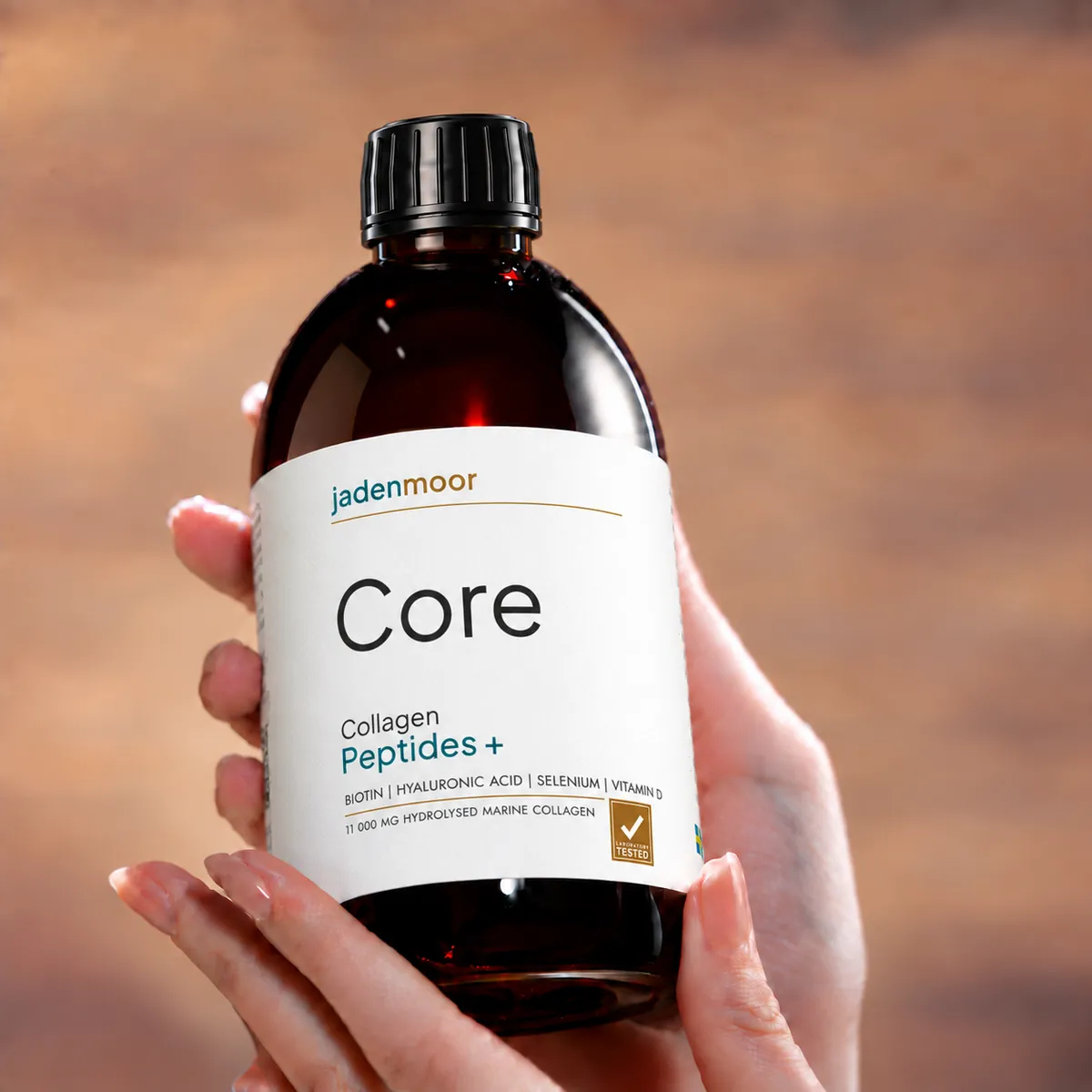
All five arrive in the same small pour as 11,000 mg of hydrolysed marine collagen, so one pour covers the list.2 The complete label is on the Core™ product page.
Two neighbouring topics belong to other articles. Selenium contributes to the normal thyroid function, and our guide to selenium and the thyroid covers it.1 Vitamin C, pantothenic acid, vitamin B6 and vitamin B12 each contribute to the reduction of tiredness and fatigue, the subject of vitamins for tiredness and energy.1
What did women in our trial report?
Women in our user trial reported more energy, and after 8 weeks of our liquid marine collagen daily, 99% of the 106 found it easy to include in their daily routine and 89% reported more moisture and glow.2 These are results for the whole drink as the women experienced it.
found it easy to include in their daily routine.
reported more moisture and glow.
reported firmer skin.
Participants in the trial also reported more energy.2 Women reported visible results in as little as 4 weeks, with further improvement by week 8.2


Participants in the 8-week user trial of our liquid marine collagen, photographed before and after.
“The taste is amazing and it is sugar free! Love what it does to my hair, nails and skin.”
★★★★★
Suzanne H.Verified purchase · Amazon, United Kingdom · 26 August 2024
“My skin looks great, with no fine lines. I'm 45 and will definitely keep using it.”
★★★★★
FrédériqueVerified purchase · Amazon, France · 18 May 2024
Verified buyer reviews of our liquid marine collagen, as sold under our manufacturer's own label.
The routine is one portion a day: shake the pack, pour into the cap, then take it straight or stirred into water or a smoothie.2
Questions about B vitamins and metabolism
Which vitamins help turn food into energy?
Five of the nutrients in Core™ are named for it on the EU list of permitted claims: pantothenic acid (vitamin B5), vitamin B6, vitamin B12, biotin and vitamin C each contribute to normal energy-yielding metabolism. That phrase means how your body turns food into energy.
What do B vitamins do in metabolism?
The author of a review of the B vitamins reported that they act as coenzymes in a large share of the body's enzymatic processes, including the reactions cells use to produce energy. There are eight B vitamins, all water-soluble.
Is biotin involved in metabolism?
Yes, by its reference description and by its authorised wording. Biotin serves as a cofactor for five carboxylase enzymes that catalyse steps in the metabolism of fatty acids, glucose and amino acids. Biotin contributes to normal macronutrient metabolism.
Which vitamin is linked to protein metabolism?
Vitamin B6. Its active coenzyme forms take part in more than 100 enzyme reactions, mostly concerned with protein metabolism. Vitamin B6 contributes to normal protein and glycogen metabolism.
How much vitamin B12 is in one Core™ portion?
24 µg per portion, which is 960% NRV. The EU reference intake for vitamin B12 on labels is 2.5 µg. Vitamin B12 contributes to normal red blood cell formation.
Which B vitamins are in Core™?
Core™ carries vitamin B5 at 5 mg, vitamin B6 at 1.7 mg, vitamin B12 at 24 µg and biotin at 5,000 µg in each portion. Vitamin C is there too, at 120 mg. One portion a day is the serving.