EFSA concluded that a cause and effect relationship has been established between dietary selenium intake and normal thyroid function. The authorised wording is short: selenium contributes to the normal thyroid function.
- Where it gathers. The thyroid gland holds a higher concentration of selenium than any other organ in the body.
- 25 selenoproteins. Selenium is built into 25 selenoproteins in the human body, with roles that include thyroid hormone metabolism.
- 27.5 µg per portion. That is 50% of the EU nutrient reference value of 55 µg per day, in every portion of Core™.
of 106 women taking our liquid marine collagen daily for 8 weeks found it easy to include in their daily routine.
- 27.5 µgselenium in one Core™ portion, 50% NRV
- 95%felt the appearance of their skin improved
- 89%reported more moisture and glow
What does selenium do for the thyroid?
Selenium has an authorised EU claim for normal thyroid function, and the three enzymes that activate and deactivate thyroid hormones are selenoproteins with selenium built in. Europe keeps a list of permitted health claims made on foods, and a mineral can only be linked to a part of the body if that list allows it, in the list's own words. For selenium and the thyroid the entry reads: selenium contributes to the normal thyroid function.1
Before a claim reaches the list, the European Food Safety Authority (EFSA) weighs the science behind it. On selenium, EFSA concluded that a cause and effect relationship has been established between dietary selenium intake and normal thyroid function.2
We quote the wording as written throughout this article, because the exact words are the ones the evidence stands behind. Underneath them sits some biology, which we explain next, along with where Core™ fits in.
Why does the thyroid hold so much selenium?
The thyroid's selenium is tied to thyroid hormone metabolism, one of the roles of the selenoproteins that selenium is built into, and the gland holds a higher concentration of selenium than any other organ in the body.3 For a mineral whose reference value is counted in micrograms, that is a striking place to gather.
Your body builds selenium into 25 selenoproteins, which means proteins with selenium as part of their structure. According to the US National Institutes of Health fact sheet on the mineral, these proteins play roles in thyroid hormone metabolism, DNA synthesis and protection from oxidative damage.3
Thyroid hormone metabolism is the part EFSA examined. Its opinion behind the thyroid claim rests on this role of selenium in thyroid hormone metabolism.2 The next section shows what that work looks like.
More concentrated in the thyroid than in any other organ
The fact sheet for health professionals states that the thyroid gland has a higher concentration of selenium than any other organ in the body.3
NIH Office of Dietary Supplements · selenium fact sheet
25 selenoproteins
Selenium is built into 25 selenoproteins. Their roles include thyroid hormone metabolism, DNA synthesis and protection from oxidative damage.3
NIH Office of Dietary Supplements · selenium fact sheet
Three deiodinases, all selenoproteins
The three iodothyronine deiodinases, the enzymes that activate and deactivate thyroid hormones, are selenoproteins.2
EFSA scientific opinion · EFSA Journal 2009;7(9):1220
Cause and effect established
EFSA concluded that a cause and effect relationship has been established between dietary selenium intake and normal thyroid function.2
EFSA scientific opinion · EFSA Journal 2009;7(9):1220
How does the thyroid make its active hormone?
The thyroid releases mostly T4, and enzymes called deiodinases convert it into T3, the active form of thyroid hormone. The physiology reference StatPearls puts the split like this: the thyroid releases mostly T4, about 80%, and some T3, about 20%.4
T3 is the active form. Most of what leaves the gland is T4, so a step is needed in between. Enzymes called deiodinases convert T4 into T3.4
EFSA's opinion picks up at that point. The three iodothyronine deiodinases, the enzymes that activate and deactivate thyroid hormones, are selenoproteins.2 Both references are describing the same family of enzymes, and this role in thyroid hormone metabolism is the one EFSA's opinion on the thyroid claim rests on.
The same physiology reference adds a line about the hormone itself. Thyroid hormone affects virtually every organ system in the body and sets the basal metabolic rate, the pace at which the body uses energy at rest.4 That sentence describes the hormone, not selenium and not Core™. The wording for selenium stays where the evidence put it: selenium contributes to the normal thyroid function.

assets/img/blog/se-shot.webpHow much selenium a day, and how much is in Core™?
The reference amount is 55 µg of selenium a day, and one Core™ portion has 27.5 µg, which is 50% NRV. Food labels in the EU measure minerals against this nutrient reference value, shortened to NRV, and for selenium it is set at that daily figure.5 It is a small number: selenium is a mineral measured in micrograms, not milligrams.
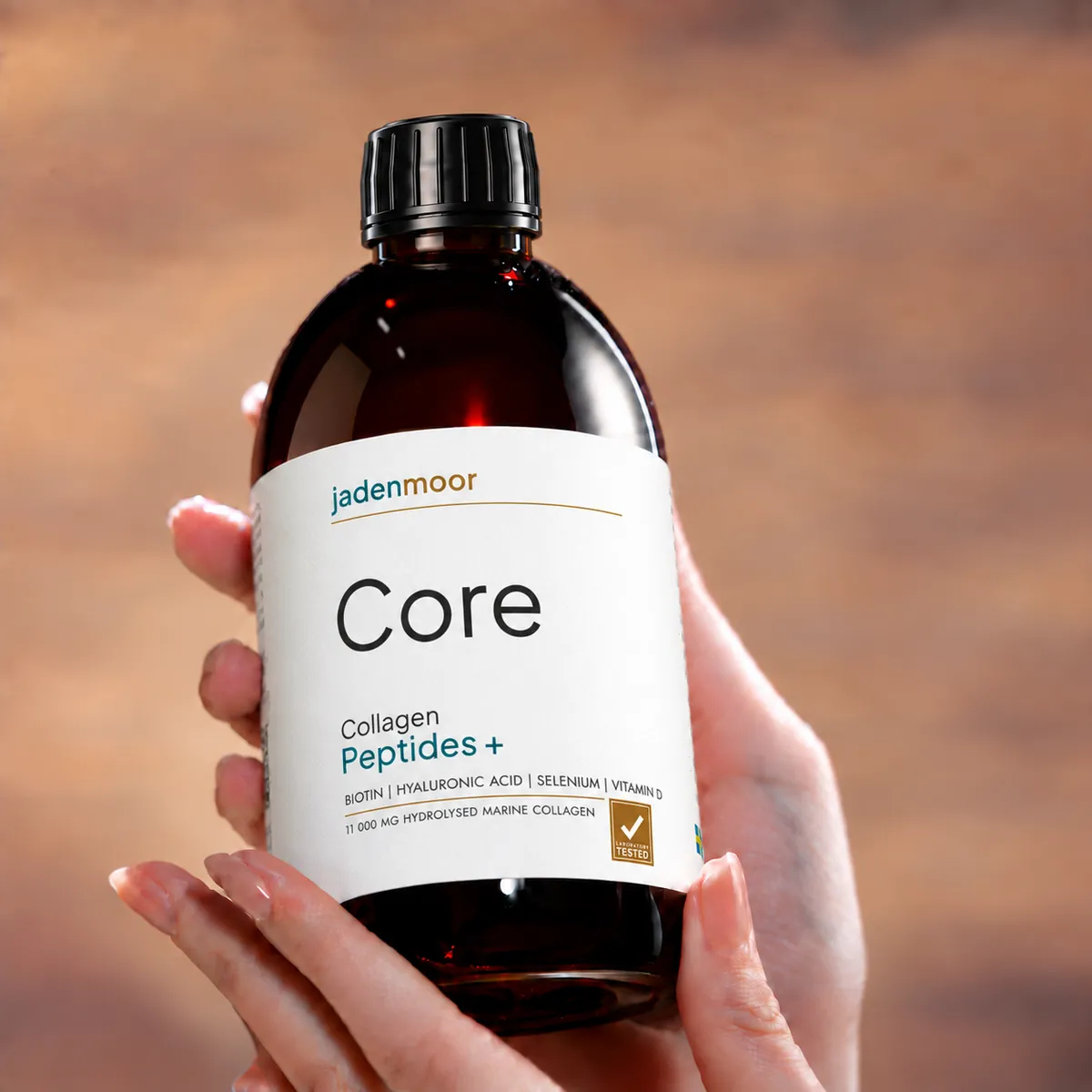
One portion of Core™ has 27.5 µg of selenium.6 Set against the reference value, that is exactly half: 50% NRV.5
the EU nutrient reference value for selenium, per day.
selenium in one portion of Core™.
of the reference value in each portion.
You do not have to count anything. The selenium is already in the pack, measured into every pour, so the cap you fill for your collagen is the same cap that carries it. You can read the full label on the Core™ product page.
What else does selenium do?
Beyond the thyroid, selenium has authorised claims for normal hair, normal nails, the normal function of the immune system and the protection of cells from oxidative stress. These four are set out below.1 The table puts them with the thyroid line, each quoted as written.
The authorised claims for selenium
Wording from the EU list of permitted health claims made on foods. One Core™ portion has 27.5 µg of selenium, 50% NRV.
| Area | Authorised wording |
|---|---|
| Thyroid | Selenium contributes to the normal thyroid function. |
| Hair | Selenium contributes to the maintenance of normal hair. |
| Nails | Selenium contributes to the maintenance of normal nails. |
| Immune system | Selenium contributes to the normal function of the immune system. |
| Cells | Selenium contributes to the protection of cells from oxidative stress. |
Hair and nails each have their own guide on this blog. For the trials and photographs, read collagen for hair and collagen for nails.
What did women report in our trial of the whole drink?
In our own trial of the whole drink, 86% of 106 women reported healthier hair and 76% reported stronger nails. They took our liquid marine collagen daily for 8 weeks and told us what they noticed.6 These are the women's own reports about the drink as a whole, set down here as they gave them.
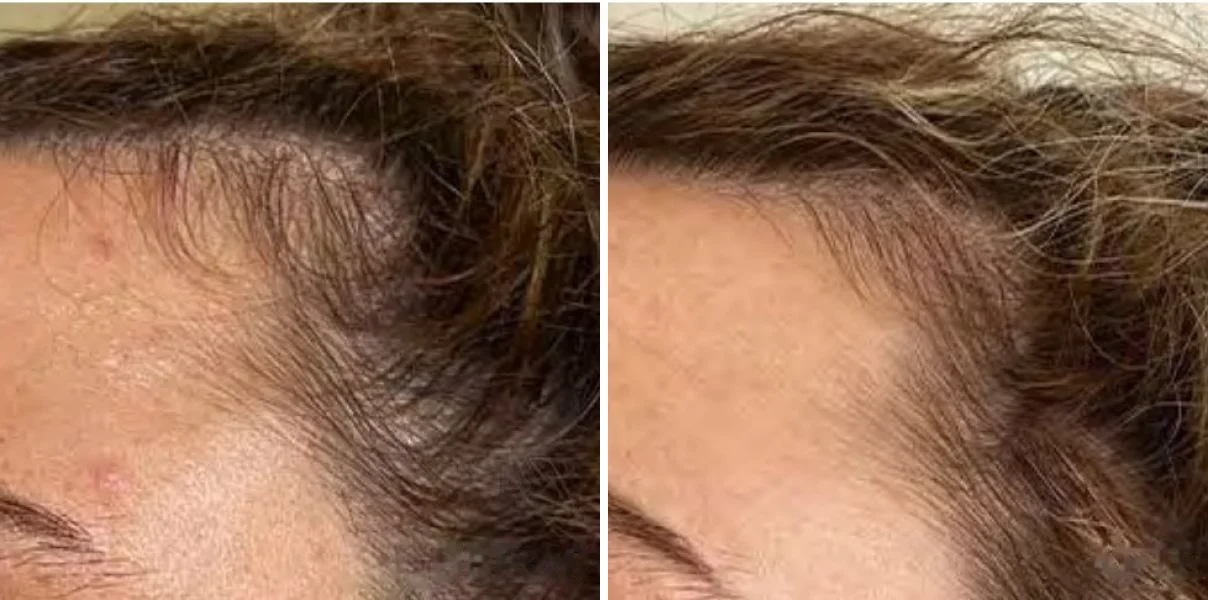
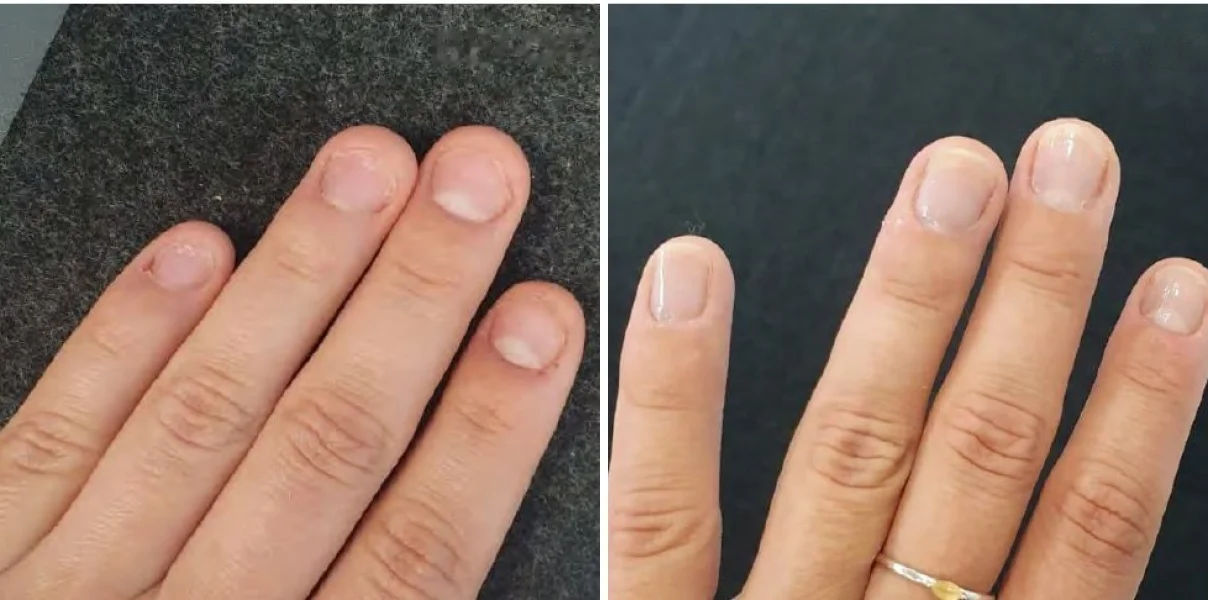
Participants in the 8-week user trial of our liquid marine collagen, photographed before and after.
“I can really see the visible changes in my skin and nails.”
★★★★★
Check4YouVerified purchase · Amazon, Germany · 27 December 2023
“The taste is amazing and it is sugar free! Love what it does to my hair, nails and skin.”
★★★★★
Suzanne H.Verified purchase · Amazon, United Kingdom · 26 August 2024
Verified buyer reviews of our liquid marine collagen, as sold under our manufacturer's own label.
What else is in the same portion?
Alongside its selenium, each portion has 11,000 mg of hydrolysed marine collagen, types I and III, with a natural berry flavour, and it is sugar free and fat free.6 Around the collagen sits a short list of nutrients, several with authorised wording of their own.1
- Vitamin B6, 1.7 mg (121% NRV). Vitamin B6 contributes to the regulation of hormonal activity. EFSA concluded that a cause and effect relationship has been established between dietary vitamin B6 intake and the regulation of hormonal activity.7
- Vitamin C, 120 mg (150% NRV). Vitamin C contributes to normal collagen formation for the normal function of skin, and vitamin C contributes to the protection of cells from oxidative stress, the same cell claim selenium holds.
- Biotin, 5,000 µg. Biotin contributes to the maintenance of normal hair, which pairs it with selenium on that line of the table.
- Vitamin D, 60 µg. Vitamin D contributes to the normal function of the immune system, another line it has in common with selenium.
- Hyaluronic acid and silica. 50 mg of each in every portion.
Vitamin B5 and vitamin B12 complete the label. Their authorised wording has its own article: the vitamins in Core™ for tiredness and energy.
Take one portion a day. Shake the pack, pour into the cap, and drink it straight or stirred into water or a smoothie. In our trial, 99% of 106 women found our liquid marine collagen easy to include in their daily routine.6
Questions about selenium and the thyroid
What does selenium do for the thyroid?
EFSA concluded that a cause and effect relationship has been established between dietary selenium intake and normal thyroid function. The authorised wording is: selenium contributes to the normal thyroid function. The enzymes that activate and deactivate thyroid hormones are selenoproteins, which have selenium built in.
How much selenium per day is the reference amount?
The EU nutrient reference value for selenium is 55 µg per day. It is the figure food labels use when they show a percentage beside a mineral.
How much selenium is in Core™?
Core™ has 27.5 µg of selenium in each portion, which is 50% NRV. It comes with 11,000 mg of hydrolysed marine collagen in the same pour.
Why is selenium linked to the thyroid in particular?
The thyroid gland holds a higher concentration of selenium than any other organ in the body. Selenium is built into 25 selenoproteins, and their roles include thyroid hormone metabolism.
What is the difference between T4 and T3?
T4 and T3 are the two forms of thyroid hormone, and T3 is the active form. The thyroid releases mostly T4, about 80%, and some T3, about 20%, and enzymes called deiodinases convert T4 into T3.
Is selenium good for hair and nails?
Selenium has authorised wording for both hair and nails on the permitted list. Selenium contributes to the maintenance of normal hair, and selenium contributes to the maintenance of normal nails.