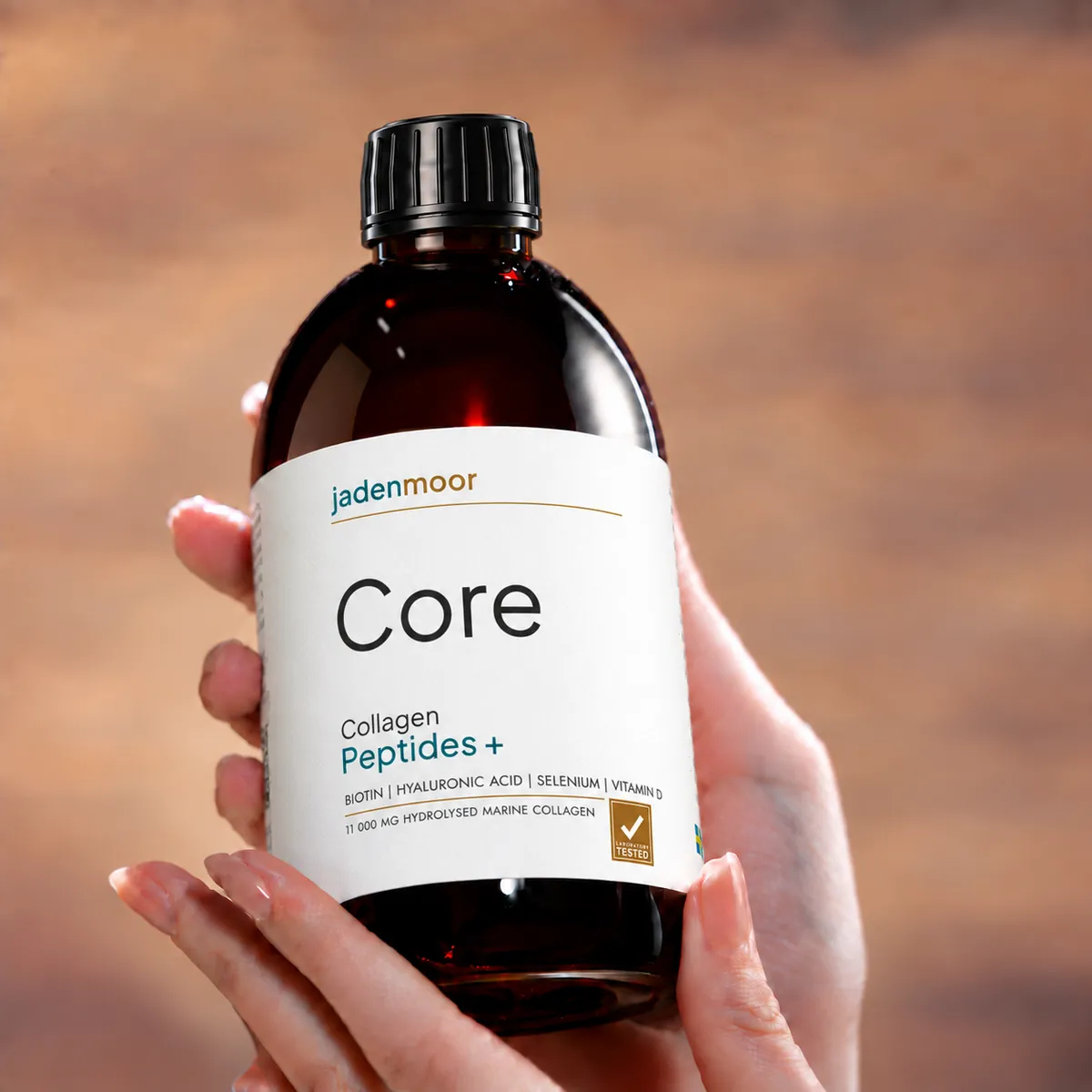
The EU list of permitted claims gives six nutrients in Core™ a line under one of three headings: energy-yielding metabolism, hormonal activity and thyroid function. The wording is general and reads the same at every stage of life.
- Energy-yielding metabolism. Vitamin C, biotin, pantothenic acid (vitamin B5), vitamin B6 and vitamin B12 each contribute to normal energy-yielding metabolism.
- Hormonal activity. Vitamin B6 contributes to the regulation of hormonal activity.
- Thyroid function. Selenium contributes to the normal thyroid function.
of 106 women said our liquid marine collagen was easy to include in their daily routine, in an 8-week user trial of the whole drink.
- 95%felt the appearance of their skin improved
- 86%reported healthier hair
- 76%reported stronger nails
Which vitamins are linked to metabolism?
Pantothenic acid (vitamin B5), vitamin B6, vitamin B12, biotin and vitamin C are the vitamins in Core™ with an authorised claim on energy-yielding metabolism. That answer comes from the one document that settles what a food is allowed to say about itself, the EU list of permitted health claims, where every line belongs to a named nutrient.1
Hold Core's label against that list and six of its nutrients, five vitamins and one mineral, have a line of their own.2 They sort under three headings.
- Energy-yielding metabolism. Five nutrients share this one: vitamin C, biotin, pantothenic acid, vitamin B6 and vitamin B12.
- Regulation of hormonal activity. One vitamin holds this line, vitamin B6.
- Normal thyroid function. This heading is selenium's, the one mineral of the six.
All of these lines are general, each naming the normal role of a nutrient in the body, and the wording does not change with your age or with the stage you are at.
What does "metabolism" mean on a supplement label?
On a supplement label, metabolism usually comes inside a set phrase such as energy-yielding metabolism, and the phrase tells you which process is meant.
The phrase you will meet most is energy-yielding metabolism. It means the way your body gets energy out of what you eat, and the energy itself is in the food.
Two narrower phrases sit next to it on the list. Macronutrient metabolism concerns fats, carbohydrates and protein, the large groups printed on any nutrition panel. Protein and glycogen metabolism is a line of its own, held by a single vitamin in Core™.
Hormonal activity and thyroid function are different phrases again, and neither contains the word metabolism. They are on this page because Core™ has a nutrient with authorised wording for each.

assets/img/blog/mm-label.webpEnergy-yielding metabolism: which five nutrients have the claim?
Biotin, pantothenic acid (vitamin B5), vitamin B6, vitamin B12 and vitamin C, five nutrients in Core™, carry the same authorised energy-yielding metabolism sentence, word for word.1 Four of them are B vitamins and the fifth is vitamin C.
The B group has eight members, every one of them water-soluble. The author of a scientific review of the group reported that B vitamins work as coenzymes in a large share of the enzymatic processes in the body, among them the reactions your cells use to produce energy.3 Each of the five has a short reference note below.
- Biotin. The NIH fact sheet lists five carboxylase enzymes that need biotin as a cofactor. Between them they catalyse critical steps in the metabolism of fatty acids, glucose and amino acids.4
- Pantothenic acid (vitamin B5). Helping to make coenzyme A is its main job.5 In EFSA's description, pantothenic acid is a component of coenzyme A and has central roles in energy, carbohydrate, protein and lipid metabolism.6
- Vitamin B6. More than 100 enzyme reactions involve its active coenzyme forms, and most of those reactions concern protein metabolism.7
- Vitamin B12. It acts as a cofactor for two enzymes, named methionine synthase and L-methylmalonyl-CoA mutase.8
- Vitamin C. It is the one name among the five from outside the B group. Vitamin C contributes to normal energy-yielding metabolism.1
For pantothenic acid the reasoning is on the record. EFSA concluded that a cause and effect relationship with normal energy-yielding metabolism is established.6
Two of the five hold a second line that names metabolism.1 Biotin contributes to normal macronutrient metabolism. Vitamin B6 contributes to normal protein and glycogen metabolism.
For the vitamin-by-vitamin read, turn to B vitamins and metabolism.
Hormonal activity: what is the vitamin B6 claim?
The authorised vitamin B6 claim on hormonal activity is one short sentence: vitamin B6 contributes to the regulation of hormonal activity.1
EFSA built the opinion behind the sentence on the active form of the vitamin, pyridoxal phosphate, known as PLP. Its reasoning rests on the role of PLP in controlling the action of a particular kind of hormone: those that work by binding to a nuclear receptor protein and modulating gene expression.9
On that basis, according to EFSA, a cause and effect relationship has been established between vitamin B6 intake from the diet and the regulation of hormonal activity.9
Pantothenic acid has a line of its own that mentions steroid hormones, and it needs quoting in full. You will find it, with the reasoning for both vitamins, in what the authorised claims say about vitamin B6, B5 and hormones.
Thyroid function: what is the selenium claim?
The authorised selenium claim on thyroid function is one sentence: selenium contributes to the normal thyroid function.1 Behind it stands an EFSA opinion, which concluded that a cause and effect relationship has been established between selenium intake from the diet and normal thyroid function.10
No other organ in the body holds selenium at a higher concentration than the thyroid gland, according to the NIH fact sheet on the mineral.11 Your body builds selenium into 25 selenoproteins, whose roles take in thyroid hormone metabolism, DNA synthesis and protection from oxidative damage.11
EFSA's opinion rests on the first of those roles. It notes that the three iodothyronine deiodinases, the enzymes that activate and deactivate thyroid hormones, are selenoproteins.10
The fuller account is in selenium and your thyroid.
What is in one Core™ portion?
One portion of Core™ holds 120 mg of vitamin C, 5,000 µg of biotin, 5 mg of vitamin B5, 1.7 mg of vitamin B6, 24 µg of vitamin B12 and 27.5 µg of selenium, as the table below sets out.2 Beside each amount is the EU reference intake, the daily figure food labels use to calculate % NRV.12 It is a reference for labelling and it is the same number for every adult. The last column quotes the authorised lines covered on this page.1
Six nutrients in Core™ and their authorised lines on this page
Amount per portion, the EU reference intake used on labels, and the permitted wording under each of the three headings.
| Nutrient | In one portion | EU reference intake | Heading | Authorised claim |
|---|---|---|---|---|
| Vitamin C | 120 mg (150% NRV) | 80 mg | Energy-yielding metabolism | Vitamin C contributes to normal energy-yielding metabolism. |
| Biotin | 5,000 µg | 50 µg | Energy-yielding metabolism | Biotin contributes to normal energy-yielding metabolism. Biotin contributes to normal macronutrient metabolism. |
| Vitamin B5 (pantothenic acid) | 5 mg (83% NRV) | 6 mg | Energy-yielding metabolism | Pantothenic acid contributes to normal energy-yielding metabolism. |
| Vitamin B6 | 1.7 mg (121% NRV) | 1.4 mg | Energy-yielding metabolism and hormonal activity | Vitamin B6 contributes to normal energy-yielding metabolism. Vitamin B6 contributes to normal protein and glycogen metabolism. Vitamin B6 contributes to the regulation of hormonal activity. |
| Vitamin B12 | 24 µg (960% NRV) | 2.5 µg | Energy-yielding metabolism | Vitamin B12 contributes to normal energy-yielding metabolism. |
| Selenium | 27.5 µg (50% NRV) | 55 µg | Thyroid function | Selenium contributes to the normal thyroid function. |
The six share the cap with the ingredient the drink is built around: 11,000 mg of hydrolysed marine collagen, types I and III, in a sugar free portion with a natural berry flavour.2 Every line of the label is set out on the Core™ product page.
What did women in our trial report?
In our user trial, 95% of 106 women felt the appearance of their skin improved and 86% reported healthier hair after taking our liquid marine collagen daily for 8 weeks, speaking for the whole drink rather than nutrient by nutrient.2
found it easy to include in their daily routine.
felt that the appearance of their skin improved.
reported healthier hair.
Beyond skin and hair, trial participants also reported more energy.2 On timing, they reported visible results in as little as 4 weeks, with further improvement by week 8.2


Participants in the 8-week user trial of our liquid marine collagen, photographed before and after.
“The taste is amazing and it is sugar free! Love what it does to my hair, nails and skin.”
★★★★★
Suzanne H.Verified purchase · Amazon, United Kingdom · 26 August 2024
“I can really see the visible changes in my skin and nails.”
★★★★★
Check4YouVerified purchase · Amazon, Germany · 27 December 2023
Verified buyer reviews of our liquid marine collagen, as sold under our manufacturer's own label.
That ease comes from a brief routine of one portion a day. Give the pack a shake, fill the cap, then drink it as it is or stir it into water or a smoothie.2 Once opened, the pack goes in the fridge.
Questions about menopause and metabolism
Which vitamins are linked to metabolism?
Among the nutrients in Core™, pantothenic acid (vitamin B5), vitamin B6, vitamin B12, biotin and vitamin C each contribute to normal energy-yielding metabolism. Biotin and vitamin B6 each hold one further metabolism line. The EU list of permitted claims names them all.
Are these claims written for menopause?
No, the authorised claims are general rather than written for menopause. Each authorised line names the normal role of a nutrient, in wording that is identical at every stage of life. Menopause is a time when many women start to read them.
What does energy-yielding metabolism mean?
Energy-yielding metabolism is label language for the way your body gets energy out of food. The food supplies the energy, and the EU list ties the phrase to named nutrients, five of which are in Core™.
Which vitamin has a claim about hormonal activity?
Vitamin B6 is the vitamin with an authorised claim about hormonal activity. The authorised sentence is that vitamin B6 contributes to the regulation of hormonal activity. EFSA's opinion on it rests on the role of pyridoxal phosphate, the active form of the vitamin.
Is selenium linked to the thyroid?
Yes, the permitted list links selenium to the thyroid in one sentence: selenium contributes to the normal thyroid function. The thyroid gland holds a higher concentration of selenium than any other organ in the body.
How much of each nutrient is in one Core™ portion?
A portion has vitamin C at 120 mg, biotin at 5,000 µg, vitamin B5 at 5 mg, vitamin B6 at 1.7 mg, vitamin B12 at 24 µg and selenium at 27.5 µg. One portion a day is the serving.