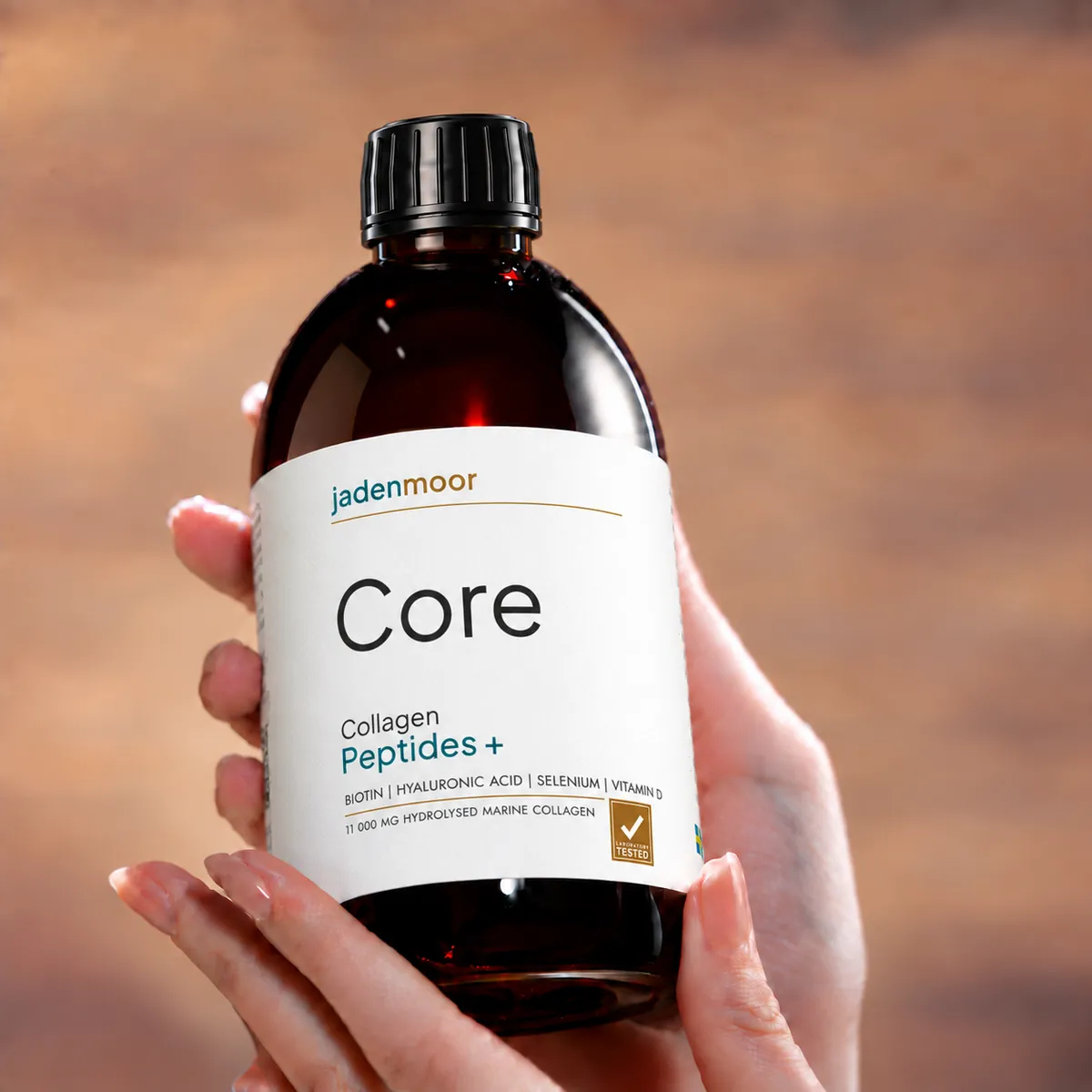
Collagen is a protein of animal connective tissue. The name vegan collagen is given to two different things, and marine collagen is collagen from fish.
- Vegan collagen, kind one: recombinant human collagen made by genetically engineered microorganisms such as yeast, as a consumer health article describes it.
- Vegan collagen, kind two: vegan "collagen-boosting" products. The same article says the body makes collagen by combining amino acids, vitamin C, zinc, copper and other nutrients.
- Core™ is marine: 11,000 mg of hydrolysed marine collagen in each portion.
of 106 women felt the appearance of their skin improved after 8 weeks on our liquid marine collagen.
- 89%reported more moisture and glow
- 87%noticed fewer fine lines and wrinkles
- 81%reported firmer skin
Is vegan collagen real collagen?
It depends on the product: in recombinant collagen the collagen is made by a microorganism, while vegan "collagen-boosting" products refer to the collagen the body makes for itself. Collagen is a protein of animal connective tissue. Harvard's Nutrition Source states that it is naturally found only in animal flesh, such as meat and fish, that contains connective tissue.1
The name vegan collagen covers two things, and a medically reviewed consumer health article describes both.2
- Recombinant collagen. In the article's words, recombinant human collagen made by genetically engineered microorganisms such as yeast.
- Nutrient products. Vegan "collagen-boosting" products. The article says the body makes its own collagen by combining amino acids, vitamin C, zinc, copper and other nutrients.
With the first kind, the collagen is made by a microorganism, and with the second, the collagen referred to is the body's own. Marine collagen is something else again, collagen from fish that is hydrolysed and taken as a supplement.
What each name refers to
Each row keeps the description given by its own source.
| Name | What it is, as its source describes it | Which collagen is meant |
|---|---|---|
| Collagen in food | Found in animal foods with connective tissue, such as tougher cuts of meat, and the bones and skin of fresh and saltwater fish.1 | The animal's |
| Marine collagen | Collagen from fish. A peer-reviewed review states that fish skin typically contains type I collagen with a high degree of purity.3 | The fish's, hydrolysed into peptides |
| Vegan collagen: recombinant | Recombinant human collagen made by genetically engineered microorganisms such as yeast.2 | Collagen made by the microorganism |
| Vegan collagen: nutrient products | Vegan "collagen-boosting" products. The article says the body makes collagen by combining amino acids, vitamin C, zinc, copper and other nutrients.2 | The body's own |
Where does collagen come from?
Collagen comes from animals, and your own body makes it too. On your plate, the foods that naturally contain collagen are animal foods with connective tissue, such as tougher cuts of meat, and the bones and skin of fresh and saltwater fish.1 The ingredient trade draws on the same origin, since commercial collagen and its derivatives such as gelatin are sourced from animal tissue.4
Then there is the collagen you carry around. StatPearls, a medical reference, describes it as the most abundant structural protein in the human body, with an amino acid composition rich in glycine and proline plus modified residues such as hydroxyproline.5 Your body builds that collagen itself from amino acids including glycine and proline, which protein foods such as fish, poultry, meat, eggs, dairy, legumes and soy supply.1
The end of that list is where plants come in. Plant foods do not supply collagen itself, but both animal and plant foods supply materials the body uses to make its own collagen.1 Legumes and soy stand in Harvard's list next to eggs and dairy. Our guide to collagen and the food you eat takes the kitchen side of this further.

assets/img/blog/vg-table.webpWhat is called vegan collagen?
Two kinds of product are sold as vegan collagen, recombinant human collagen made by genetically engineered microorganisms such as yeast and vegan "collagen-boosting" products, as the consumer health article sorts them.2 They share a name, so each gets its own heading here.
Recombinant collagen
Recombinant collagen, as the article describes it, is human collagen made by genetically engineered microorganisms such as yeast.2 Making the protein without an animal has a scientific literature behind it. In one paper, researchers produced collagen-like proteins without animals by recombinant production in the yeast Pichia pastoris.4
A review of the preparation technology goes wider and describes recombinant collagen being made in several expression systems, including the bacterium E. coli, yeast, plant cells (tobacco, corn), insect cells and mammalian cells.6 Both papers are about biomaterials, the setting in which they describe the method.
Nutrient products
The second kind is the vegan "collagen-boosting" product. The article says the body makes collagen on its own by combining amino acids, vitamin C, zinc, copper and other nutrients.2
What is marine collagen?
Marine collagen is collagen from fish. A peer-reviewed review of fish collagen states that fish skin typically contains type I collagen with a high degree of purity.3 In skin, type I makes up 80% to 90% of the collagen.7 The numerals have a page to themselves in our guide to the types of collagen.
A supplement delivers it hydrolysed, which means cut into shorter pieces. One review describes hydrolysed collagen as small peptides of low molecular weight, 3 to 6 kDa, and as highly soluble in water.8 That range is the review's general description of the ingredient.
Core™ is a marine collagen. Each portion has 11,000 mg of hydrolysed marine collagen, types I and III, and the collagen is hydrolysed to a low molecular weight of about 1,500 daltons.9 If you are choosing between fish and cattle as a source, we compare them in marine or bovine collagen.
Which nutrients does the body use to make collagen?
The body builds collagen from amino acids including glycine and proline, and the process also needs vitamin C and zinc, according to Harvard's Nutrition Source.1
Vitamin C is the one to know by name. The NIH Office of Dietary Supplements states that vitamin C is required for the biosynthesis of collagen. It adds that humans, unlike most animals, cannot make vitamin C in the body, so it has to come from the diet.10
An EFSA scientific opinion gives the chemistry. In collagen synthesis, vitamin C acts as a coenzyme for the enzymes that add hydroxyl groups to the amino acids proline and lysine in the collagen molecule, and this hydroxylation stabilises collagen's triple-helix structure.11
EU law turns this into an authorised claim, and the wording is fixed: Vitamin C contributes to normal collagen formation for the normal function of skin.12 The same form of words is authorised for bones, cartilage, gums, teeth and blood vessels.12 Core™ has 120 mg of vitamin C in every portion, which is 150% of the nutrient reference value.9
Is Core™ vegan?
No, Core™ is made with marine collagen, and marine collagen is not plant-based, so Core™ is not suitable for a vegan diet. The list below shows what a portion holds, so you can set it against the way you eat.9
- The collagen. 11,000 mg of hydrolysed marine collagen, types I and III, in one portion.
- The protein. 9.9 g per portion. Core™ is sugar free and fat free.
- The flavour. Natural berry, ready to drink from the cap.
- The routine. Shake, pour into the cap, and drink it straight or stir it into water or a smoothie. Keep the pack in the fridge once opened.
The full ingredient list is on the Core™ product page.
What did women report on our liquid marine collagen?
In our user trial of our liquid marine collagen, 95% of 106 women felt the appearance of their skin improved, 89% reported more moisture and glow and 86% reported healthier hair after 8 weeks of daily use. Definitions tell you what a product is, and a trial tells you what the people who took it noticed about their skin, hair and nails.9 They reported visible results in as little as 4 weeks, with further improvement by week 8.9
felt that the appearance of their skin improved.
reported more moisture and glow.
reported healthier hair.
Nails were on the questionnaire as well, and 76% of the women reported stronger nails, while 99% found the drink easy to include in their daily routine.9 The photographs below are of women who took part in that trial.
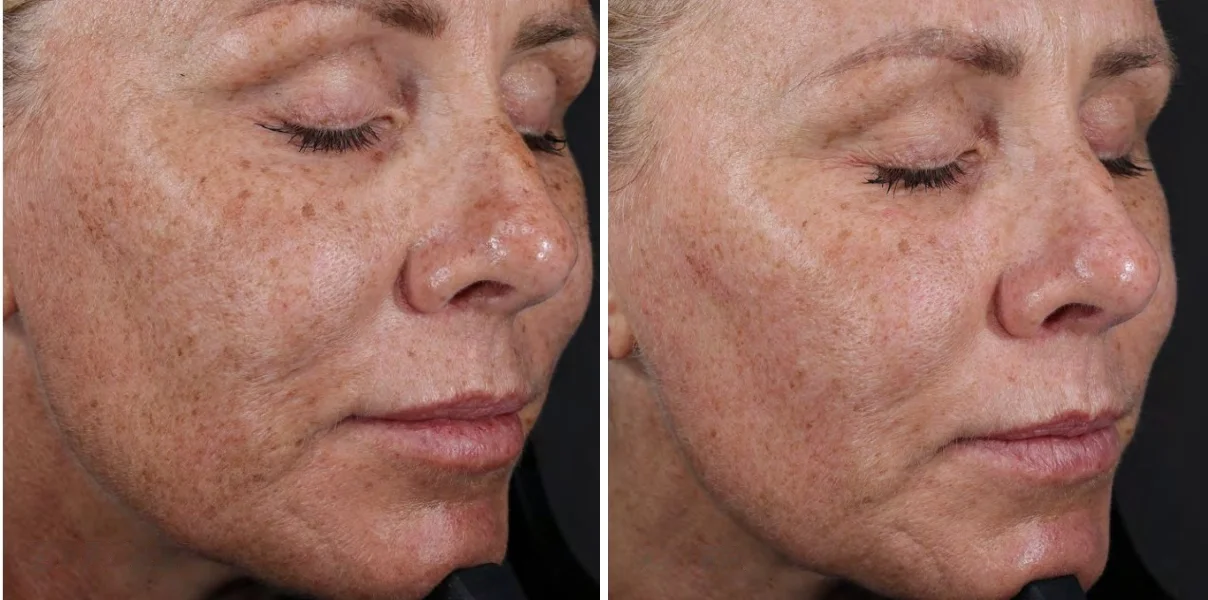

Participants in the 8-week user trial of our liquid marine collagen, photographed before and after.
“I can really see the visible changes in my skin and nails.”
★★★★★
Check4YouVerified purchase · Amazon, Germany · 27 December 2023
“My skin looks great, with no fine lines. I'm 45 and will definitely keep using it.”
★★★★★
FrédériqueVerified purchase · Amazon, France · 18 May 2024
“The taste is amazing and it is sugar free! Love what it does to my hair, nails and skin.”
★★★★★
Suzanne H.Verified purchase · Amazon, United Kingdom · 26 August 2024
Verified buyer reviews of our liquid marine collagen, as sold under our manufacturer's own label.
Questions about vegan and marine collagen
Is vegan collagen real collagen?
It depends on the product, since a consumer health article describes two things under the name: recombinant human collagen made by genetically engineered microorganisms such as yeast, and vegan "collagen-boosting" products.
Do plants contain collagen?
No, plant foods do not supply collagen itself, which is a protein of animal connective tissue, but both animal and plant foods supply materials the body uses to make its own collagen, according to Harvard's Nutrition Source.
What is plant-based collagen made of?
Vegan "collagen-boosting" products are built around nutrients rather than collagen: a consumer health article describes them and says the body makes collagen by combining amino acids, vitamin C, zinc, copper and other nutrients. Recombinant collagen is a separate kind, made by genetically engineered microorganisms such as yeast.
What is marine collagen made from?
Marine collagen is made from fish. A peer-reviewed review states that fish skin typically contains type I collagen with a high degree of purity. For a supplement it is hydrolysed into small peptides.
Is Core™ suitable for vegans?
No, Core™ is made with marine collagen, and marine collagen is not plant-based. Each portion has 11,000 mg of hydrolysed marine collagen, types I and III.
What does vitamin C have to do with collagen?
Vitamin C is required for the biosynthesis of collagen, according to the NIH Office of Dietary Supplements. The authorised EU wording is: Vitamin C contributes to normal collagen formation for the normal function of skin. Core™ has 120 mg of vitamin C per portion.