The authors of a 2024 study in six healthy adults describe collagen hydrolysates as digested and absorbed. In an earlier study, after volunteers drank hydrolysed collagen, collagen peptides appeared in their blood and peaked within one to two hours.
- Digested, then found in blood. After people ingested gelatin hydrolysate, nine hydroxyproline-containing di- and tripeptides were quantified in blood plasma.
- As amino acids and as peptides. In a 2024 study of six healthy adults, a single 10 g dose of collagen hydrolysate raised blood levels of both.
- Cut small beforehand. A review puts native collagen at roughly 285 to 300 kDa and the peptides made from it at about 3 to 6 kDa.
of 106 women felt the appearance of their skin improved after 8 weeks on our liquid marine collagen.
- 89%reported more moisture and glow
- 87%noticed fewer fine lines and wrinkles
- 81%reported firmer skin
Is collagen absorbed or just digested?
Collagen is both digested and absorbed, according to the authors of a 2024 blood study, who describe collagen hydrolysates as taken up both as free amino acids and in peptide-bound form. In an early study of this kind, volunteers drank hydrolysed collagen and gave blood afterwards. Collagen peptides showed up in the samples and reached their peak within one to two hours.1 The drink in that study was a gelatin hydrolysate.
A 2024 randomised, double-blind crossover study came at it again in six healthy adults. Each took a single 10 g dose of collagen hydrolysate. Afterwards their blood carried more free hydroxyproline and more collagen-derived peptides, including two named Pro-Hyp and Hyp-Gly, and that held for all sources and molecular weights tested.2
The authors of that paper describe collagen hydrolysates as digested and absorbed both as free amino acids and in peptide-bound form.2 The sceptic is right that collagen is digested, and the blood readings cover the absorbed part.
What happens to collagen in your stomach?
Collagen is digested, as the 2024 authors say, but not only down to single amino acids.2 A study of gelatin hydrolysate shows how far the taking apart goes. After people ingested the hydrolysate, nine hydroxyproline-containing di- and tripeptides were quantified in their blood plasma, with Pro-Hyp the most abundant.3
A dipeptide is two amino acids still joined, and a tripeptide is three. Hydroxyproline is one of the amino acids found in collagen, and it is the one these studies tracked.
The word on the label matters here, because native collagen is a large molecule of roughly 285 to 300 kDa. Hydrolysis cuts it into collagen peptides, which a peer-reviewed review places at about 3 to 6 kDa.4 A hydrolysed collagen therefore reaches you with part of the cutting already done before you take the first sip.

assets/img/blog/ab-glass.webpWhat did researchers find in the blood?
Researchers found collagen-derived peptides such as Pro-Hyp in the blood, not only free amino acids, in each of the four published studies in our evidence that gave people gelatin hydrolysate, collagen hydrolysate or collagen tripeptide. Each row below is one of them, with its own people and preparation. These teams used their own materials, so our drink was not the one in the cup.
Four studies that took blood after a dose of collagen
Who took part, what they swallowed, and what the samples contained.
| Study | People | What was taken | What was found in blood |
|---|---|---|---|
| Iwai and colleagues1 | Volunteers | Gelatin hydrolysate, as a drink | Collagen peptides appeared in the blood and peaked within one to two hours. |
| Ichikawa and colleagues3 | Not given in the published summary | Gelatin hydrolysate | Nine hydroxyproline-containing di- and tripeptides quantified in plasma. Pro-Hyp was the most abundant, with a peak of about 60.65 nmol/mL. |
| Virgilio and colleagues, 20242 | Six healthy adults, randomised, double-blind crossover | A single 10 g dose of collagen hydrolysate, dissolved in 200 mL of water | Higher blood levels of free hydroxyproline and of collagen-derived peptides including Pro-Hyp and Hyp-Gly, for all sources and molecular weights tested. |
| Yamamoto and colleagues5 | Not given in the published summary | Collagen tripeptide preparations | Gly-Pro-Hyp and Pro-Hyp in plasma, at higher levels when more Gly-Pro-Hyp was ingested. Both peptides were also found in urine. |
The last row adds a second kind of sample. In that study of collagen tripeptide preparations, the same two peptides measured in plasma were found in urine too, which the paper reads as a sign that they circulate and are excreted in peptide form.5 That finding belongs to tripeptide preparations, the kind that study set out to examine.
Every row is a reading from blood. Skin is a separate measurement, made by separate trials, and we come to those further down.
What does "hydrolysed" mean, and what is a dalton?
Hydrolysed means the collagen has been cut into shorter pieces, called collagen peptides.4 A dalton is the unit used for the weight of a single molecule, and a kilodalton, written kDa, is 1,000 daltons. The bigger the figure, the bigger the molecule. Three figures put the scale in view.
daltons, about: native collagen, before it is hydrolysed.
about: where a peer-reviewed review places collagen peptides after hydrolysis.
daltons, about: the collagen in Core™, from the product specification.
The collagen in Core™ is hydrolysed to a low molecular weight of about 1,500 daltons. Native collagen is about 300,000 daltons, roughly 200 times larger.6 That figure describes what is in the pack, while the blood studies in the table each worked with their own hydrolysate.
You can see one more effect of hydrolysis for yourself. Hydrolysed collagen is highly soluble in water, and a peer-reviewed review describes that higher solubility as a main advantage over native collagen.4 That solubility allows hydrolysed collagen to be formulated as a ready-to-drink liquid. Our comparison of liquid collagen with powder, capsules and gummies looks at formats in detail.
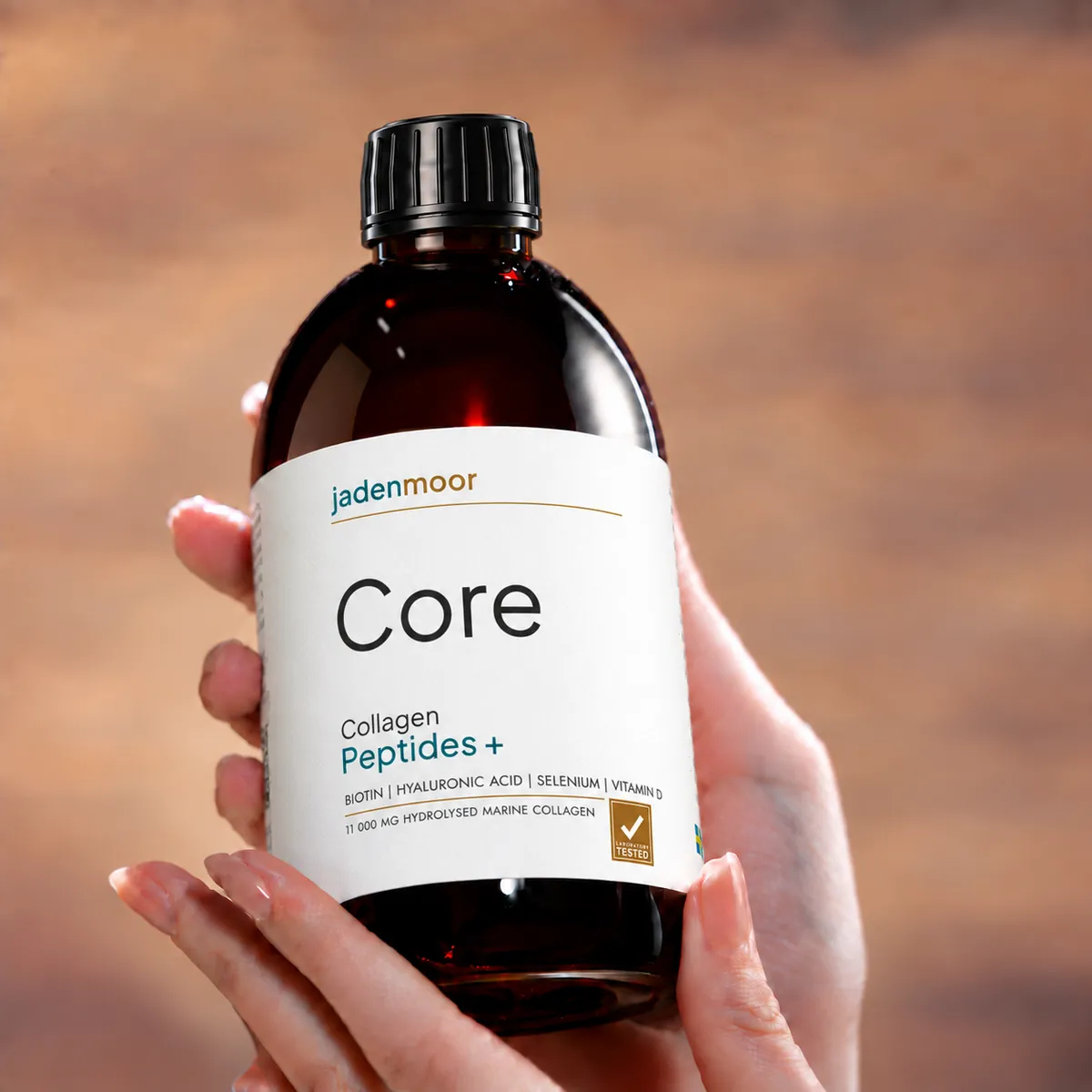
One portion of Core™ carries 11,000 mg of hydrolysed marine collagen, types I and III, along with 120 mg of vitamin C.6 Vitamin C contributes to normal collagen formation for the normal function of skin.7 For how that amount sits beside the doses used in trials, see how much collagen to take a day.
If it is absorbed, does it do anything?
Four placebo-controlled trials in our evidence gave collagen for weeks and reported changes in the skin itself in the collagen groups, from collagen density in the dermis to hydration, elasticity and wrinkles. A blood test ends at the blood, and the thinking behind the research is that peptides carried there go on to the skin, so skin trials start from that other end.
More collagen density in the dermis
One paper reports two placebo-controlled trials of daily collagen peptides. In one of them, collagen density in the dermis had increased significantly after 4 weeks, and the effect was still present at 12 weeks.8
Placebo-controlled trial · one of two in the same paper
65% more procollagen type I than placebo
After 8 weeks on 2.5 g of collagen peptides a day, skin samples from the collagen group held 65% more procollagen type I and 18% more elastin than samples from the placebo group.9
114 women aged 45 to 65 · randomised, double-blind, placebo-controlled
Hydration ahead of placebo at weeks 6 and 12
With 1,000 mg a day of low-molecular-weight fish collagen peptide, skin hydration was significantly higher than placebo at 6 weeks and again at 12 weeks. By week 12, crow's-feet wrinkling and skin elasticity were significantly better too.10
64 women aged 40 to 60 · randomised, double-blind, placebo-controlled
The dipeptide-rich one did more than placebo
This trial compared two collagen hydrolysates. The one richer in the dipeptides Pro-Hyp and Hyp-Gly improved facial skin moisture, elasticity, wrinkles and roughness more than placebo.11
Randomised, double-blind, placebo-controlled · 8 weeks
Procollagen is counted in skin samples, so the trial that measured it took its reading from the skin itself.
The readings on these cards were taken between 4 and 12 weeks in. Our guide to how long collagen takes to work sets out when each study took its readings.
What did women report?
In our user trial, 95% of 106 women felt the appearance of their skin improved after taking our liquid marine collagen daily for 8 weeks, an answer from the mirror rather than from blood and skin samples.6
- 95% felt the appearance of their skin improved.
- 89% reported more moisture and glow.
- 87% noticed a reduction in fine lines and wrinkles.
- 99% found it easy to include in their daily routine.
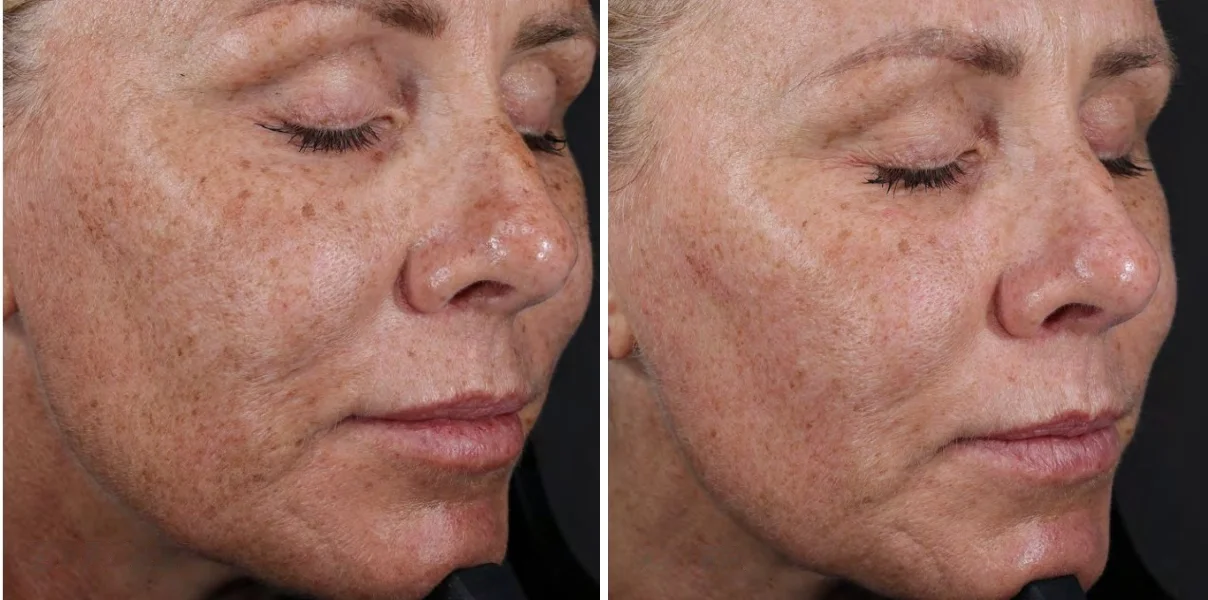
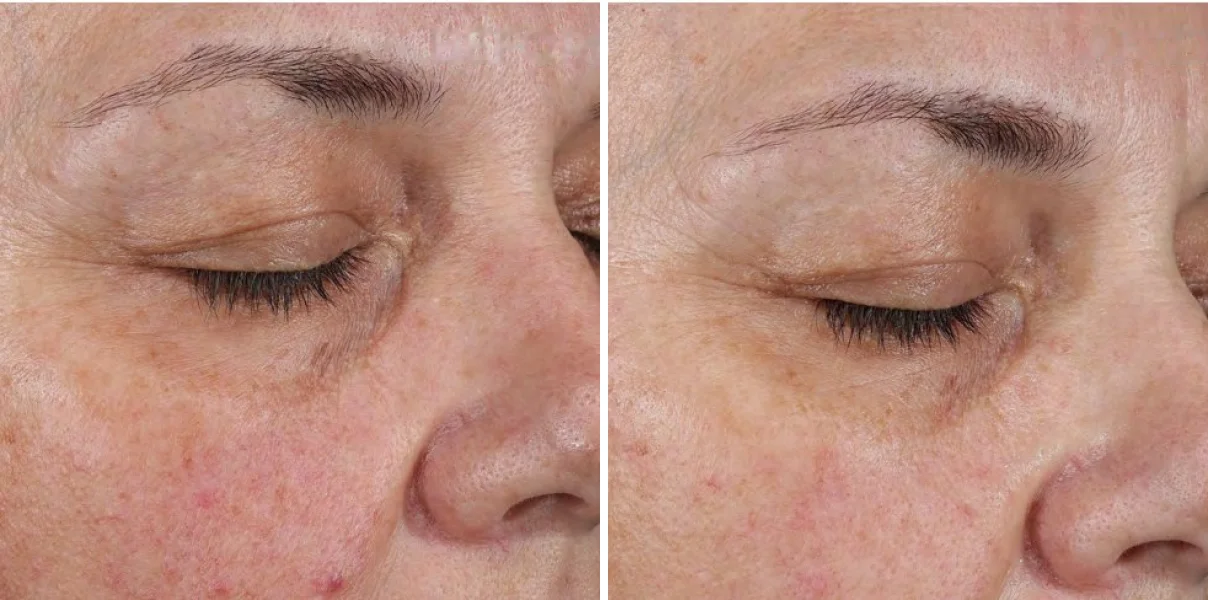
Participants in the 8-week user trial of our liquid marine collagen, photographed before and after.
One published account comes from a writer who started out as unconvinced as the sceptic at the top of this page.
“And truthfully? My skin looks better than ever.”
A self-confessed sceptic, she took marine collagen daily for two months. By the end she found her skin plumper, healthier and noticeably more radiant.
Shannon LawlorBeauty editor, writing in Marie Claire UK12
“I can really see the visible changes in my skin and nails.”
★★★★★
Check4YouVerified purchase · Amazon, Germany · 27 December 2023
An independent first-person account of marine collagen published by the outlet named, and a verified buyer review of our liquid marine collagen as sold under our manufacturer's own label.
Questions about collagen and absorption
Does stomach acid destroy collagen?
Digestion breaks collagen down, but not all the way to single amino acids, as blood studies show. After people ingested gelatin hydrolysate, nine hydroxyproline-containing di- and tripeptides were quantified in their blood plasma. The authors of a 2024 study in six healthy adults, each given a single 10 g dose, describe collagen hydrolysates as digested and absorbed both as free amino acids and in peptide-bound form.
How quickly does collagen reach your blood?
Collagen peptides appeared in the blood and peaked within one to two hours in one early study. The volunteers in that study drank a gelatin hydrolysate.
Is hydrolysed collagen the same as collagen peptides?
Yes, hydrolysed collagen and collagen peptides are two names for the same thing. Hydrolysis cuts native collagen, a large molecule of roughly 285 to 300 kDa, into collagen peptides that a peer-reviewed review places at about 3 to 6 kDa.
What is Pro-Hyp?
Pro-Hyp is a dipeptide that contains hydroxyproline. It was the most abundant of the nine peptides quantified in plasma after people ingested gelatin hydrolysate, and it was among the peptides that rose in blood after a single 10 g dose of collagen hydrolysate in six healthy adults.
How small are the collagen peptides in Core™?
The collagen peptides in Core™ weigh about 1,500 daltons, according to the product specification. Native collagen is about 300,000 daltons, roughly 200 times larger.
Do collagen supplements work if they are digested?
Skin trials in our evidence reported measurable changes in the skin of the collagen groups, even though collagen is digested. In a trial of 114 women aged 45 to 65, the collagen group had 65% more procollagen type I in skin samples than the placebo group after 8 weeks on 2.5 g of collagen peptides a day. In our own user trial, 95% of 106 women felt the appearance of their skin improved after 8 weeks on our liquid marine collagen.