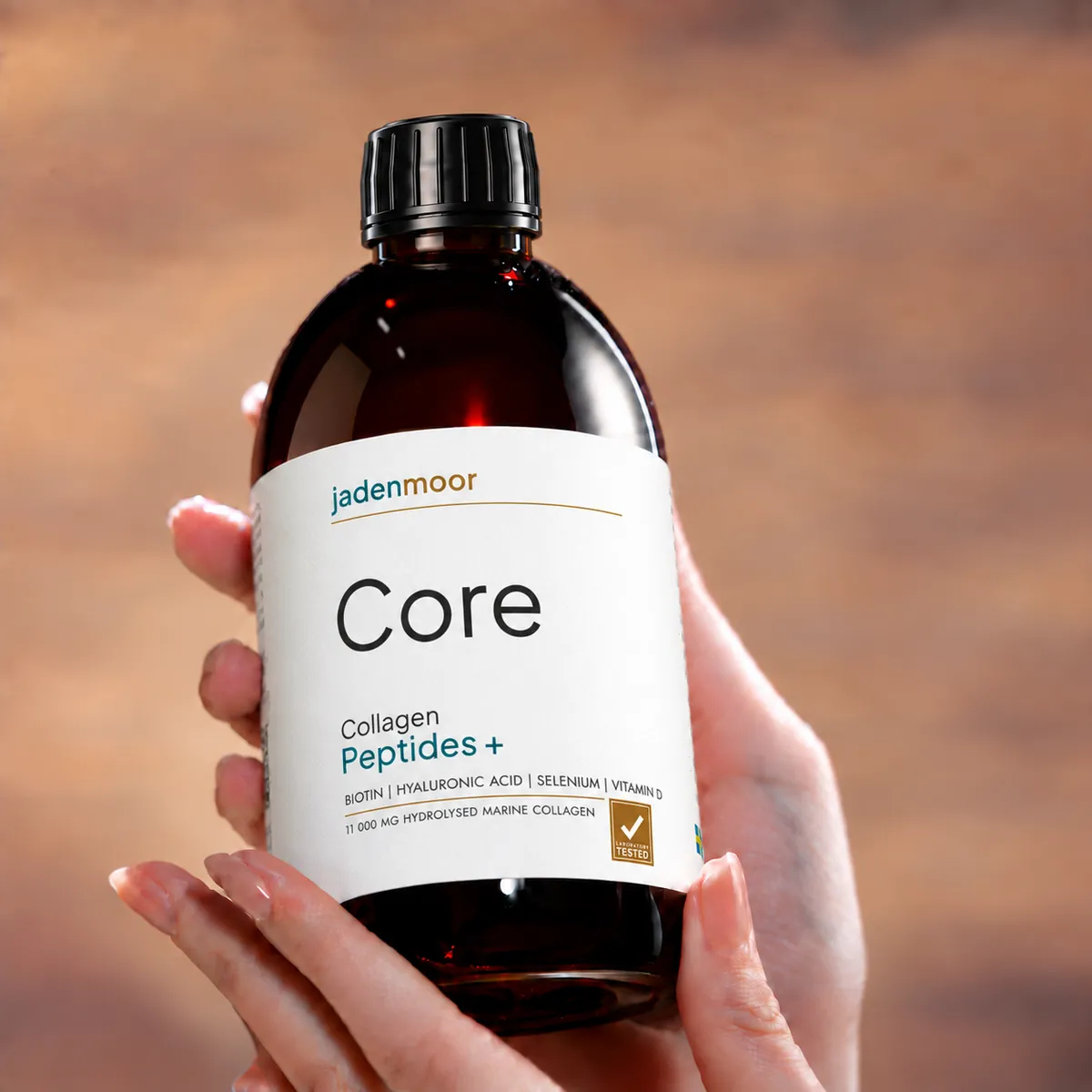
The trials in our evidence tested a daily amount of collagen, several of them as a drink, so three things on the label count: hydrolysed, how much per serving, and whether you will take it every day.
- Hydrolysed. A review puts native collagen at roughly 285 to 300 kDa and the peptides made from it at about 3 to 6 kDa.
- Amount per serving. The 26 trials in a pooled analysis listed 372 mg to 12 g of collagen, most of them between 2.5 g and 10 g.
- One portion of Core™. 11,000 mg of hydrolysed marine collagen, measured in the cap, with nothing to mix.
of the 106 women in our 8-week user trial said our liquid marine collagen was easy to include in their daily routine.
- 95%said their skin looked better
- 89%more moisture and glow
- 87%noticed fewer fine lines and wrinkles
Is liquid collagen better than powder?
The amount of collagen per serving, taken every day, matters more than whether it comes as a liquid or a powder: the collagen trials in our evidence tested a set daily amount for weeks, and several of them gave it as a drink. Format was how the dose reached the volunteers.
The studies differ in their amounts. In the 26 trials pooled in a 2023 meta-analysis, the listed collagen amounts ranged from 372 mg to 12 g, with most trials using between 2.5 g and 10 g.1 That makes the collagen in each serving the practical figure to compare across products, whatever shape they come in.
The useful comparison is which format gives you the amount you want, in a form you will take every day. One portion of Core™ carries 11,000 mg of hydrolysed marine collagen, already measured and already liquid.2
What do the four formats have in common?
Liquid, powder, capsules and gummies are all ways of getting collagen from the pack to you, and they differ only in how you take them.
- Liquid. Collagen already dissolved and ready to drink. You pour a serving and drink it.
- Powder. Dry collagen. You stir a serving into a drink.
- Capsules. Collagen in a capsule. You swallow the serving shown on the pack.
- Gummies. Collagen in a chewable form. You chew the serving shown on the pack.
All four carry a label. Look for the kind of collagen inside and the amount in a serving, because those two lines tell you more than the shape does.
Hydrolysed collagen is highly soluble in water, and a peer-reviewed review describes that higher solubility as a main advantage of hydrolysed collagen over native collagen.3 That solubility allows it to be made as a ready-to-drink liquid.
What did the trials actually use?
Several of the studies in our evidence gave their volunteers a daily collagen drink, from 10 mL of a liquid syrup to a 30 ml drink, carrying between 2.5 g and 10 g of collagen. The table lists those that describe the format, in the words each one uses.
The format and amount in six collagen studies
How each study describes what its volunteers took, the collagen in it, and what was recorded.
| Format as described | Collagen amount | Study and what it recorded |
|---|---|---|
| 10 mL of a liquid syrup daily | 4 g of hydrolysed fish collagen, plus coenzyme Q10, vitamin C, vitamin A and biotin | 34 healthy women aged 40 to 65, 12 weeks, randomised, double-blind, placebo-controlled. Dermis density increased and periorbital wrinkle area decreased versus placebo.4 |
| A 20 ml drink a day | 3,000 mg of fish-scale collagen peptides | 71 healthy women aged 30 to 60, 12 weeks, randomised, placebo-controlled, double-blind. Periorbital wrinkles fell significantly versus placebo.5 |
| A drink | 2.5 g of bovine collagen peptides, plus acerola extract, vitamin C, zinc, vitamin E and biotin | 72 women aged 35 and over, 36 per group, 12 weeks, randomised, placebo-controlled. Change from baseline in the collagen group at 12 weeks: skin hydration +28.0% (placebo +9.0%).6 |
| A daily marine collagen drink | 8 g of hydrolysed collagen, plus vitamin C | Adults aged 40 to 60, about 90% of them women, 12 weeks, randomised, double-blind, placebo-controlled. The authors reported skin hydration +13.8% and elasticity +22.7% in the collagen group at 12 weeks.7 |
| A daily 30 ml drink | 10 g of fish-derived collagen peptide, plus 400 mg of ornithine | Pilot trial in 22 healthy Japanese adults aged 31 to 48, 8 weeks, randomised, double-blind, placebo-controlled. Transepidermal water loss was lower than placebo at 8 weeks.8 |
| Dissolved in 200 mL of water | A single 10 g dose of collagen hydrolysate | Absorption study, randomised, double-blind crossover, in six healthy adults. Blood levels of free hydroxyproline and of collagen-derived peptides rose.9 |
One more trial is in our evidence by its dose. In a trial of 64 women aged 40 to 60, the collagen group took 1,000 mg a day of low-molecular-weight fish collagen peptide for 12 weeks, with skin hydration significantly higher than placebo at 6 weeks and at 12 weeks.10
The middle column shows that the researchers stated an amount every time. Our guide to how much collagen to take a day sets those doses out study by study.
Why does "hydrolysed" matter more than the format?
Hydrolysed matters more than the format because it describes the collagen itself, while the format only describes the packaging. Native collagen is a large molecule of roughly 285 to 300 kDa. Hydrolysis cuts it into collagen peptides, which a peer-reviewed review places at about 3 to 6 kDa.3
The collagen in Core™ is hydrolysed to a low molecular weight of about 1,500 daltons. Native collagen is about 300,000 daltons, roughly 200 times larger.2
Hydrolysed collagen is also the form the published blood studies gave their volunteers. When volunteers drank hydrolysed collagen, collagen peptides appeared in their blood and peaked within one to two hours.11 A second study, in which people ingested gelatin hydrolysate, quantified nine hydroxyproline-containing di- and tripeptides in blood plasma, with one called Pro-Hyp the most abundant.12
In a 2024 crossover study in six healthy adults, a single 10 g dose of collagen hydrolysate, dissolved in 200 mL of water, raised blood levels of free hydroxyproline and of collagen-derived peptides for all sources and molecular weights tested.9 These studies measured blood, and each one used collagen that was hydrolysed.
assets/img/blog/lq-pour.webpWhat do you get in one portion of Core™?
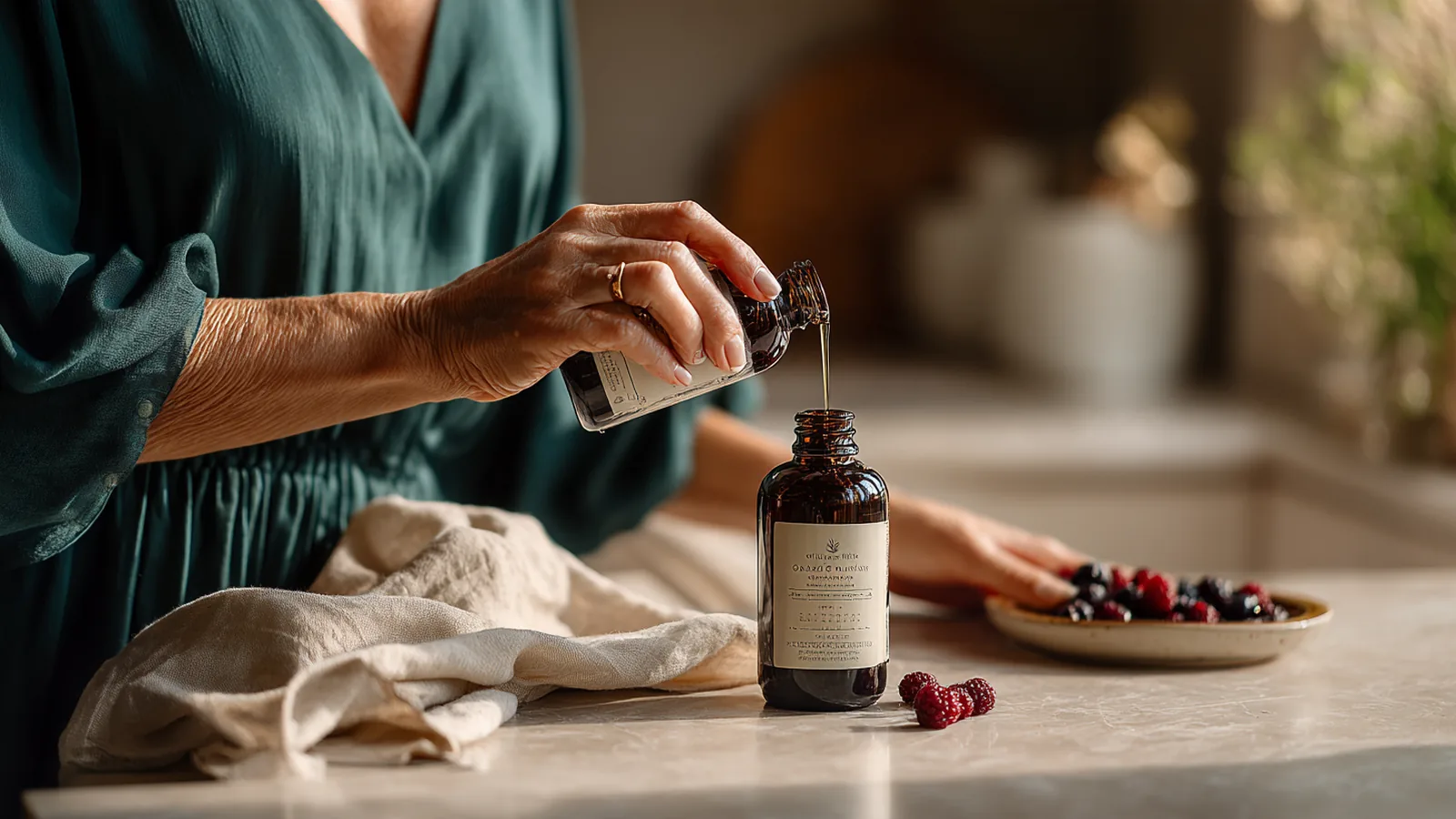
One portion of Core™, our liquid marine collagen, gives you 11,000 mg of hydrolysed marine collagen with vitamins already in it, measured and ready to drink.2
- A measured dose. Shake the pack and fill the cap, which holds your serving for the day.
- Nothing to mix. Drink it straight from the cap. If you like it longer, stir it into water or a smoothie.
- 11,000 mg in one portion. Hydrolysed marine collagen, types I and III, which the label shows as 9.9 g of protein. It is sugar free and fat free, with a natural berry flavour.
- Vitamins already in it. Each portion has 120 mg of vitamin C, 5,000 µg of biotin, 60 µg of vitamin D, vitamins B5, B6 and B12 and 27.5 µg of selenium, with 50 mg of hyaluronic acid and 50 mg of silica.
The vitamin C is there for a reason. Vitamin C contributes to normal collagen formation for the normal function of skin.13
For scale, the clinical trials in our evidence used between 1 g and 10 g of collagen peptides a day, and Core's 11,000 mg is 11 g. The pack lives in the fridge once opened.2 Source is a separate choice from format, and our guide to marine collagen for women covers that one.
Did women find it easy?
Yes, 99% of the 106 women in our user trial found our liquid marine collagen easy to include in their daily routine after taking it daily for 8 weeks.2
found it easy to include in their daily routine.
felt that the appearance of their skin improved.
reported firmer skin.
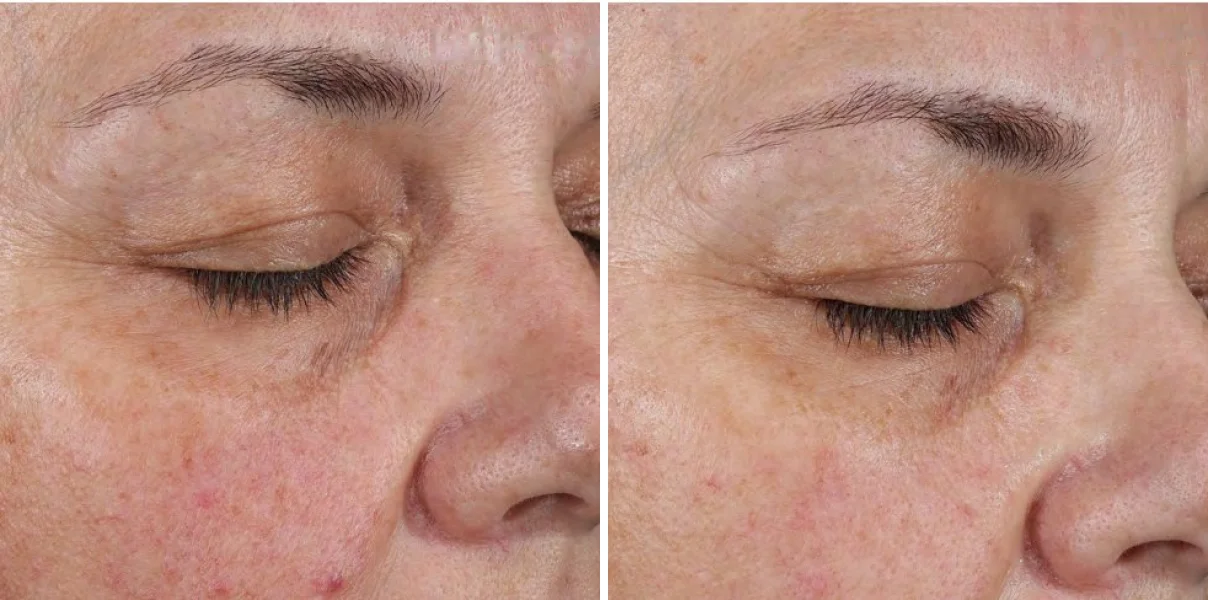
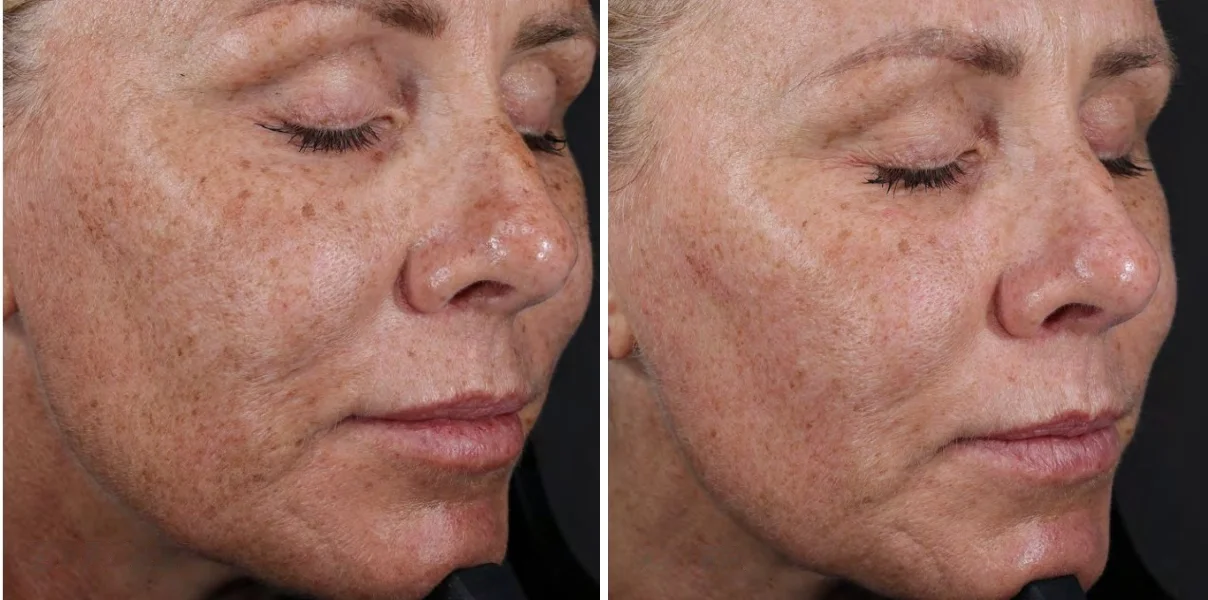
Participants in the 8-week user trial of our liquid marine collagen, photographed before and after.
Women in that trial reported visible results in as little as 4 weeks, with further improvement by week 8.2 For what the published studies recorded and when, see how long collagen takes to work.
What do women say about taking collagen daily?
Women who take collagen daily write about taste and skin: one verified buyer of our liquid marine collagen found the taste amazing, and one beauty editor described her skin as plumper, healthier and more radiant after two months.
“The taste is amazing and it is sugar free! Love what it does to my hair, nails and skin.”
★★★★★
Suzanne H.Verified purchase · Amazon, United Kingdom · 26 August 2024
“And truthfully? My skin looks better than ever.”
She began as a self-confessed sceptic. Two months of marine collagen every single day later, she described her skin as plumper, healthier and noticeably more radiant.
Shannon LawlorBeauty editor, writing in Marie Claire UK14
A verified buyer review of our liquid marine collagen as sold under our manufacturer's own label, and an independent first-person account of marine collagen published by the outlet named.
How do you choose?
Choose a collagen that is hydrolysed, states its amount per serving, fits your daily routine and has been tested, whatever its format. Hold any product against these four checks.
- Is it hydrolysed? The word should be on the label. It is the form the blood studies above used.
- Is the amount stated per serving? Compare it with the 2.5 g to 10 g most of the pooled trials used.1 Core™ states 11,000 mg per portion.
- Will you take it daily? Pick the format that fits your morning without effort. In our trial, 99% of 106 women found our liquid marine collagen easy to include in their daily routine.
- Has it been tested? Our liquid marine collagen went through an 8-week user trial of 106 women and an 8-week clinical study of 10 women with skin imaging.
If a product passes all four, the format that suits you is the right one.
Questions about liquid collagen and other formats
Is liquid collagen better than powder?
The daily amount of collagen matters more than the format: the trials tested daily amounts of collagen, from 372 mg to 12 g across 26 pooled trials, and several of the trials in our evidence gave it as a drink. A liquid portion adds the practical side, a measured serving with nothing to mix.
Do collagen peptides reach the blood?
Yes, a blood study found that collagen peptides appeared in the blood when volunteers drank hydrolysed collagen, peaking within one to two hours. That study used gelatin hydrolysate and measured blood only.
Collagen capsules or liquid: which should you pick?
Pick the one you will take every day, with hydrolysed collagen and a clear amount per serving on the label. In our 8-week user trial, 99% of 106 women found our liquid marine collagen easy to include in their daily routine.
How much collagen is in a liquid collagen portion?
One portion of Core™ has 11,000 mg of hydrolysed marine collagen, though the amount depends on the product, so read it per serving. The clinical trials in our evidence used between 1 g and 10 g of collagen peptides a day.
Do you have to mix liquid collagen with anything?
No, you drink liquid collagen straight: shake the pack, pour into the cap and drink it. You can also stir it into water or a smoothie, and the pack goes in the fridge once opened.