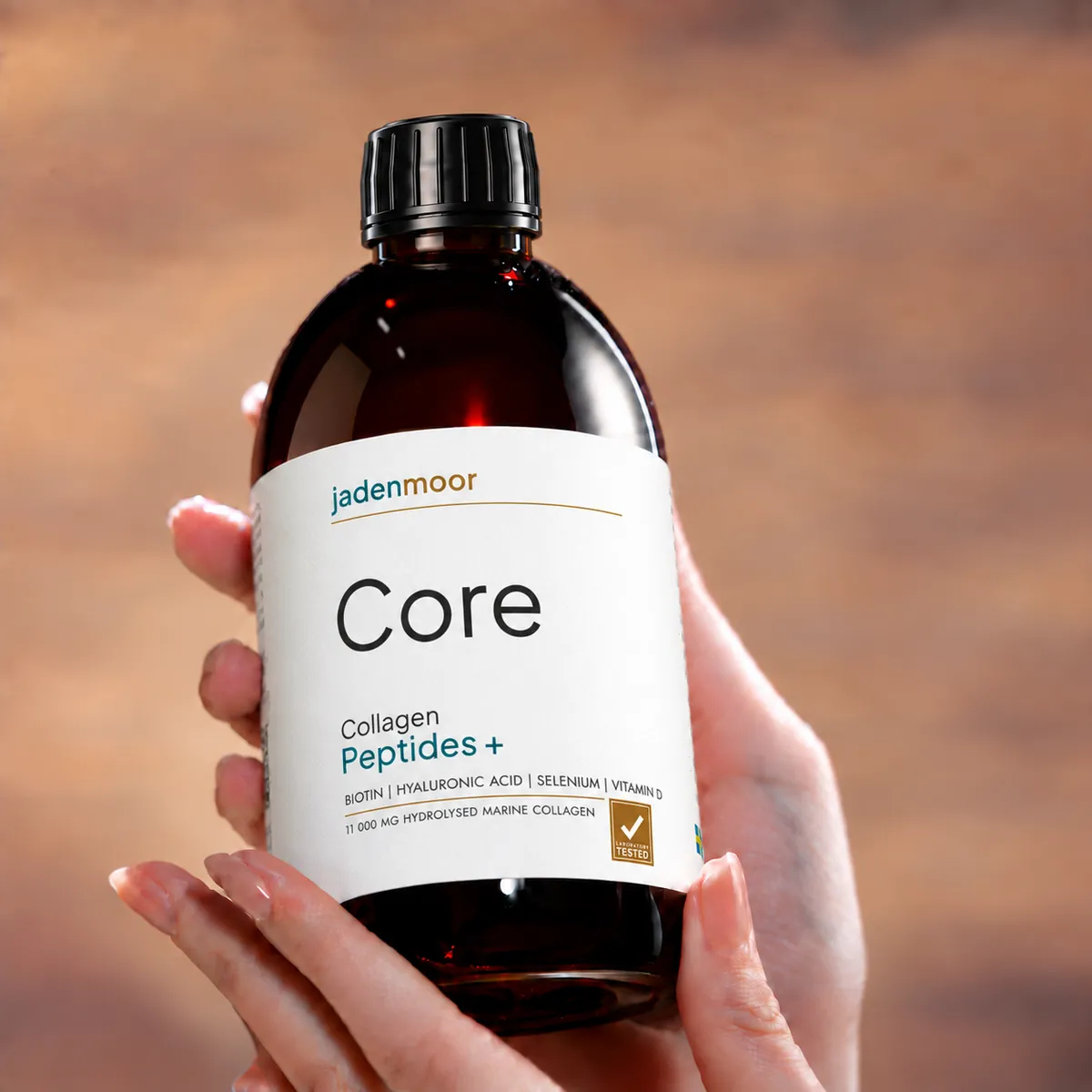
Yes. Collagen is a protein, and a medical reference text calls it the most abundant structural protein in the human body, which is why a collagen drink has a protein line on its label.
- Rich in glycine and proline. Those amino acids, plus hydroxyproline, mark out collagen's make-up.
- 9.9 g of protein per portion. Core's label gives this figure for one serving.
- Sugar free and fat free. Both are defined label terms in EU rules, each with a ceiling of 0.5 g per 100 g or 100 ml.
of 106 women found our liquid marine collagen easy to include in their daily routine during an 8-week trial.
- 95%felt their skin's appearance improved
- 89%reported more moisture and glow
- 87%noticed fewer fine lines and wrinkles
Is collagen a protein?
Yes, collagen is a protein: StatPearls, a medical reference text, describes it as the most abundant structural protein in the human body.1
Because collagen is a protein, a collagen drink carries a protein line like any other food that supplies protein.
What is collagen made of?
Collagen is made of amino acids, like every protein, and the same reference text describes its composition as rich in glycine and proline, together with modified residues such as hydroxyproline.1
A review of collagen sources and applications puts figures on that pattern:2
- Glycine: about 33%. The review gives collagen's primary structure as mainly glycine.
- Proline and hydroxyproline: about 22% together. The pair that gives collagen its signature.
These are the review's general figures for collagen as a protein, so they describe the molecule itself.
According to Harvard's Nutrition Source, the body builds its own collagen from amino acids including glycine and proline, which protein foods such as fish, poultry, meat, eggs, dairy, legumes and soy supply. The process also needs vitamin C and zinc.3 Our article on foods and collagen covers that side of the plate.
In a supplement the collagen arrives as collagen peptides, which is the hydrolysed form. You can read how that is made in what hydrolysed collagen is. The European gelatine industry association states that collagen peptides are about 97% protein on a dry weight basis.4 The association's figure covers the dry ingredient in general, and for a finished product the number to use is the one printed on its own label.

assets/img/blog/pr-label.webpHow much protein is in a collagen portion?
It depends on the product: a portion of Core™ has 9.9 g of protein. That figure is on the label of Core™, our liquid marine collagen, and for any other drink the label of the one in your hand gives its own.5
The same label also shows that each portion holds 11,000 mg of hydrolysed marine collagen, types I and III.5 One figure is the collagen amount and the other is the protein line, both printed per portion.
If the collagen amount is the number you are comparing between products, our guide to how much collagen to take per day sets it beside the amounts used in clinical trials.
The protein, sugar and fat lines on a Core™ portion
What the label says for one serving, and what each term means.
| Label line | What Core's label says | What the term means |
|---|---|---|
| Collagen | 11,000 mg of hydrolysed marine collagen, types I and III5 | The amount of the collagen ingredient in one portion. |
| Protein | 9.9 g per portion5 | The protein figure for one portion. Collagen is a protein.1 |
| Sugar | Sugar free5 | In EU rules, "sugars-free" may be used only for a food with no more than 0.5 g of sugars per 100 g or 100 ml.6 |
| Fat | Fat free5 | In EU rules, "fat-free" may be used only for a food with no more than 0.5 g of fat per 100 g or 100 ml.6 |
Is liquid collagen sugar free?
That depends on the product, and Core's label says sugar free.5 In the European Union that phrase is a regulated nutrition claim with a written condition behind it.
Under the Annex to the EU regulation on nutrition and health claims, a food may be described as sugars-free only if it contains no more than 0.5 g of sugars per 100 g or 100 ml.6
Read it the same way on any pack, as a term with a written ceiling.
What counts as "sugars" on a label?
In EU food labelling, "sugars" means all the monosaccharides and disaccharides present in a food.7 In kitchen terms those are the simple sugars and the double sugars.
Is "sugar free" the same as "no added sugars"?
They are different claims. "With no added sugars" has a condition of its own: it may only be made where the product contains no added mono- or disaccharides, and no other food used for its sweetening properties.6 One term is about how much sugar is in the food, the other about what was put in, and the one on Core's label is sugar free.
Is it fat free?
Core's label says fat free, and that term is defined in the same place.5 A food may be described as fat-free only if it contains no more than 0.5 g of fat per 100 g or 100 ml.6
The Annex also rules on wording, and prohibits claims that express fat-free as a percentage.6
Together the lines describe a Core™ portion as a protein figure of 9.9 g, with a sugar free and a fat free statement beside it.5
What does vitamin B6 have to do with protein?
Vitamin B6 is the one nutrient in Core™ with an authorised EU health claim that names protein, and the EU list of permitted claims words it like this:8
Vitamin B6 contributes to normal protein and glycogen metabolism.
The claim belongs to vitamin B6 as a nutrient. The US National Institutes of Health describes the background: the active coenzyme forms of vitamin B6 take part in more than 100 enzyme reactions, mostly concerned with protein metabolism.9
Each Core™ portion contains 1.7 mg of vitamin B6, which the label gives as 121% of the nutrient reference value.5
What else is in one Core™ portion?
After its 11,000 mg of collagen, each portion of Core™ lists hyaluronic acid, silica, vitamin C, biotin, vitamin D, vitamins B5, B6 and B12, and selenium, each with its amount per serving.5
One portion of Core™
Amounts per portion, as given in the product specification.
| Ingredient | Amount per portion | Reference intake (NRV) |
|---|---|---|
| Hydrolysed marine collagen (types I and III) | 11,000 mg | – |
| Hyaluronic acid | 50 mg | – |
| Silica | 50 mg | – |
| Vitamin C | 120 mg | 150% |
| Biotin | 5,000 µg | – |
| Vitamin D | 60 µg | – |
| Vitamin B5 | 5 mg | 83% |
| Vitamin B6 | 1.7 mg | 121% |
| Vitamin B12 | 24 µg | 960% |
| Selenium | 27.5 µg | 50% |
The flavour is natural berry, and the cap is the measure for each portion.5
What did women in our trial report?
In our 8-week user trial, 99% of 106 women found our liquid marine collagen easy to include in their daily routine and 95% felt that the appearance of their skin improved, which adds daily use to what the label tells you.5
On the practical side, nearly every woman found the daily serving easy to include in her routine. Women in the trial also reported visible results in as little as 4 weeks, with further improvement by week 8.5
found it easy to include in their daily routine.
felt that the appearance of their skin improved.
reported more moisture and glow.
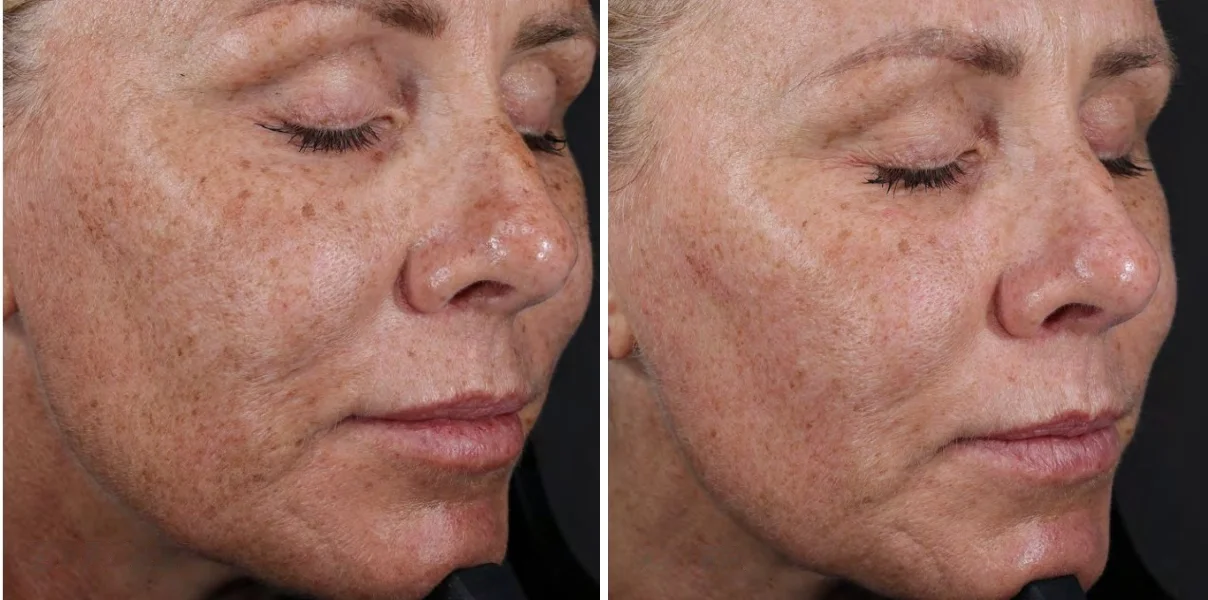
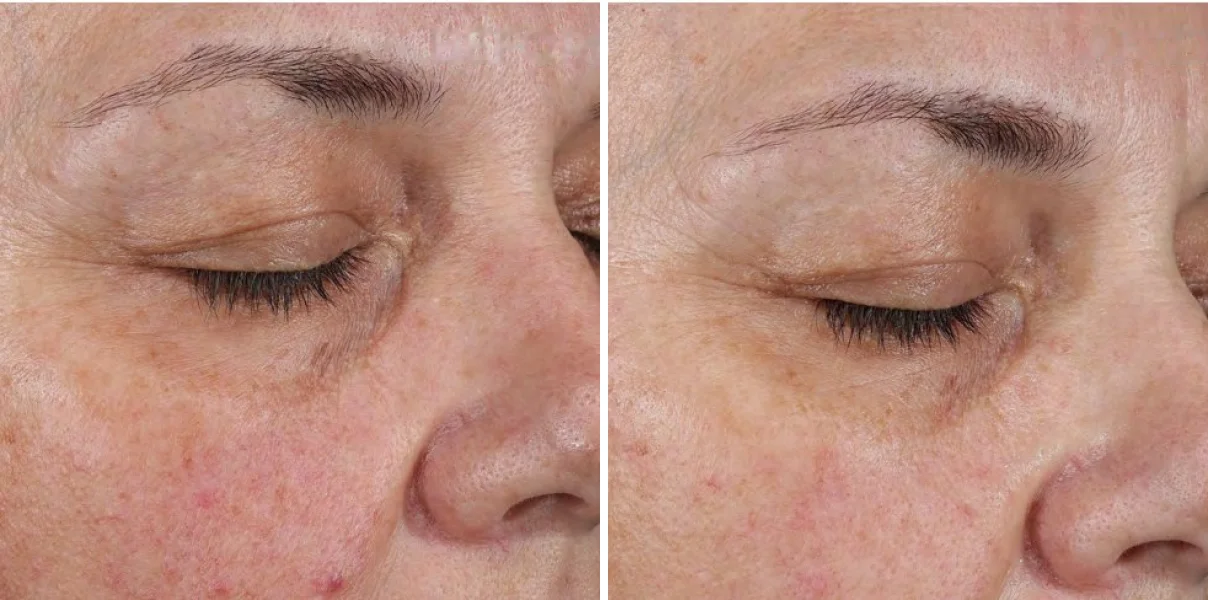
Participants in the 8-week user trial of our liquid marine collagen, photographed before and after. This is what it looked like for women in our studies.
What buyers wrote
Verified buyers wrote about the taste, the sugar free line and visible changes in their skin and nails.
“The taste is amazing and it is sugar free! Love what it does to my hair, nails and skin.”
★★★★★
Suzanne H.Verified purchase · Amazon, United Kingdom · 26 August 2024
“I can really see the visible changes in my skin and nails.”
★★★★★
Check4YouVerified purchase · Amazon, Germany · 27 December 2023
“My skin looks great, with no fine lines. I'm 45 and will definitely keep using it.”
★★★★★
FrédériqueVerified purchase · Amazon, France · 18 May 2024
Verified buyer reviews of our liquid marine collagen, as sold under our manufacturer's own label.
Questions about collagen, protein and sugar
Is collagen a protein?
Yes. A medical reference text describes collagen as the most abundant structural protein in the human body. Its amino acid make-up is rich in glycine and proline, with modified residues such as hydroxyproline.
How much protein is in one portion of Core™?
The label gives 9.9 g of protein per portion. The same portion holds 11,000 mg of hydrolysed marine collagen, types I and III.
Is liquid collagen sugar free?
It varies by product, and Core's label says sugar free. In EU rules the term sugars-free may be used only for a food with no more than 0.5 g of sugars per 100 g or 100 ml.
Does sugar free mean the same as no added sugars?
No, they are separate claims. Sugars-free sets a ceiling on the sugars in the food. "With no added sugars" may only be made where no mono- or disaccharides, and no other food used for its sweetening properties, have been added.
Is Core™ fat free?
Yes, the label says fat free. In EU rules that term may be used only for a food with no more than 0.5 g of fat per 100 g or 100 ml.
Which amino acids is collagen rich in?
Glycine comes first. One review gives collagen's primary structure as mainly glycine, at about 33%, with proline and hydroxyproline together at about 22%.