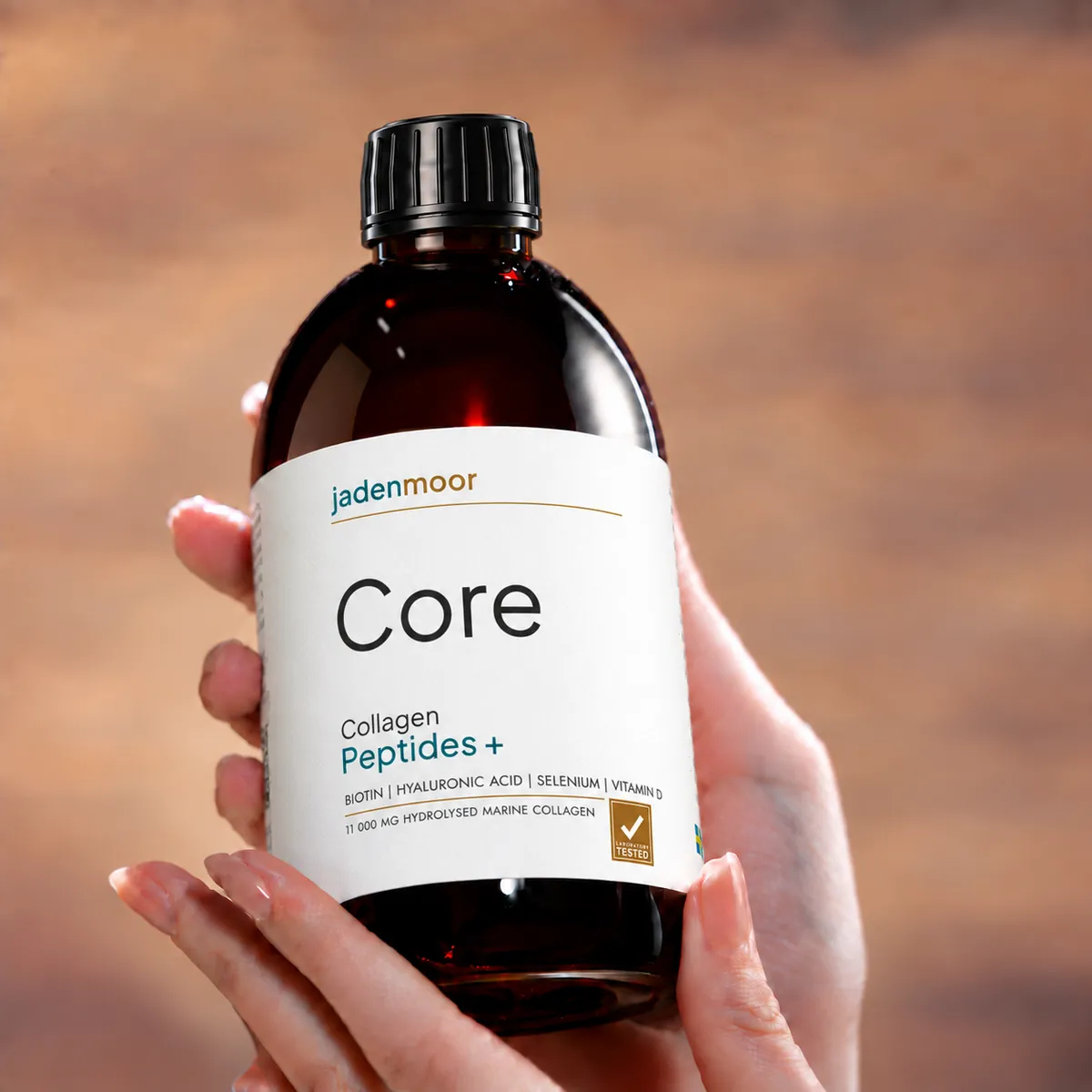
The EU list of permitted health claims has a line that names cartilage, and it is a vitamin C line: vitamin C contributes to normal collagen formation for the normal function of cartilage.
- A source you eat or drink. Your body cannot make vitamin C, so every milligram arrives through your diet.
- Types by tissue. Type II collagen is present in cartilage. The marine collagen in Core™ is types I and III.
- Muscles and bones. Vitamin D has authorised wording for both, and Core™ has 60 µg per portion.
of 106 women found our liquid marine collagen easy to include in their daily routine over 8 weeks.
- 95%felt their skin's appearance improved
- 86%reported healthier hair
- 76%reported stronger nails
Collagen for joints: what does the EU list say about cartilage?
The EU list of permitted health claims, Regulation (EU) No 432/2012, names cartilage in a vitamin C claim about collagen formation. The list authorises a family of vitamin C sentences about collagen formation, one tissue at a time, and cartilage has its own.1
Here it is, word for word: vitamin C contributes to normal collagen formation for the normal function of cartilage.
That sentence is why vitamin C leads this page, and because the wording is fixed we print it exactly. Before you read any label, take three details from the regulation with you.
- It is a vitamin C claim. The wording names the vitamin, and the vitamin is what it describes.
- There is an entry condition. Only a food that is at least a source of vitamin C may carry it.1
- It has a scientific file behind it. The regulation cites an opinion from EFSA, the European Food Safety Authority, published in the EFSA Journal in 2009.1
A label shows it qualifies through the reference intake. For adults the EU sets the daily reference intake for vitamin C at 80 mg, in Annex XIII of Regulation (EU) No 1169/2011.2 That number is a labelling yardstick. A single portion of Core™ holds 120 mg of vitamin C, shown on the label as 150% NRV.3
What does vitamin C do in collagen formation?
Vitamin C works as a coenzyme in collagen synthesis, and all of yours comes from your diet.
Most animals produce their own vitamin C. Humans cannot, which leaves the diet as the only route. The US National Institutes of Health says so in its fact sheet on the vitamin, and the same document calls vitamin C a requirement for the biosynthesis of collagen, an essential component of connective tissue.4
As for the step itself, EFSA's opinion describes vitamin C as a coenzyme in collagen synthesis. It works alongside two enzymes, the prolyl and lysyl hydroxylases, whose task is to attach hydroxyl groups to proline and lysine, two amino acids in the collagen molecule. Once that is done, collagen's triple helix holds its shape: the hydroxylation stabilises the structure.5
EFSA's NDA Panel adopted that opinion on 2 July 2009. Its verdict was that cause and effect is established between vitamin C in the diet and normal collagen formation, and it named the general population as the group the finding applies to.5

assets/img/blog/jt-stretch.webpAs for how much of the vitamin gets in, the NIH fact sheet gives a general figure for vitamin C intake: at moderate intakes of 30 to 180 mg per day, about 70% to 90% is absorbed.4 For the skin side of this vitamin, our article on why vitamin C and collagen go together picks up the thread.
Which type of collagen is in cartilage, and which is in Core™?
Type II collagen is present in cartilage, while the marine collagen in Core™ is types I and III. Collagen is a family, and a current medical reference counts at least 28 types, and names types I to IV as the most prevalent.6 Each has its own address in the body, and two published sources give the address for cartilage.
A review of hydrolysed collagen states that type II is present in cartilage.7
A standard cell-biology textbook goes a step further and calls type II the major collagen in cartilage.8
Both are describing the collagen your own body forms and keeps.
On the label, the marine collagen in Core™ is types I and III: 11,000 mg of it, hydrolysed, in each portion.3
Those are two separate facts, one about your body and one about a pack, and we set them down as such. If the numerals are new to you, our plain guide to collagen types I, II and III maps the whole family.
What about muscles and bones?
Muscles and bones have their own authorised wording in the EU list, mostly written for a second vitamin in Core™, vitamin D, with one vitamin C line for bones as well.
- Muscle. Vitamin D contributes to the maintenance of normal muscle function.1
- Bones. Vitamin D contributes to the maintenance of normal bones.1
- Bones again, via collagen. Vitamin C contributes to normal collagen formation for the normal function of bones.1
Vitamin D is fat-soluble, and your skin produces some of it when ultraviolet rays from sunlight reach it. The NIH fact sheet on vitamin D lists what it is needed for: bone growth, bone remodelling, and the normal development and growth of muscle fibres.9
EFSA reviewed the bone evidence in 2009 and judged cause and effect to be established between vitamin D in the diet and the maintenance of normal bone and teeth.10 A 2010 opinion reached the same conclusion for the maintenance of normal muscle function.11
We have given the calcium story, and the full set of vitamin D wordings, a page of their own: vitamin D, vitamin C and your frame.
What did women in our trial report?
Women in our 8-week user trial reported an easy routine and visible results in their skin, hair and nails, with 99% of the 106 women finding it easy to include in their daily routine. Each took our liquid marine collagen every day and then answered questions about the experience.3 Every answer is about the drink as a whole.
Participants also told us they noticed better joint flexibility. They said so in their own judgement, with no percentage attached, and we share the report as it reached us.
The questions that did produce percentages were about routine, skin, hair and nails.
found it easy to include in their daily routine.
reported more moisture and glow.
reported firmer skin.
Start with the top figure. A daily portion is first of all a habit, and nearly every woman in the trial found that habit easy to keep. Women also reported visible results in as little as 4 weeks, with further improvement by week 8.3
Some participants were photographed before and after. This is what it looked like for two of them.
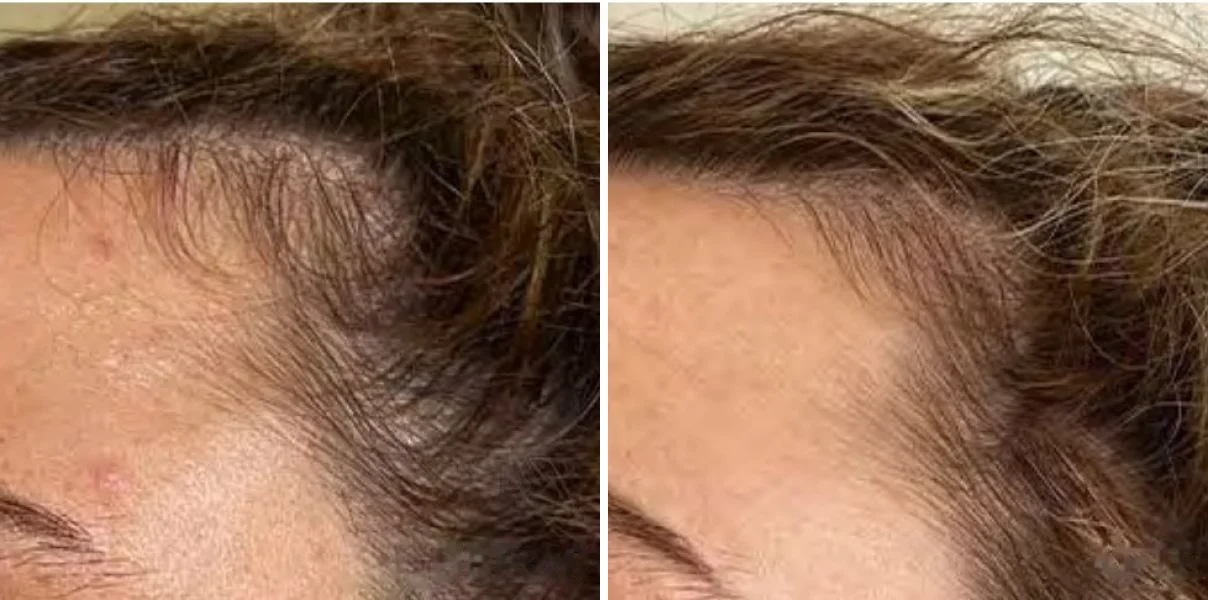
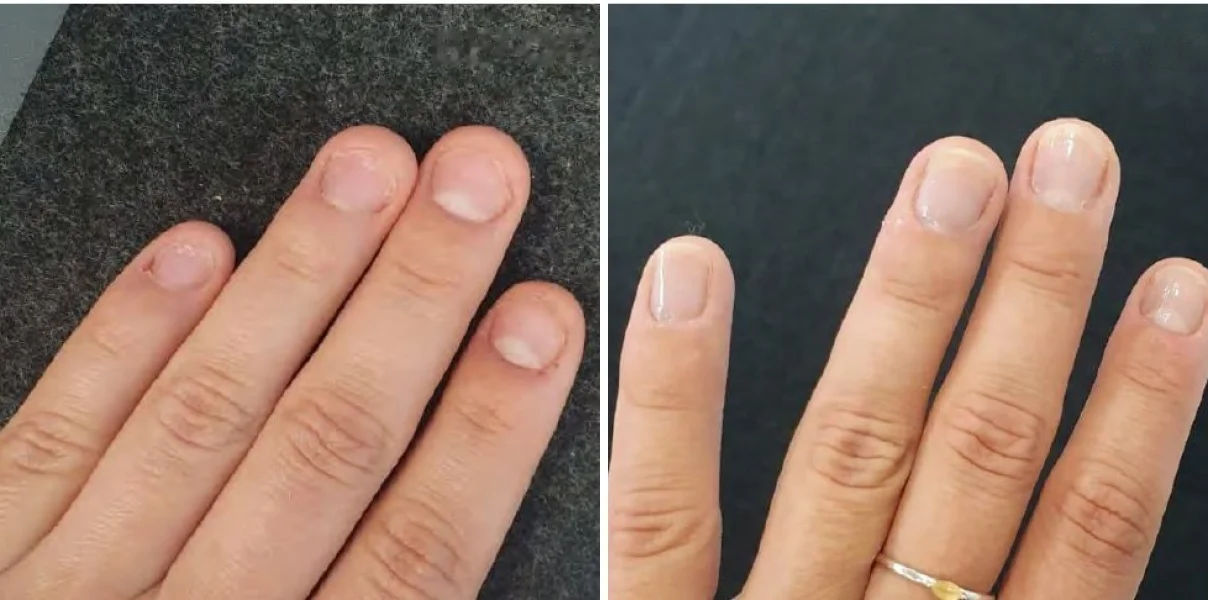
Participants in the 8-week user trial of our liquid marine collagen, photographed before and after. The trial results are for the drink as a whole.
And from buyers
Two verified buyers of the same drink wrote about taste and about what they saw.
“The taste is amazing and it is sugar free! Love what it does to my hair, nails and skin.”
★★★★★
Suzanne H.Verified purchase · Amazon, United Kingdom · 26 August 2024
“I can really see the visible changes in my skin and nails.”
★★★★★
Check4YouVerified purchase · Amazon, Germany · 27 December 2023
Verified buyer reviews of our liquid marine collagen as sold under our manufacturer's own label.
What is in one Core™ portion?
One portion of Core™ holds 11,000 mg of hydrolysed marine collagen, 120 mg of vitamin C and 60 µg of vitamin D, the two vitamins with authorised wording for cartilage, bones and muscle.
Collagen, vitamin C and vitamin D in one portion of Core™
Amount per portion, with the authorised EU wording where the list has one for cartilage, bones or muscle.
| In the portion | Amount per portion | What the sources say |
|---|---|---|
| Hydrolysed marine collagen | 11,000 mg | Types I and III, from the product specification. |
| Vitamin C | 120 mg (150% NRV) | Vitamin C contributes to normal collagen formation for the normal function of cartilage. Vitamin C contributes to normal collagen formation for the normal function of bones. |
| Vitamin D | 60 µg | Vitamin D contributes to the maintenance of normal muscle function. Vitamin D contributes to the maintenance of normal bones. |
The rest of the label is short. A portion gives you 9.9 g of protein and tastes of natural berry, with no sugar and no fat.3
- Shake and pour. The cap is your measure: fill it for one portion.
- Drink it your way. Straight from the cap, or stirred into water or a smoothie.
- Once a day. One portion is the daily amount. An opened pack goes in the fridge.
Every ingredient and amount is listed on the Core™ product page.
Questions about collagen, vitamin C and cartilage
What can honestly be said about collagen for joints?
The authorised EU wording that names cartilage belongs to vitamin C: vitamin C contributes to normal collagen formation for the normal function of cartilage. Core™ has 120 mg of vitamin C per portion. What women in our own trial told us sits in its own section above.
Which vitamin does the EU list name for cartilage?
Vitamin C is the vitamin the EU list names for cartilage. The list of permitted health claims authorises the cartilage wording for foods that are at least a source of the vitamin, and it cites an EFSA opinion from 2009.
What type of collagen is in cartilage?
Cartilage collagen is type II. A review of hydrolysed collagen states that type II is present in cartilage, and a cell-biology textbook calls it the major collagen there. Both describe the body's own collagen.
What type of collagen is in Core™?
The collagen in Core™ is types I and III. Core™ is hydrolysed marine collagen, 11,000 mg in each portion, and its specification lists those two types.
Can your body make vitamin C for collagen formation?
No, humans cannot produce vitamin C, so it has to come from what you eat and drink. The NIH fact sheet describes it as required for the biosynthesis of collagen.
Is there vitamin D in Core™ as well?
Yes, Core™ has 60 µg of vitamin D per portion. Vitamin D contributes to the maintenance of normal muscle function. Vitamin D contributes to the maintenance of normal bones.