Several published collagen trials state age ranges that run past 60. The highest upper limits in this article are 65, 70 and 75.
- Up to 75. A 16-week hair trial of 2.5 g of collagen peptides a day enrolled 44 healthy women aged 39 to 75.
- Up to 70. A meta-analysis pooled 19 randomised double-blind trials with 1,125 participants aged 20 to 70.
- Up to 65. An 8-week eye-wrinkle trial of 2.5 g of collagen peptides a day enrolled 114 women aged 45 to 65.
of 106 women felt the appearance of their skin improved after 8 weeks on our liquid marine collagen.
- 99%found it easy to include in their daily routine
- 86%reported healthier hair
- 81%reported firmer skin
Is collagen worth taking after 60?
Women past 60 were eligible for collagen studies that reported a result: a hair study of collagen peptides accepted healthy women aged 39 to 75, and its collagen group finished ahead of placebo on hair thickness.1 A pooled analysis of skin trials counted participants aged 20 to 70.2 A wrinkle trial set its range at 45 to 65.3
Women in their sixties, and in the hair trial women up to 75, were eligible for studies that reported a result. Each of these trials published its figures for the whole group it enrolled.
If you are a few years short of 60, the studies that centre on the decade before are gathered in collagen after 50.
Which trials had age ranges reaching the sixties and seventies?
Three studies had age ranges beyond 60: a hair trial of 44 healthy women aged 39 to 75, a meta-analysis of 19 trials with participants aged 20 to 70, and an eye-wrinkle trial of 114 women aged 45 to 65. Each of those studies has its own card below, with its participants, its daily amount and the reading it took.
Hair thickness up 1.93 micrometres on average with collagen
Over 16 weeks on 2.5 g of collagen peptides a day, hair thickness rose by 1.93 micrometres on average in the collagen group. The placebo group showed a slight dip of 0.99 micrometres, and the difference between groups was significant.1
44 healthy women aged 39 to 75 · randomised, placebo-controlled
19 trials pooled, 1,125 participants
The authors of this meta-analysis concluded that 90 days of hydrolysed collagen reduced wrinkles and improved skin elasticity and hydration. About 95% of the participants were women.2
19 randomised double-blind trials · participants aged 20 to 70
Eye-wrinkle volume about 20% lower than placebo
On 2.5 g of collagen peptides a day, eye-wrinkle volume was significantly lower than placebo after 4 weeks and after 8 weeks (about 20%). Skin samples taken after 8 weeks showed 65% more procollagen type I and 18% more elastin in the collagen group than with placebo.3
114 women aged 45 to 65 · randomised, double-blind, placebo-controlled
Other studies stop at 60 exactly, and one is described by life stage, with no age range to quote here. The table puts them in one place, highest upper limit first.
Collagen studies by the oldest age they enrolled
One row per study: the top of its age range, who took part and what they took, and what it recorded.
| Upper age limit | Who took part and what they took | What the study recorded |
|---|---|---|
| 75 | 44 healthy women aged 39 to 75. 2.5 g of collagen peptides a day, or placebo, for 16 weeks.1 | Hair thickness rose by 1.93 micrometres on average with collagen, against a slight dip of 0.99 micrometres with placebo. |
| 70 | 1,125 participants aged 20 to 70, about 95% women, in a meta-analysis of 19 randomised double-blind trials of hydrolysed collagen.2 | The authors concluded that 90 days of hydrolysed collagen reduced wrinkles and improved skin elasticity and hydration. |
| 65 | 114 women aged 45 to 65. 2.5 g of collagen peptides a day, or placebo, for 8 weeks.3 | Eye-wrinkle volume significantly lower than placebo after 4 weeks and after 8 weeks (about 20%). The effect was still there four weeks after stopping. |
| 60 | Adults aged 35 to 60 with dry skin, 50 randomised and 44 completed. 1,000 mg a day of fish-scale collagen peptides, or placebo, for 12 weeks.4 | A skin moisture reading improved by 7.33% versus 2.83% with placebo, and natural moisturising factor in the stratum corneum ended higher than with placebo. |
| 60 | 71 healthy women aged 30 to 60. 20 ml a day containing 3,000 mg of fish-scale collagen peptides, or placebo, for 12 weeks.5 | Periorbital wrinkles fell significantly versus placebo. Facial skin moisture and elasticity rose in the collagen group. |
| No age range to quote | 36 postmenopausal women. 5 g of marine collagen hydrolysate a day, or placebo, for 4 weeks.6 | Cheek skin elasticity improved compared with placebo, and the difference was still there four weeks after stopping. |
| 55 | 69 women aged 35 to 55. 2.5 g or 5.0 g of collagen hydrolysate, or placebo, once daily for 8 weeks.7 | Skin elasticity improved significantly in both collagen groups compared with placebo. In older women elasticity was still higher 4 weeks after the last dose. |
Two rows need a word of explanation. The study of 36 women recruited by life stage, so every participant was postmenopausal and we have no age range to quote for it.6 The last row closes at 55, so it sits below your decade. It earns its place for one line in its findings, that in older women elasticity was still higher 4 weeks after the last dose.7 "Older" in that sentence means the older participants of a trial that enrolled ages 35 to 55.
The ingredients vary too. Collagen peptides, hydrolysed collagen, fish-scale collagen peptides and marine collagen hydrolysate all appear, in daily amounts from 1,000 mg to 5 g in the single trials. A result in one row belongs to the product in that row. For the same studies arranged from the youngest entry age upwards, see what age to start collagen.

assets/img/blog/a6-garden.webpHow does skin renewal change with age?
Skin renewal slows with age: older adults take more than 10 days longer than young adults to renew the skin's outer layer, a pace that has been measured at different ages.
The skin's outer layer renews in roughly 20 days in young adults and takes more than 10 days longer in older adults.8 The figure comes from a study of how the outer layer renews, and it describes the pace of that surface layer alone.
What else is in a Core™ portion for this stage?
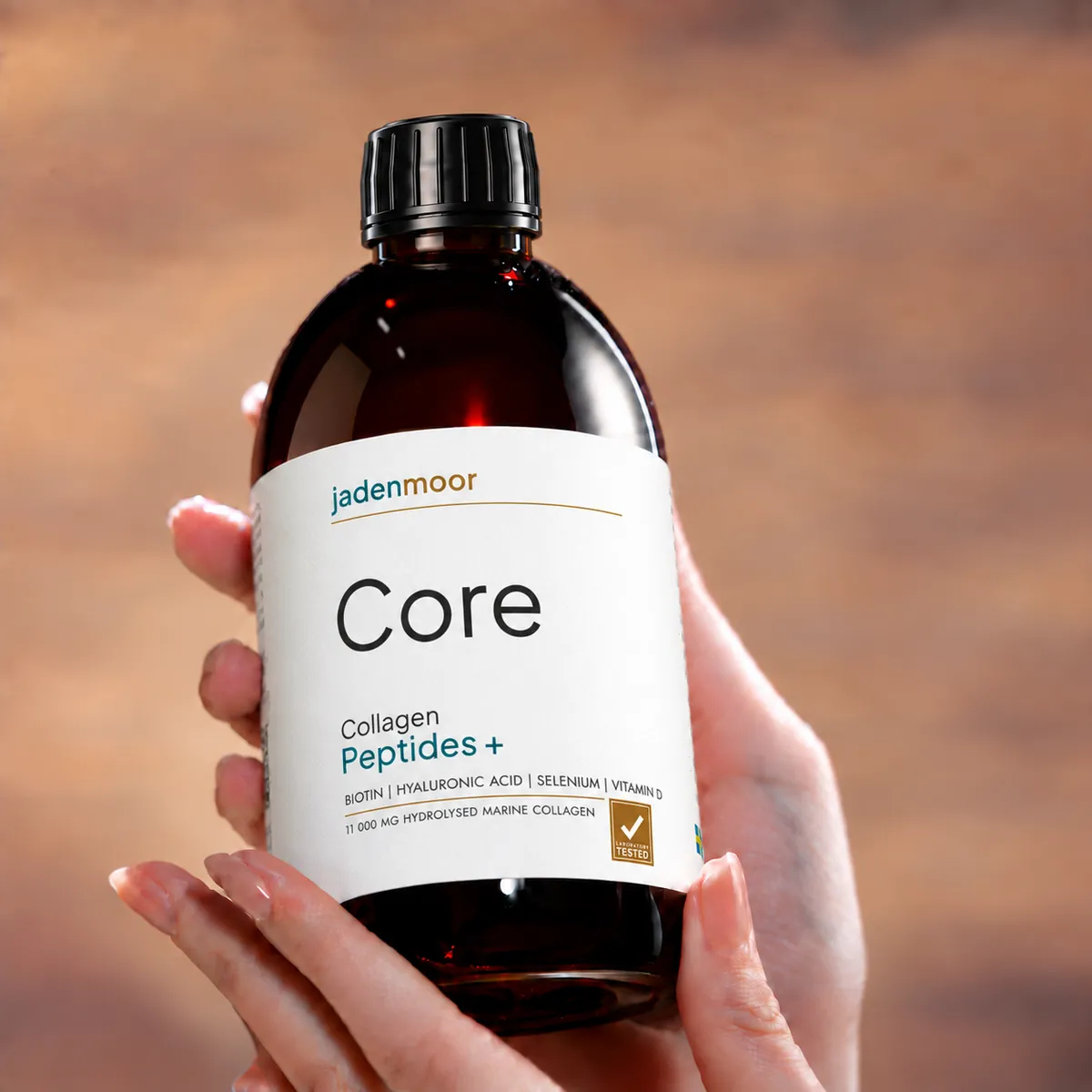
Besides 11,000 mg of hydrolysed marine collagen, types I and III, each portion of Core™ holds vitamin D, vitamin C, vitamin B12, vitamin B6, hyaluronic acid, silica, biotin, vitamin B5 and selenium, and gives you 9.9 g of protein.9 For comparison, the clinical trials drawn on across this blog used between 1 g and 10 g of collagen peptides a day.
Four of the vitamins in Core™ carry EU-authorised wording, set out in the table below.10 The wording is fixed, so it is quoted as written.
Four vitamins in one portion of Core™
Amount per portion, with authorised EU wording for each vitamin.
| Nutrient | Amount per portion | Authorised claim |
|---|---|---|
| Vitamin D | 60 µg | Vitamin D contributes to the maintenance of normal bones. Vitamin D contributes to the maintenance of normal muscle function. |
| Vitamin C | 120 mg (150% NRV) | Vitamin C contributes to normal collagen formation for the normal function of skin. Vitamin C contributes to normal collagen formation for the normal function of bones. Vitamin C contributes to normal collagen formation for the normal function of cartilage. |
| Vitamin B12 | 24 µg (960% NRV) | Vitamin B12 contributes to normal red blood cell formation. Vitamin B12 contributes to normal functioning of the nervous system. |
| Vitamin B6 | 1.7 mg (121% NRV) | Vitamin B6 contributes to normal protein and glycogen metabolism. Vitamin B6 contributes to the normal function of the immune system. |
NRV stands for nutrient reference value, the labelling reference printed on food supplements. Vitamin D and vitamin C have a longer article to themselves, bones and muscles after menopause, which explains where their wording comes from.
The same portion also holds hyaluronic acid and silica at 50 mg each, plus biotin, vitamin B5 and selenium.9
How do you take it?
Take one portion of Core™ once a day, straight or stirred into water or a smoothie, with nothing to mix or swallow whole.
- Shake and pour. Shake the pack and pour into the cap.
- Drink it your way. Take it straight, or stir it into water or a smoothie. The flavour is natural berry, and the portion is sugar free and fat free.
- Keep it cold. Once the pack is open it goes in the fridge.
Prices, delivery and the full label are on the Core™ product page.
What did women report on our liquid marine collagen?
Of the 106 women who took our liquid marine collagen daily for 8 weeks in its user trial, 95% felt the appearance of their skin improved, 86% reported healthier hair and 76% reported stronger nails.9
felt the appearance of their skin improved.
reported healthier hair.
reported stronger nails.
Each figure is a share of the women in that trial, taken from their own answers. Visible results were reported in as little as 4 weeks, with further improvement by week 8. Participants also reported more energy and better joint flexibility.9
Some participants were photographed before and after, and two of those pairs are below.
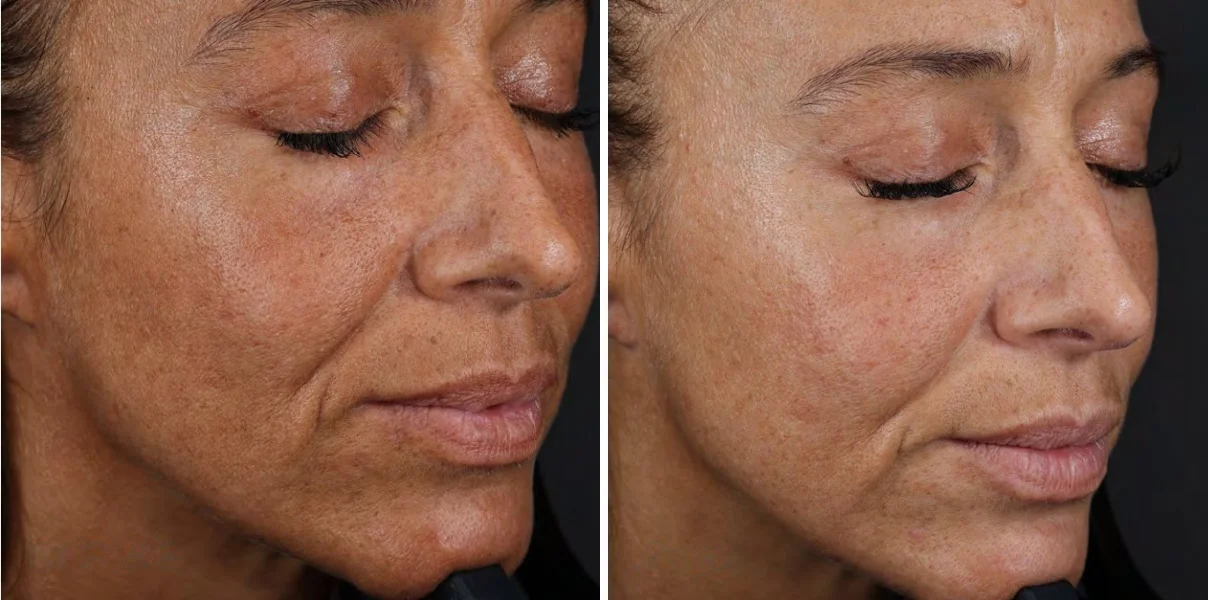
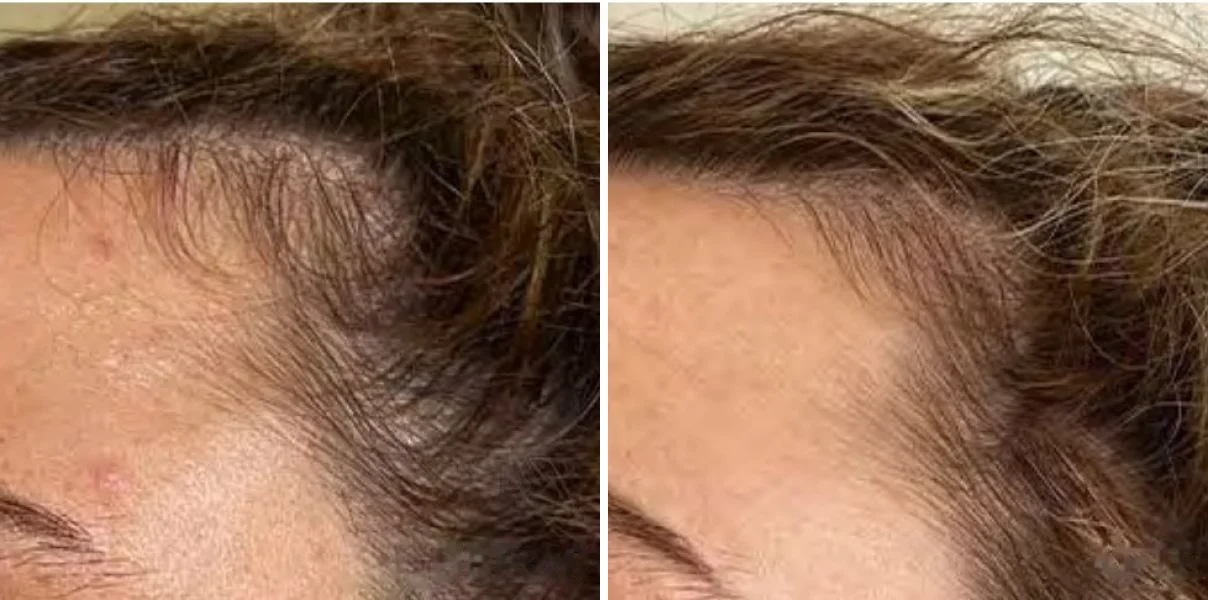
Participants in the 8-week user trial of our liquid marine collagen, photographed before and after.
Buyers in their own words
The trial figures cover a group of women. Each review below is one buyer describing what she noticed herself.
“The taste is amazing and it is sugar free! Love what it does to my hair, nails and skin.”
★★★★★
Suzanne H.Verified purchase · Amazon, United Kingdom · 26 August 2024
“I can really see the visible changes in my skin and nails.”
★★★★★
Check4YouVerified purchase · Amazon, Germany · 27 December 2023
Verified buyer reviews of our liquid marine collagen as sold under our manufacturer's own label.
Questions about collagen after 60
Is collagen worth taking at 60?
Studies open to women past 60 came out in favour of collagen: in a hair trial of 44 healthy women aged 39 to 75 and an eye-wrinkle trial of 114 women aged 45 to 65, the collagen group finished ahead of placebo on the measure taken. A meta-analysis covering participants aged 20 to 70 is the third study in this article with a range past 60.
What is the oldest age a collagen trial here enrolled?
The oldest was 75. This was the upper limit of a randomised, placebo-controlled hair trial in which 44 healthy women took 2.5 g of collagen peptides a day, or placebo, for 16 weeks. Hair thickness rose by 1.93 micrometres on average with collagen.
What is the best collagen for over 60?
Look for daily collagen peptides or hydrolysed collagen, the forms given every day in the studies with age ranges past 60. Core™ gives you 11,000 mg of hydrolysed marine collagen, types I and III, in one portion, taken once a day.
Has collagen been studied after menopause?
Yes, collagen has been studied after menopause: a randomised, double-blind, placebo-controlled trial enrolled 36 postmenopausal women and gave 5 g of marine collagen hydrolysate a day for 4 weeks. Cheek skin elasticity improved compared with placebo, and the difference was still there four weeks after stopping.
Which vitamins in Core™ have claims for bones and muscle?
Vitamin D and vitamin C are the vitamins in Core™ with claims for bones and muscle. Vitamin D contributes to the maintenance of normal bones. Vitamin D contributes to the maintenance of normal muscle function. Vitamin C is in the portion as well, and vitamin C contributes to normal collagen formation for the normal function of bones.