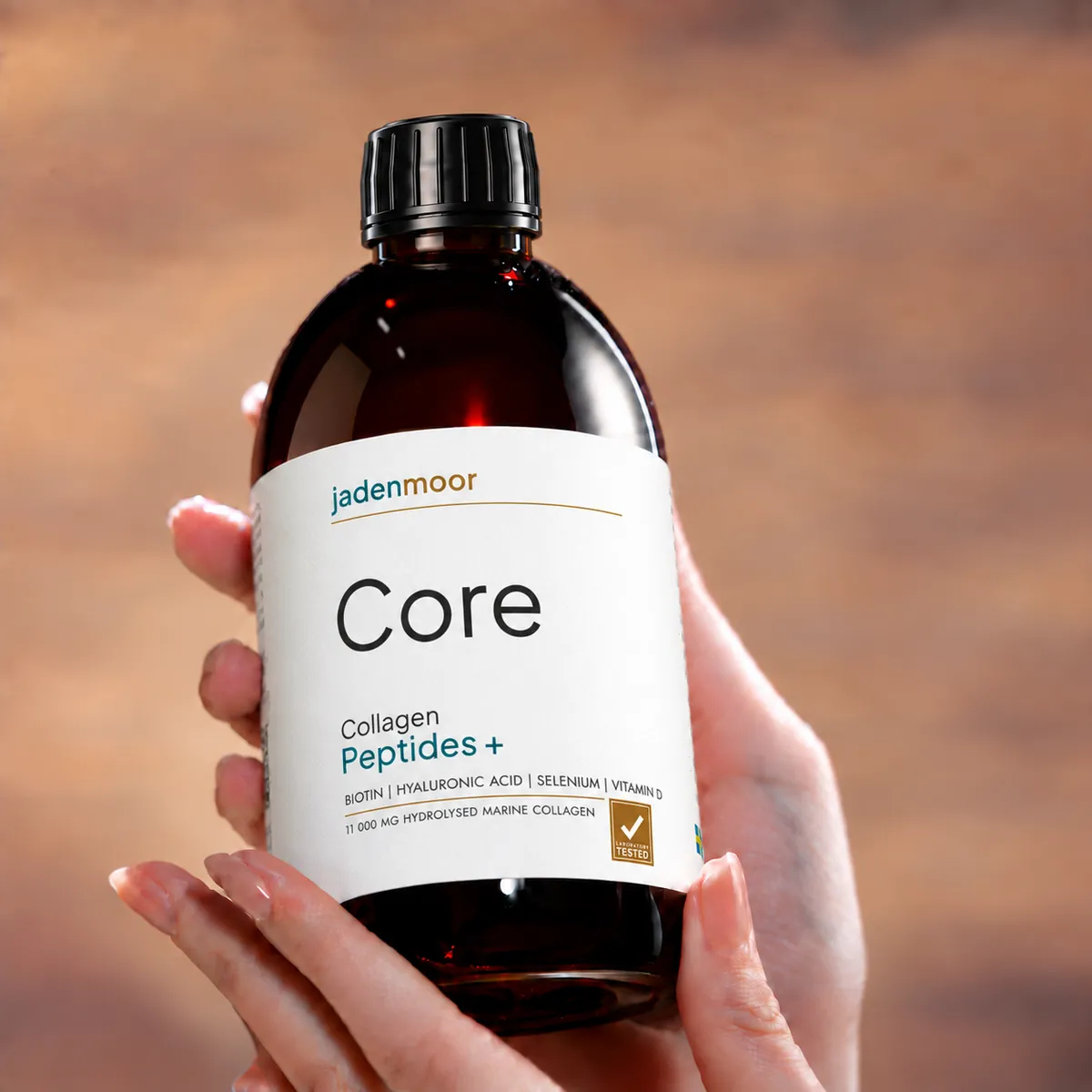
The EU claims list gives the nutrients in Core™ one antioxidant wording, and it is held by vitamin C and by selenium. It speaks about cells.
- Vitamin C contributes to the protection of cells from oxidative stress.
- Selenium contributes to the protection of cells from oxidative stress.
- Skin is named elsewhere: vitamin C contributes to normal collagen formation for the normal function of skin.
of 106 women felt the appearance of their skin improved after 8 weeks on our liquid marine collagen.
- 89%reported more moisture and glow
- 87%noticed fewer fine lines and wrinkles
- 81%reported firmer skin
Which nutrients in Core™ have an antioxidant claim?
Vitamin C and selenium are the nutrients in the portion whose entries in the EU list of permitted health claims include the line this article calls the antioxidant wording.1 Nothing else in the pack holds it.
Each wording on the list belongs to a named nutrient, which helps when you compare labels. The clearest way to talk about antioxidants for skin is therefore nutrient by nutrient, in the list's own words.
- Vitamin C: 120 mg in every portion of Core™.
- Selenium: 27.5 µg in the same portion.
What does the authorised wording say?
The authorised wording is a single sentence about the protection of cells from oxidative stress, identical for vitamin C and for selenium.
- Vitamin C contributes to the protection of cells from oxidative stress.1
- Selenium contributes to the protection of cells from oxidative stress.1
Three details in it are useful to know.
- The subject is the nutrient. The sentence belongs to vitamin C or to selenium. It is never handed to a product, a formula or to collagen.
- The object is cells. The wording names cells in general, with no single tissue such as the face or the hands picked out.
- The term stays as written. "Oxidative stress" is the list's own phrase, so we print it exactly and add nothing to it.
This one sentence is the whole antioxidant statement on this site, kept short on purpose so you can check it against the regulation yourself.
Is there vitamin C in your skin?
Yes, in both layers. A 2017 review of vitamin C in skin gathered the published tissue measurements, and the authors reported more of it in the outer layer than in the one beneath.2
Epidermis: about 6 to 64 mg per 100 g
The reported range for the epidermis, by wet weight of tissue. These are ranges compiled from published measurements of skin.2
Pullar, Carr and Vissers · review, 2017
Dermis: about 3 to 13 mg per 100 g
The reported range for the dermis, again by wet weight. The review puts the gap between the layers at 2- to 5-fold.2
Pullar, Carr and Vissers · review, 2017
Your plate, every time
Humans, unlike most animals, cannot make vitamin C in the body. All of it has to arrive through what you eat and drink.3
NIH Office of Dietary Supplements · vitamin C fact sheet
Those figures describe human skin in general, compiled from published tissue measurements. They tell you that vitamin C is an ordinary resident of the tissue you see in the mirror.
The NIH fact sheet notes that about 70% to 90% of vitamin C is absorbed at moderate intakes of 30 to 180 mg per day.3 The figure refers to vitamin C intake in general.

assets/img/blog/ax-pour.webpWhat is selenium?
Selenium is a mineral your body works into its own proteins. The US National Institutes of Health counts 25 of these selenoproteins in the human body.4
The same fact sheet lists what those proteins are involved in: thyroid hormone metabolism, DNA synthesis and protection from oxidative damage.4 The benefit sentence for selenium is the authorised one, word for word, as printed above.
Selenium has other entries on the claims list too, and the thyroid one has its own page: see selenium and normal thyroid function.
The EU nutrient reference value for selenium is 55 µg per day, so the 27.5 µg in a portion of Core™ is 50% of that labelling reference.5
Which claims are about skin itself?
Two claims name skin itself, one for vitamin C and one for biotin. The antioxidant sentence is about cells, so if skin is what you are shopping for, look at those two. Core™ contains the nutrients behind both of them.
Vitamin C and collagen formation
Vitamin C contributes to normal collagen formation for the normal function of skin.1 Behind that wording sits an opinion from EFSA's NDA Panel, which concluded that a cause and effect relationship has been established between the dietary intake of vitamin C and normal collagen formation.6
The same opinion describes the chemistry. Vitamin C acts as a coenzyme for the enzymes that add hydroxyl groups to proline and lysine in the collagen molecule, a step that stabilises collagen's triple-helix structure.6 Our article on vitamin C and collagen walks through it in full.
Biotin and normal skin
Biotin contributes to the maintenance of normal skin.1 EFSA's NDA Panel concluded that a cause and effect relationship has been established between the dietary intake of biotin and the maintenance of normal skin and mucous membranes.7
Biotin is a water-soluble B vitamin, also known as vitamin B7, and an essential nutrient.8 It carries no antioxidant wording, and its place here is the skin sentence alone.
What is in one Core™ portion?
A single serving of Core™ holds 120 mg of vitamin C (150% NRV), 27.5 µg of selenium (50% NRV) and 5,000 µg of biotin. The table lists each one beside the wording it is allowed to carry.
The nutrients on this page, per portion
Amount in one portion of Core™, its share of the EU reference intake where the label gives one, and the authorised wording used in this article.
| Nutrient | In one portion | Authorised wording |
|---|---|---|
| Vitamin C | 120 mg (150% NRV) | Vitamin C contributes to the protection of cells from oxidative stress. Vitamin C contributes to normal collagen formation for the normal function of skin.1 |
| Selenium | 27.5 µg (50% NRV) | Selenium contributes to the protection of cells from oxidative stress.1 |
| Biotin | 5,000 µg | Biotin contributes to the maintenance of normal skin.1 |
The reference value for vitamin C is 80 mg, which is why 120 mg reads as 150% on the label.5 A reference value is there so you can compare one label with another.
The portion is built around 11,000 mg of hydrolysed marine collagen, types I and III, with hyaluronic acid, silica, vitamin D and vitamins B5, B6 and B12 alongside.9 For what each of those is authorised to say, read why Core™ pairs collagen with vitamins.
- One portion a day. Shake, pour into the cap, and drink it straight or stirred into water or a smoothie.
- Keep it cold. The pack lives in the fridge once opened.
What did women report on our liquid marine collagen?
In our user trial, 95% of 106 women felt the appearance of their skin improved after taking our liquid marine collagen every day for 8 weeks, 89% reported more moisture and glow and 81% reported firmer skin.9
felt that the appearance of their skin improved.
reported more moisture and glow.
reported firmer skin.
These answers describe the complete drink over the full 8 weeks, and are not a reading for any one ingredient inside it. Women in the trial reported visible results in as little as 4 weeks, with further improvement by week 8.9
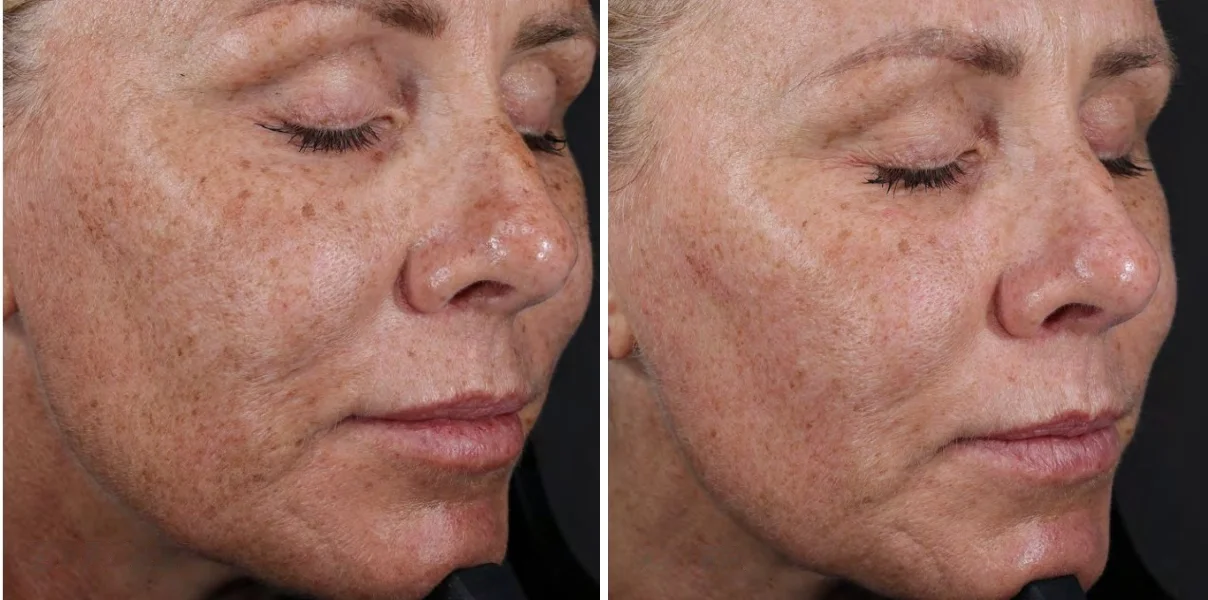
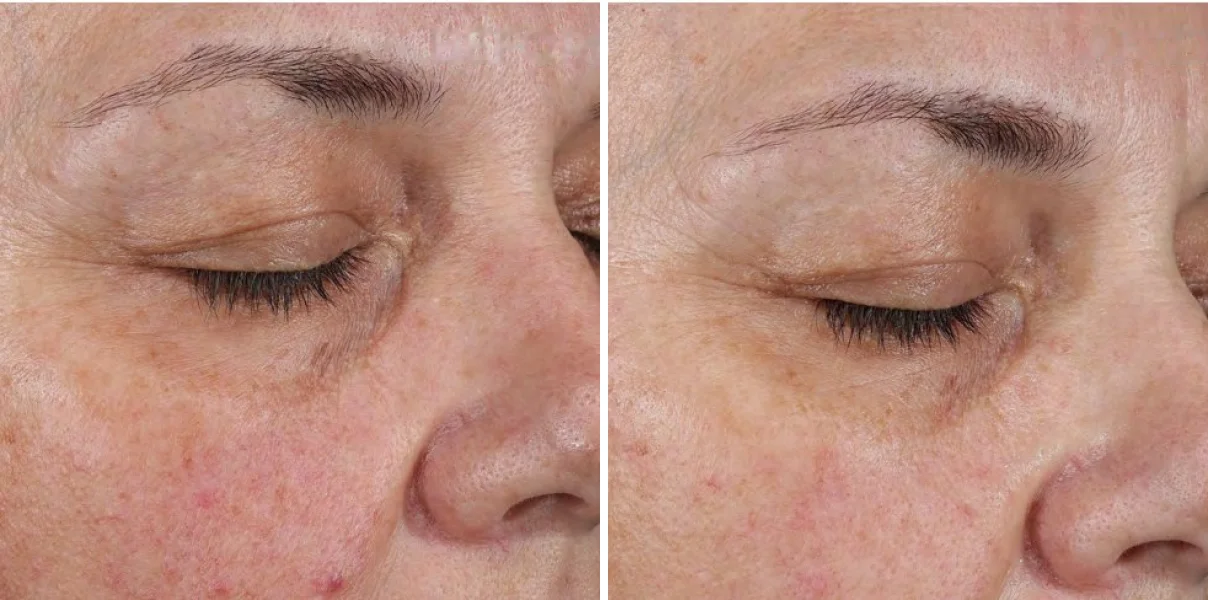
Participants in the 8-week user trial of our liquid marine collagen, photographed before and after. This is what it looked like for women in our studies.
A separate clinical study followed 10 women who took our liquid marine collagen daily for 8 weeks, with skin imaging before and after. It showed a visible reduction in eye wrinkles, forehead wrinkles, spots, pigmentation and redness, and improved skin texture.9
Buyers of the same drink have written about their skin as well.
“I can really see the visible changes in my skin and nails.”
★★★★★
Check4YouVerified purchase · Amazon, Germany · 27 December 2023
“The taste is amazing and it is sugar free! Love what it does to my hair, nails and skin.”
★★★★★
Suzanne H.Verified purchase · Amazon, United Kingdom · 26 August 2024
“My skin looks great, with no fine lines. I'm 45 and will definitely keep using it.”
★★★★★
FrédériqueVerified purchase · Amazon, France · 18 May 2024
Verified buyer reviews of our liquid marine collagen, as sold under our manufacturer's own label.
Questions about antioxidants for skin
Which vitamins have an antioxidant claim for skin?
On the EU list, the antioxidant wording is about cells, and among Core's nutrients it is held by vitamin C and selenium. Vitamin C contributes to the protection of cells from oxidative stress, and the list gives selenium the identical sentence. Skin is named in a different vitamin C claim, the one on collagen formation.
Is vitamin C an antioxidant for skin?
The permitted antioxidant sentence for vitamin C is about cells in general rather than skin by name: vitamin C contributes to the protection of cells from oxidative stress. The vitamin C claim that mentions skin by name is the collagen-formation one.
What does selenium do in the body?
According to the NIH fact sheet, selenium is built into 25 selenoproteins, which play roles in thyroid hormone metabolism, DNA synthesis and protection from oxidative damage. On the EU list, selenium contributes to the protection of cells from oxidative stress.
How much vitamin C and selenium are in Core™?
One portion has 120 mg of vitamin C, which is 150% of the EU nutrient reference value, and 27.5 µg of selenium, which is 50%. You take one portion a day.
Does biotin have an antioxidant claim?
No, the list gives biotin different wording. Biotin contributes to the maintenance of normal skin, and Core™ has 5,000 µg per portion.
Do collagen, hyaluronic acid and silica have an antioxidant claim?
No: collagen, hyaluronic acid and silica have no authorised wording of any kind on the EU list. What we can tell you about the collagen drink comes from studies, including our own 8-week user trial of 106 women.