The trials say yes. A 2023 meta-analysis of 26 randomised controlled trials with 1,721 participants found oral collagen significantly improved skin hydration compared with placebo.
- Ahead of placebo at week 6 and week 12 for skin hydration, in a trial of 64 women aged 40 to 60 testing 1,000 mg a day of fish collagen peptide.
- Hydration reading up 28.0% from baseline at 12 weeks in the collagen group, against 9.0% with placebo, on a drink of bovine collagen peptides with vitamin C, zinc, vitamin E and biotin.
- More natural moisturising factor in the skin's surface layer after 12 weeks on 1 g or 5 g of collagen peptides a day, in a trial of 99 healthy Japanese women aged 35 to 50.
of 106 women reported more moisture and glow after 8 weeks on our liquid marine collagen.
- 95%felt their skin looked better
- 87%noticed fewer fine lines and wrinkles
- 99%found it easy to take daily
How does skin hold on to water?
Skin holds water in two places, each with its own keeper: hyaluronic acid deeper down and natural moisturising factor at the surface. A review of hyaluronic acid in skin describes skin hydration as depending on the water bound to it in the dermis and in the living layers of the epidermis.1
At the surface the keeper is natural moisturising factor, or NMF. It sits in the stratum corneum, the skin's thin outer layer, and is a mixture of water-attracting, water-soluble compounds, including free amino acids, pyrrolidone carboxylic acid, lactic acid and urea. It forms when a protein called filaggrin is broken down, and it is described as largely responsible for keeping water in the stratum corneum.2
Around all of this sits collagen, the main structural protein of skin and about 75% of its dry weight.3
How is skin hydration measured?
Hydration trials lean on two readings: the corneometer, which estimates skin-surface hydration, and transepidermal water loss, or TEWL, which shows how much water escapes through the skin barrier.
- The corneometer. This probe estimates skin-surface hydration from electrical capacitance, using the fact that water has a much higher dielectric constant than other skin components. It reads only the outermost 10 to 20 micrometres of the stratum corneum and reports in arbitrary units (0 to 130).4 A rise is a rise in that reading.
- Transepidermal water loss, or TEWL. This is the amount of water that passes outward through a fixed area of the stratum corneum over time. It is the most widely used objective measure of how well the skin barrier is working: a lower reading means less water is escaping.5 It describes the barrier, and water content is a separate reading.
Glow is different, and here it means what women reported seeing for themselves.

assets/img/blog/hy-water.webpDoes collagen hydrate skin? The trials
The pooled evidence says collagen does hydrate skin: in 2023 researchers combined 26 randomised controlled trials with 1,721 participants and found that oral collagen significantly improved skin hydration and elasticity compared with placebo. The hydration effect was larger when collagen was taken for more than 8 weeks.6
Behind that summary sit individual trials, each with its own dose and volunteers.
Hydration ahead of placebo at week 6 and again at week 12
This trial tested 1,000 mg a day of low-molecular-weight fish collagen peptide. Skin hydration in the collagen group was significantly higher than in the placebo group at the 6-week reading, and the lead held at 12 weeks.7
64 women aged 40 to 60 · randomised, double-blind, placebo-controlled
Hydration +13.8% in the collagen group at week 12, as the authors reported
The daily drink held 8 g of hydrolysed marine collagen plus vitamin C. In the collagen group, the authors reported skin hydration up 7.5% at week 6 and up 13.8% at week 12. Figures are from the daily-dose groups: 48 on collagen, 52 on placebo.8
Adults aged 40 to 60, about 90% of them women · randomised, double-blind, placebo-controlled
More water, less water loss, more NMF
Volunteers took 1 g or 5 g of collagen peptides a day. Water content in the stratum corneum and epidermis increased, transepidermal water loss came down, and natural moisturising factor in the stratum corneum went up.9
99 healthy Japanese women aged 35 to 50 · randomised, double-blind, placebo-controlled
Moisture reading up 7.33%, against 2.83% with placebo
On 1,000 mg a day of fish-scale collagen peptides, a skin moisture reading taken on the forearm improved by 7.33%, against 2.83% with placebo. Natural moisturising factor in the stratum corneum also ended higher than with placebo.10
Adults aged 35 to 60 with dry skin · 50 randomised, 44 completed · randomised, double-blind, placebo-controlled
Four more trials complete the list in the table.
The skin hydration and water-loss trials at a glance
One placebo-controlled trial per row.
| Trial | Daily amount | What was measured | When |
|---|---|---|---|
| Kim, 20187 | 1,000 mg of low-molecular-weight fish collagen peptide | Skin hydration significantly higher than placebo. Trial of 64 women aged 40 to 60. | Week 6 and week 12 |
| Asserin, 201511 | Daily collagen peptides | Skin hydration significantly improved in one placebo-controlled trial. | After 8 weeks |
| Reilly, 20248 | A marine collagen drink: 8 g of hydrolysed collagen plus vitamin C | Hydration in the collagen group, as reported by the authors: +7.5% and +13.8%. Adults aged 40 to 60, about 90% of them women. | Week 6 and week 12 |
| Bolke, 201912 | A drink with 2.5 g of bovine collagen peptides plus acerola extract, vitamin C, zinc, vitamin E and biotin | Hydration from baseline: +28.0% in the collagen group, +9.0% with placebo. Trial of 72 women aged 35 and over. | 12 weeks |
| Miyanaga, 20219 | 1 g or 5 g of collagen peptides | Higher water content in the stratum corneum and epidermis, lower transepidermal water loss, more natural moisturising factor. 99 healthy Japanese women aged 35 to 50. | 12 weeks |
| Jung, 202110 | 1,000 mg of fish-scale collagen peptides | Skin moisture reading +7.33%, against +2.83% with placebo. Natural moisturising factor higher than placebo. Adults aged 35 to 60 with dry skin. | 12 weeks |
| Ito, 201813 | A 30 ml drink with 10 g of fish-derived collagen peptide plus 400 mg of ornithine | Transepidermal water loss lower than placebo. Pilot, 22 healthy Japanese adults aged 31 to 48. | 8 weeks |
| Inoue and colleagues14 | Two collagen hydrolysates compared | Facial skin moisture improved more than placebo with the hydrolysate richer in Pro-Hyp and Hyp-Gly. | 8 weeks |
Lines are their own subject, and collagen for wrinkles covers them. If you want the week-by-week picture across skin, hair and nails, see how long collagen takes to work.
Is marine collagen better for skin hydration?
The authors of the 2023 meta-analysis described fish as the optimal source of collagen for improving skin hydration, so on their reading marine collagen comes out ahead. Of the 26 trials they pooled, 14 used fish-derived collagen.6 The reading is theirs, and it is about hydration specifically.
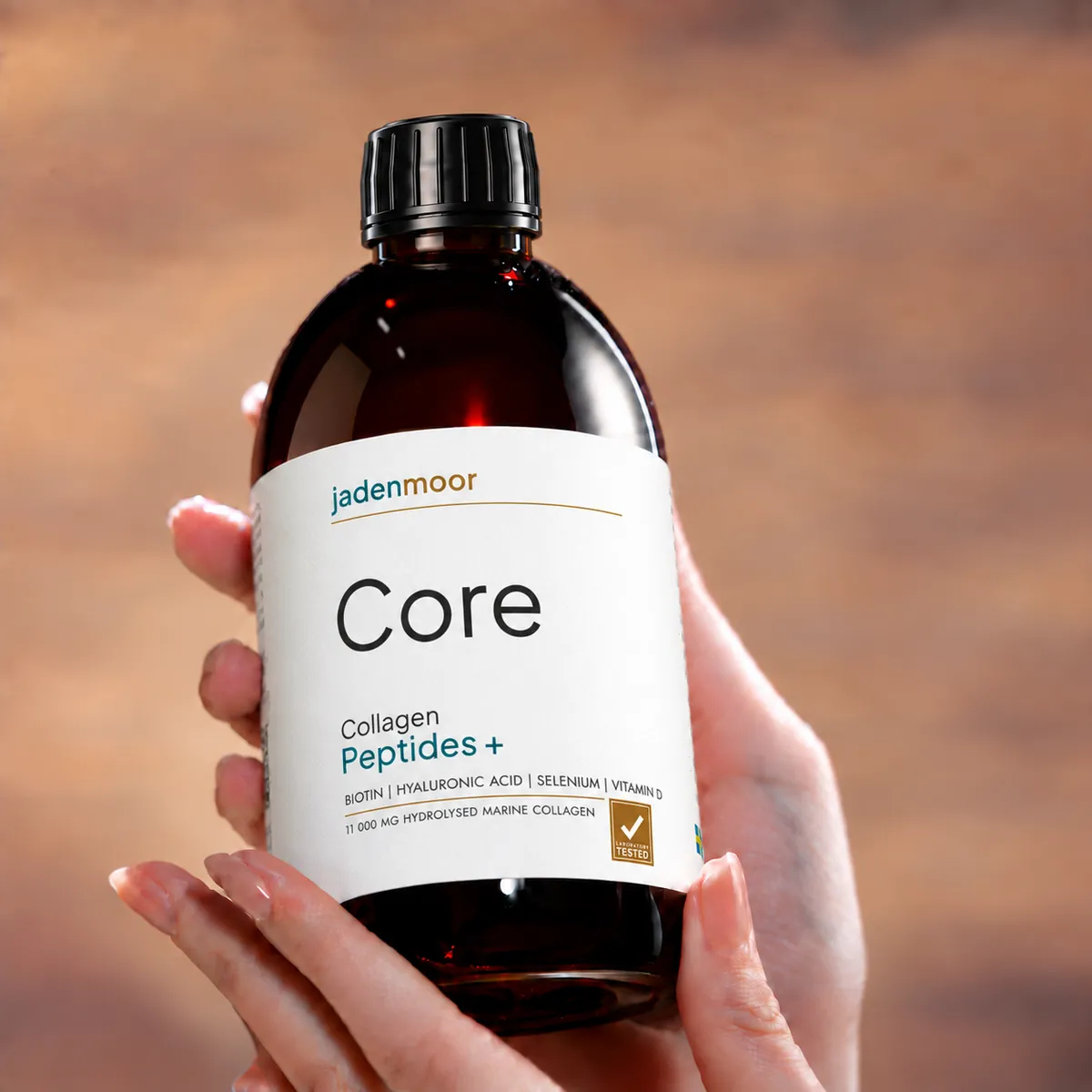
Core™ is marine too: 11,000 mg of hydrolysed marine collagen, types I and III, in each portion.15
What does hyaluronic acid do for skin hydration?
Hyaluronic acid is the molecule your skin's deeper water is bound to, and reviews put about half of the body's total hyaluronic acid in the skin.1
Hyaluronic acid has been tested by mouth as well. In a 12-week randomised, double-blind, placebo-controlled trial of 40 adults aged 35 to 64, 120 mg of hyaluronic acid a day gave higher water content in the facial stratum corneum and lower facial transepidermal water loss than placebo at 12 weeks.16 A 2014 review reported that placebo-controlled studies using 120 mg or 240 mg a day for 2 to 6 weeks, in people with dry skin, found improved skin moisture versus placebo.17
Those studies tested 120 mg or 240 mg of hyaluronic acid a day. Core's own recipe has 50 mg of hyaluronic acid in each portion, alongside its 11,000 mg of marine collagen.15
Does collagen give you glowing skin? Our 8-week results
In our 8-week user trial, 89% of 106 women reported more moisture and glow after taking our liquid marine collagen daily, and 95% felt the appearance of their skin improved.15
reported more moisture and glow.
felt the appearance of their skin improved.
reported firmer skin.
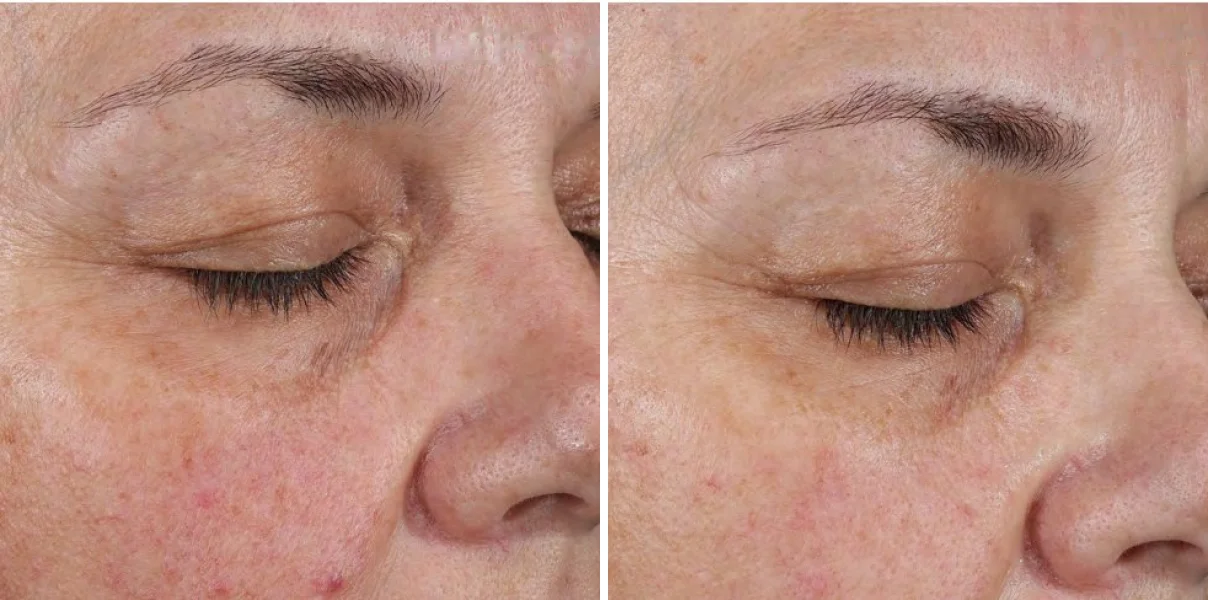
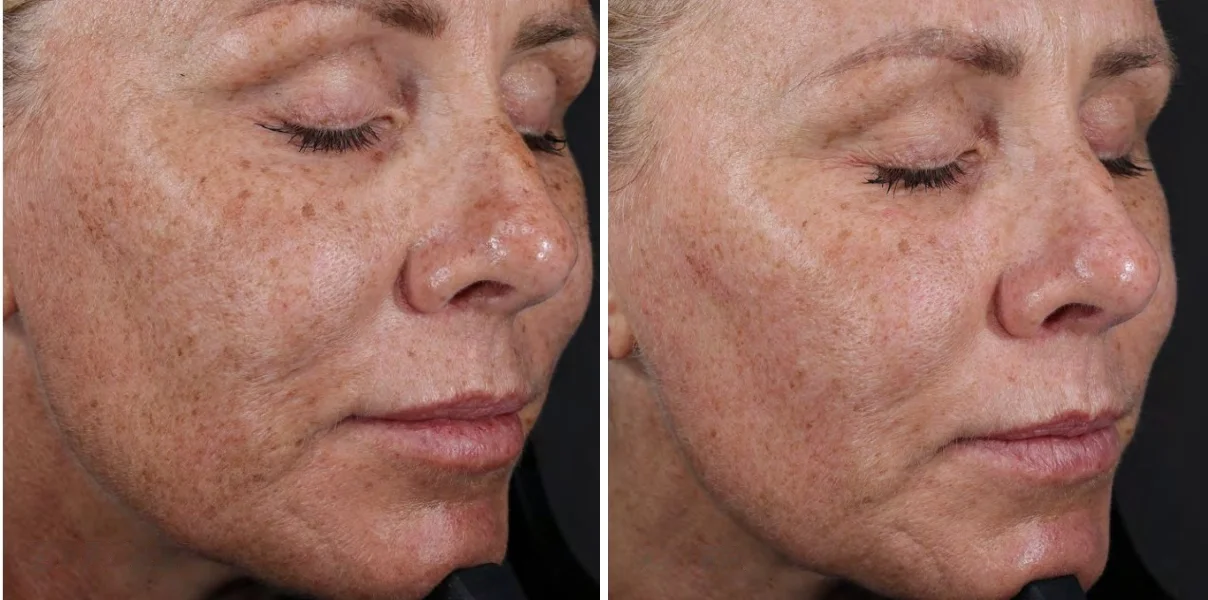
Participants in the 8-week user trial of our liquid marine collagen, photographed before and after.
These are shares of women, not instrument readings. In the same trial, women reported visible results in as little as 4 weeks, with further improvement by week 8.15
What women say about collagen, moisture and glow
Women describe glowier skin that holds on to hydration: one writer found her skin glowier and more even around six months into marine collagen, and another saw plumpness and glow build over three months.
“To my surprise, these worked.”
Around six months into taking 10,000 mg of marine collagen a day, she described skin that was glowier and more even, and that held on to hydration for longer.
Charlotte BitmeadWriting in Stylist18
Softer first, then plumper and glowier.
She took marine collagen daily for three months. Softer, smoother skin was there from the first month, and the plumpness and glow built after it.
Eleanor VousdenBeauty editor, writing in Who What Wear UK19
“I can really see the visible changes in my skin and nails.”
★★★★★
Check4YouVerified purchase · Amazon, Germany · 27 December 2023
Independent first-person accounts of marine collagen published by the outlets named, and a verified buyer review of our liquid marine collagen as sold under our manufacturer's own label.
How to take collagen for dry skin
- Daily, without gaps. The hydration trials above with a stated dose gave it as a daily amount. One portion of Core™ is your day's 11,000 mg: shake, pour into the cap, then drink it straight or stir it into water. Keep the pack in the fridge once opened.
- Past the 8-week mark. In the pooled trials the hydration effect was larger when collagen was taken for more than 8 weeks.
- With the skin vitamins. Vitamin C contributes to normal collagen formation for the normal function of skin. Biotin contributes to the maintenance of normal skin. Core™ has 120 mg of vitamin C and 5,000 µg of biotin in each portion.
Take one portion of Core™ every day, ideally for more than 8 weeks, since the pooled hydration effect was larger past that point. For the years around menopause, our guide to collagen and menopause looks at the trials run in that stage of life.
Questions about collagen and skin hydration
Does collagen hydrate skin?
Yes, on the pooled evidence: a meta-analysis of 26 randomised controlled trials found oral collagen significantly improved skin hydration compared with placebo. In our 8-week user trial, 89% of 106 women reported more moisture and glow.
Is collagen good for dry skin?
In the one trial run in adults aged 35 to 60 with dry skin, the skin moisture reading improved by 7.33% after 12 weeks on 1,000 mg a day of fish-scale collagen peptides, against 2.83% with placebo.
How long does collagen take to improve skin hydration?
The earliest reading in the trials here is week 6, when hydration was significantly higher than placebo in a study of 64 women aged 40 to 60. The pooled effect was larger when collagen was taken for more than 8 weeks.
Does collagen make your skin glow?
In the trial of our liquid marine collagen, 89% of 106 women reported more moisture and glow after 8 weeks, and 95% felt the appearance of their skin improved. Glow is something women report for themselves.
Which collagen is best for skin hydration?
The authors of a 2023 meta-analysis described fish as the optimal source of collagen for improving skin hydration. Core™ uses hydrolysed marine collagen, 11,000 mg in each portion.
Should I take collagen or hyaluronic acid for hydration?
You can have both collagen and hyaluronic acid: Core™ has 11,000 mg of marine collagen and 50 mg of hyaluronic acid per portion. The collagen trials on this page used 1 g to 10 g of collagen a day, and the hyaluronic acid trial used 120 mg a day.