They are studied in different places. A review of cosmetics puts collagen in a cream at the skin's surface, holding water there. Collagen you drink is hydrolysed, and studies have measured collagen-derived peptides in the blood afterwards.
- Cream: described in a review as a humectant whose film reduces water loss from the skin.
- Drink: in a study of six healthy adults, a single 10 g dose of collagen hydrolysate raised blood levels of collagen-derived peptides.
- Side by side: one study of 60 women aged 40 to 50 tested a topical peptide formulation and an oral hydrolysed-collagen supplement. Its authors called the two complementary.
of 106 women felt the appearance of their skin improved after 8 weeks on our liquid marine collagen.
- 89%reported more moisture and glow
- 87%noticed fewer fine lines and wrinkles
- 81%reported firmer skin
What is the difference between a collagen drink and a collagen cream?
A collagen cream is spread on the outside of your skin, while a collagen drink is swallowed, so its collagen goes through digestion first. The difference is the route.
The sources describe the two routes in different terms. For creams, a review of collagen in cosmetics talks about moisture held at the surface.1 For collagen taken by mouth, a second review talks about collagen-derived peptides counted in blood samples.2 So set "which one" aside and ask "what was each one measured doing". The sections below take them in turn.
What does collagen do in a cream?
In a cream, collagen works at the surface: a review of collagen in cosmetics describes it as a natural humectant and moisturiser. Its film-forming properties reduce water loss from the skin, which the paper calls transepidermal water loss.1
The film slows the water leaving your skin, so the surface stays moist, and the review states that benefit outright.
A second review states that native collagen, at around 300 kDa, does not pass through the skin's outer layer because of its size.2
- Where: on the skin, in contact with its outer layer.
- How the review describes it: humectant, moisturiser, film former.
- What that changes: how much water the skin lets go of.
assets/img/blog/dc-shelf.webpWhat happens to collagen you drink?
Collagen you drink has already been hydrolysed into short chains called peptides, and in volunteers those collagen peptides appeared in the blood and peaked within one to two hours. The sources below followed what came next, and each one looked in the same place, the blood.
- Within one to two hours. When volunteers drank hydrolysed collagen, in this case gelatin hydrolysate, collagen peptides appeared in their blood and peaked inside that window.3
- After a single 10 g dose. A 2024 randomised, double-blind crossover study in six healthy adults found raised blood levels of free hydroxyproline and of collagen-derived peptides, including Pro-Hyp and Hyp-Gly, for every source and molecular weight it tested.4
- Across several studies. A review reports that several studies found collagen-derived peptides in the blood rose significantly after hydrolysed collagen was taken by mouth.2
All of these findings are about blood. The thinking behind the research is that peptides carried in the bloodstream are available to skin from the inside. What happens after that is a question for skin trials. Our article on whether collagen is absorbed walks through the blood studies one by one.
One skin trial of oral collagen took its readings over weeks. This randomised, double-blind, placebo-controlled trial of 64 women aged 40 to 60 tested 1,000 mg a day of low-molecular-weight fish collagen peptide for 12 weeks. Skin hydration was significantly higher than placebo at 6 weeks and again at 12 weeks.5
Has anyone compared the two?
Yes, one human study has set the two routes side by side, and its authors called them complementary. A pooled analysis has also placed oral trials beside topical ones. Each card below reports what its authors measured and in whom.
Two routes, two sets of readings, called complementary
In this study, 60 women aged 40 to 50 were split into three groups: a topical formulation with di- and tripeptides, an oral hydrolysed-collagen supplement, or an oral placebo. The topical raised surface water content and elasticity by day 28. The oral supplement acted on elasticity and had a more pronounced effect on dermis echogenicity at 90 days. The authors called the two complementary.6
60 women aged 40 to 50 · three groups · the topical was a peptide formulation, not a collagen cream
Oral and topical peptide trials pooled
A systematic review and meta-analysis of 19 randomised trials of peptides for skin ageing found that oral peptides did better than topical formulations on most outcomes in a subgroup comparison. Only 2 of the 19 trials were topical, and the authors say this limits firm conclusions. The comparison sets separate trials next to each other, and the authors ask for balanced comparisons.7
19 randomised trials · 1,341 participants · 17 oral trials and 2 topical trials
The first study's authors did not rank the routes. They reported an earlier surface reading for the topical and a later, deeper reading for the oral supplement, and concluded that the two act by different mechanisms.6
Drink and cream side by side
Side by side, collagen in a cream has been studied at the skin's surface for water loss, with a topical reading at day 28, while collagen you drink has been studied through blood levels of collagen-derived peptides and skin readings at 6 weeks, 12 weeks and 90 days. Every cell is taken from a source named above, so the table shows what was looked at, in whom, and for how long.
Collagen cream and collagen drink: where, what and how long
What the sources in this article describe or measured for each route.
| Collagen in a cream | Collagen you drink | |
|---|---|---|
| Where it was studied | At the skin's surface, as a humectant and film former.1 | Taken by mouth as hydrolysed collagen. Collagen-derived peptides have been measured in blood.2 |
| What was measured | Water loss from the skin in the cosmetics review.1 Surface water content and elasticity for the topical peptide formulation in the side-by-side study.6 | Blood levels of free hydroxyproline and collagen-derived peptides after a single 10 g dose.4 Elasticity and dermis echogenicity for the oral supplement in the side-by-side study.6 |
| Length of the trial on record | Reading at day 28 for the topical peptide formulation.6 | Reading at 90 days for the oral supplement.6 Readings at 6 and 12 weeks in the 12-week trial of fish collagen peptide in 64 women.5 |
Can you use both?
Yes, you can use a collagen cream and a collagen drink together, and nothing in the sources asks you to pick one. A cream goes on your skin, a drink goes in a glass, and the authors of the side-by-side study described the two routes as complementary.6
A simple way to arrange it:
- Keep the cream where it already lives. Morning, evening or both, as part of the skincare you enjoy.
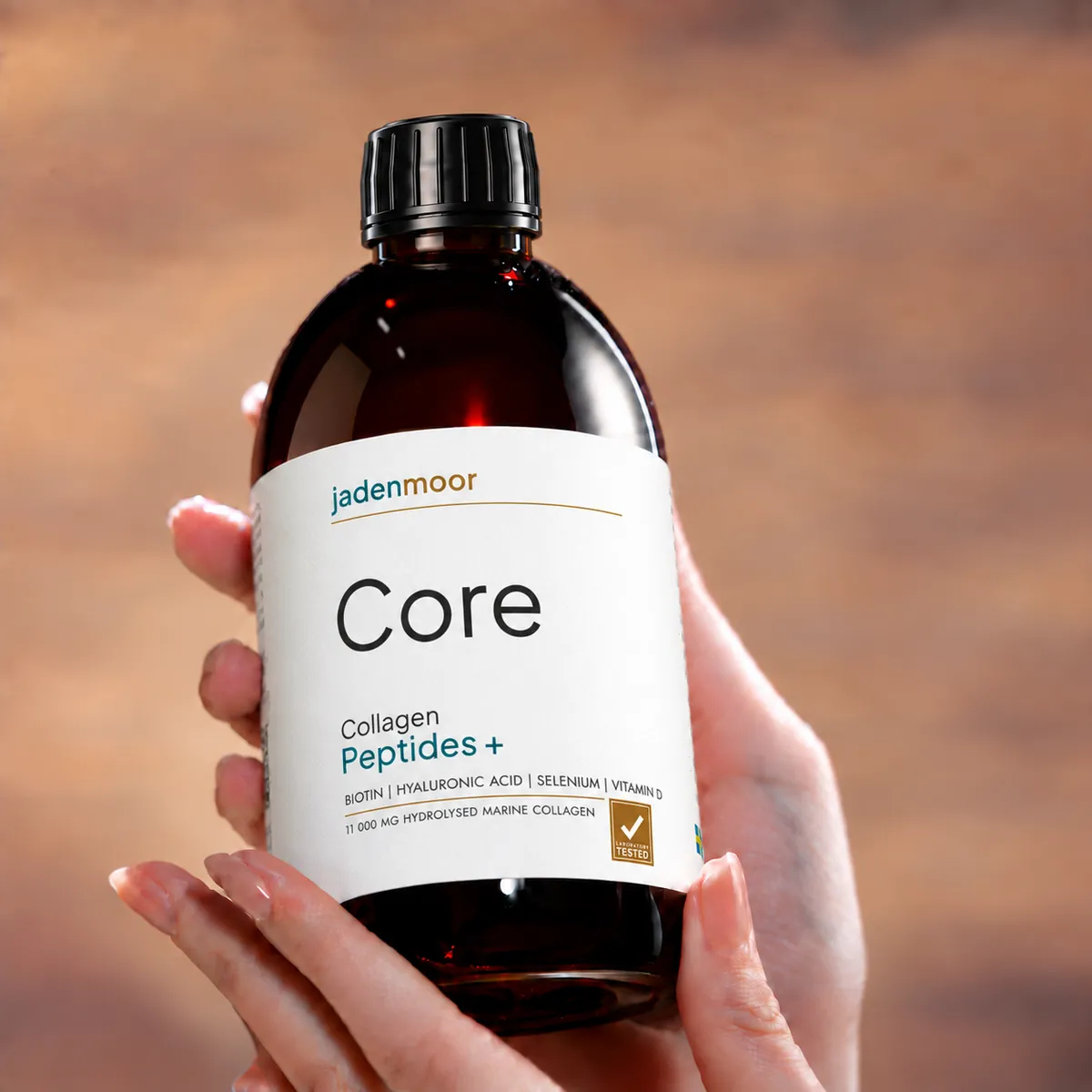
- Give the drink one fixed moment. Core™ is one portion a day: shake, pour into the cap, drink it straight or stir it into water or a smoothie.8 Our guide on when to take collagen covers the timing.
- Let both run. Take one portion of Core™ a day alongside your cream, and keep the pack in the fridge once opened.8
On the drinking side, Core™ gives you 11,000 mg of hydrolysed marine collagen, types I and III, in each portion. The collagen is hydrolysed to a low molecular weight of about 1,500 daltons.8
Each portion also carries 120 mg of vitamin C. Vitamin C contributes to normal collagen formation for the normal function of skin.9
Hyaluronic acid raises the same drink-or-jar question. We set it beside collagen in collagen vs hyaluronic acid.
What did women report on our liquid marine collagen?
After 8 weeks of drinking our liquid marine collagen daily, 95% of the 106 women in our user trial felt that the appearance of their skin improved and 89% reported more moisture and glow. Women reported visible results in as little as 4 weeks, with further improvement by week 8.8
felt that the appearance of their skin improved.
reported more moisture and glow.
found it easy to include in their daily routine.
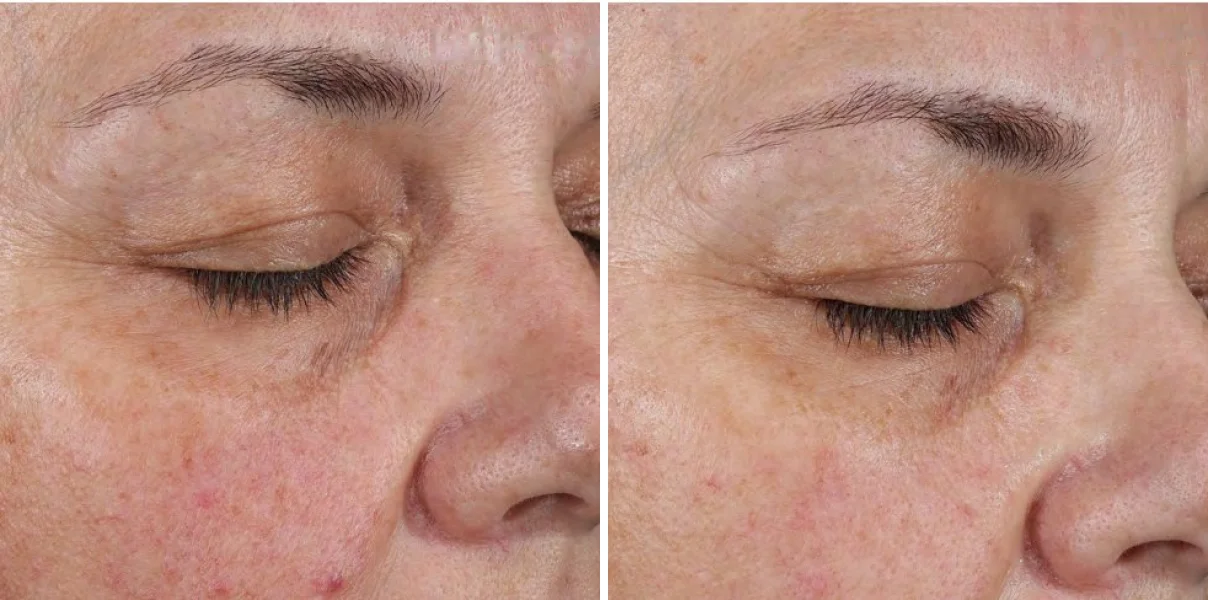
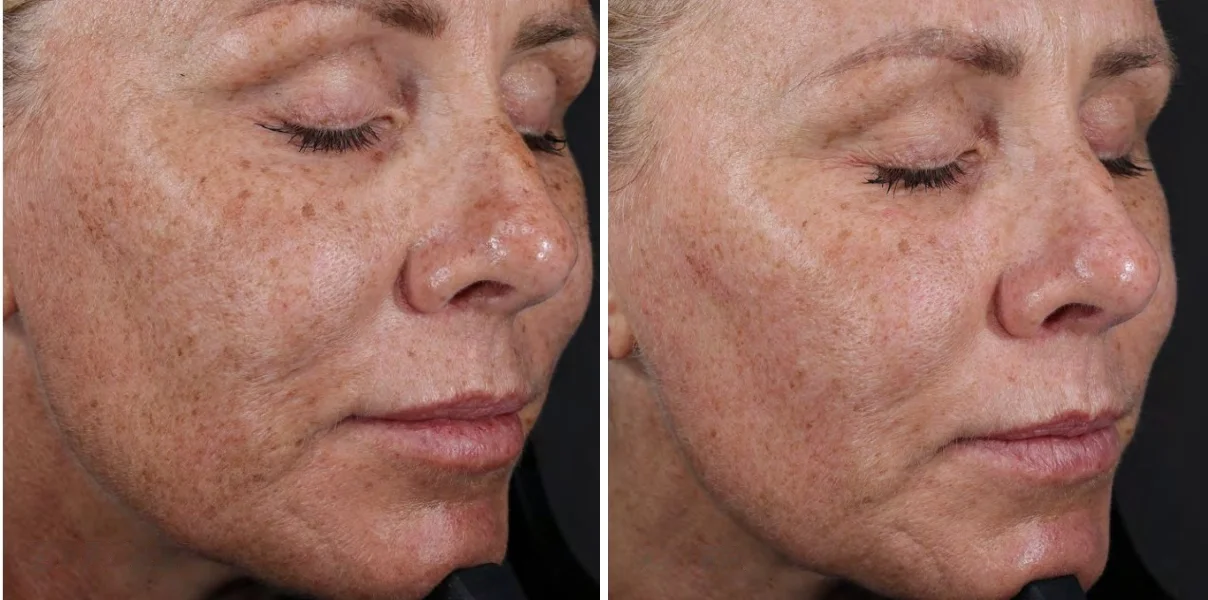
Participants in the user trial of our liquid marine collagen, before and after. This is what it looked like for women in our studies.
Buyers write about it in their own words too.
“I can really see the visible changes in my skin and nails.”
★★★★★
Check4YouVerified purchase · Amazon, Germany · 27 December 2023
“My skin looks great, with no fine lines. I'm 45 and will definitely keep using it.”
★★★★★
FrédériqueVerified purchase · Amazon, France · 18 May 2024
“The taste is amazing and it is sugar free! Love what it does to my hair, nails and skin.”
★★★★★
Suzanne H.Verified purchase · Amazon, United Kingdom · 26 August 2024
Verified buyer reviews of our liquid marine collagen, as sold under our manufacturer's own label.
Questions about collagen drinks and creams
What does a collagen cream do for your skin?
A collagen cream moisturises at the surface of the skin. A review of collagen in cosmetics describes it as a natural humectant and moisturiser whose film-forming properties reduce water loss from the skin.
Is oral collagen the same as topical collagen?
No, oral and topical collagen share a name but take different routes. Topical collagen is described at the skin's surface, while oral collagen is hydrolysed and, in the studies cited here, collagen-derived peptides were measured in blood afterwards.
Does collagen you drink get into your blood?
Yes, blood studies have measured collagen-derived peptides in the blood after collagen is taken by mouth. In a 2024 crossover study of six healthy adults, a single 10 g dose of collagen hydrolysate raised blood levels of free hydroxyproline and of peptides such as Pro-Hyp. The finding is about blood.
Has a collagen drink been tested against a cream?
The closest test is one study of 60 women aged 40 to 50, in which a topical peptide formulation raised surface water content and elasticity by day 28, and an oral hydrolysed-collagen supplement acted on elasticity and dermis echogenicity at 90 days. The authors called the two complementary.
Can I take a collagen drink and use a collagen cream together?
Yes, you can take a collagen drink and use a collagen cream together as a matter of routine. One goes on the skin and the other is one daily portion, and the authors of the side-by-side study described the two routes as complementary.
How long did the studies run?
The side-by-side study reported its topical reading at day 28 and its oral reading at 90 days. Our own user trial of liquid marine collagen ran for 8 weeks.